Power Deficit Forces Crypto Miners to Leave Kazakhstan
Electricity shortages have been dogging Kazakhstan’s booming crypto mining industry this year. A media report reveals that some miners, including some of those that moved in amid China’s crackdown on the sector, are now...
Archive context
Older archive item. Useful for background and entity history, but not a fresh market-moving signal.
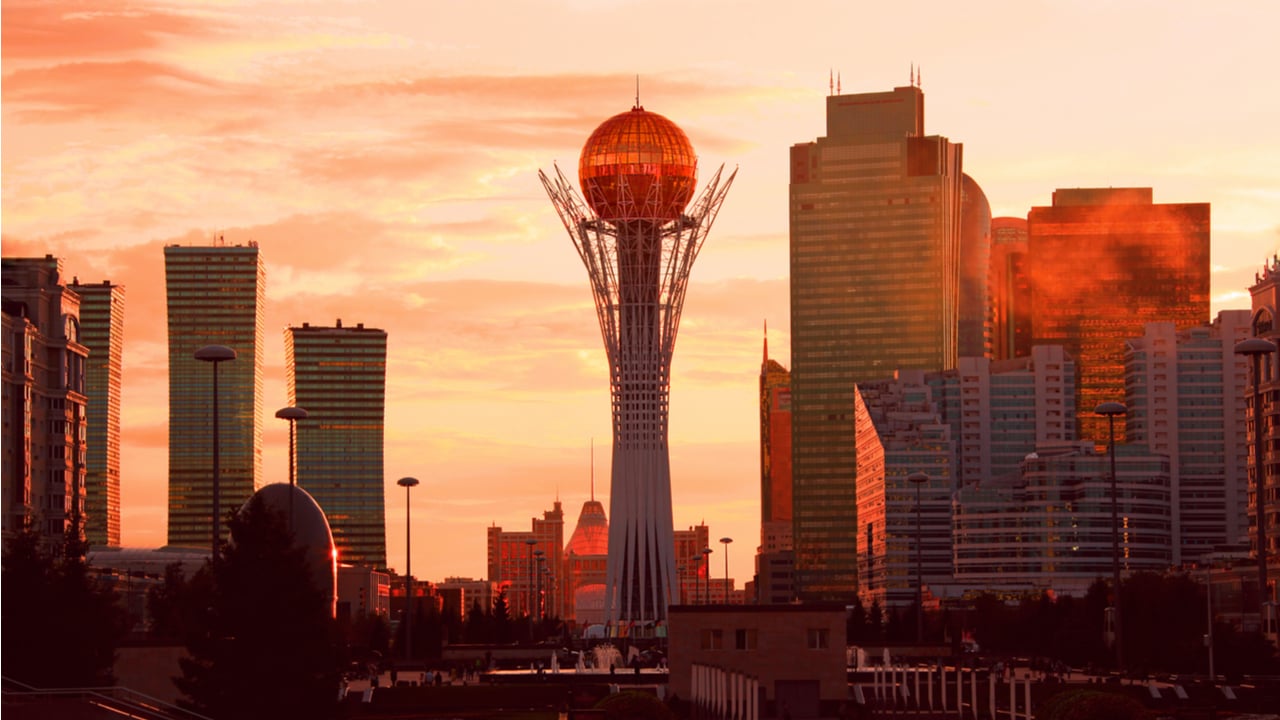
Electricity shortages have been dogging Kazakhstan’s booming crypto mining industry this year. A media report reveals that some miners, including some of those that moved in amid China’s crackdown on the sector, are now looking to relocate to destinations with a more stable energy supply like the United States.
Miners Shut Down Crypto Farms Due to Kazakhstan’s Issues With Power GenerationKazakhstan has become a crypto mining hotspot since China launched a government offensive against bitcoin miners in May. The Central Asian nation maintains capped electricity rates and is a major producer of fossil fuels. However, its neglected infrastructure and insufficient generation capacities have failed to meet the rapidly rising demand for electricity needed to power the energy-hungry coin minting facilities.
Authorities have blamed the growing deficit — consumption surged by 7% in the first three quarters of the year — on the mushrooming mining data centers, and lawmakers have proposed introducing higher electricity tariffs for miners. Representatives of the industry have complained about what they view as unfair treatment. “They made mining a scapegoat,” Didar Bekbauov, founder of the local mining hosting company Xive, stated on social media earlier in December.
The executive published his comment on Twitter after Xive was forced to shut down its main facility in Southern Kazakhstan when its power supply was suddenly cut last month, Nikkei Asia noted in a report. The company is still running another mining farm in the country but at the same time is exploring options to transfer some operations to the U.S.
In November, the Data Center Industry and Blockchain Association of Kazakhstan reached an agreement with the country’s grid operator, KEGOC, to ensure uninterrupted power supplies to registered miners. When the state-run utility failed to fulfill its part of the deal, mining companies began shutting down their facilities in the country. Another large crypto farm operator, Bitmain-backed Bitfufu, has closed down its crypto farms in Kazakhstan and is also moving to the United States.
While restrictions imposed by the power distribution company have affected regulated crypto mining businesses, small-scale crypto farms in the shadow economy have continued to mint digital currencies in basements and garages. The “gray miners” are burning serious amounts of electrical energy and posing another challenge for the government in Nur-Sultan. “Unfortunately it’s very hard to get rid of them,” Alan Dorjiyev, president of the crypto industry association, told Nikkei.
Initially, Kazakhstan welcomed cryptocurrency miners and took steps to regulate the sector through legislation. Estimates published in October suggested that the country could expect crypto mining to pour some $1.5 billion into its economy in the next five years and over $300 million in tax revenue. A new tax of $0.0023 per kilowatt-hour of electricity used by registered crypto mining companies will be imposed in January 2022. Kazakhstan is also planning to build power plants with a combined 3,000-megawatt generating capacity in the coming years, expand the share of renewable sources in its energy mix, and is considering nuclear energy.
Do you think Kazakhstan will manage to solve its power supply problems and provide sufficient electricity for its crypto mining industry? Tell us in the comments section below.
Why this matters
This mining story adds another data point to the current market tape and is useful when read alongside nearby source coverage.
Original source
Read on Bitcoin NewsRelated market context

Venezuelan delegation led by interim president Rodriguez discusses energy, debt, and mining in US
The US-Venezuela talks could reshape global energy and mineral supply chains, impacting geopolitical alliances and economic depend...
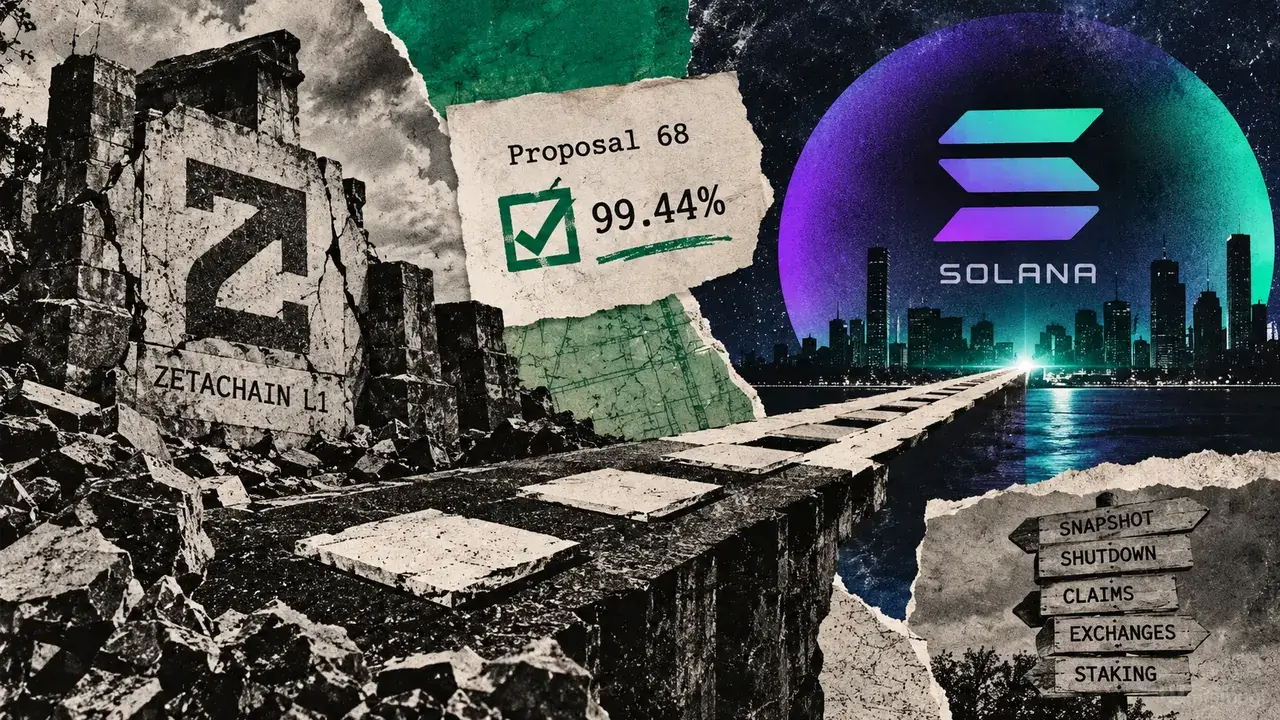
This blockchain just voted to shut itself down for a Solana-powered AI pivot
ZetaChain's on-chain governance has approved retiring the network’s standalone blockchain and moving ZETA to Solana as the project...
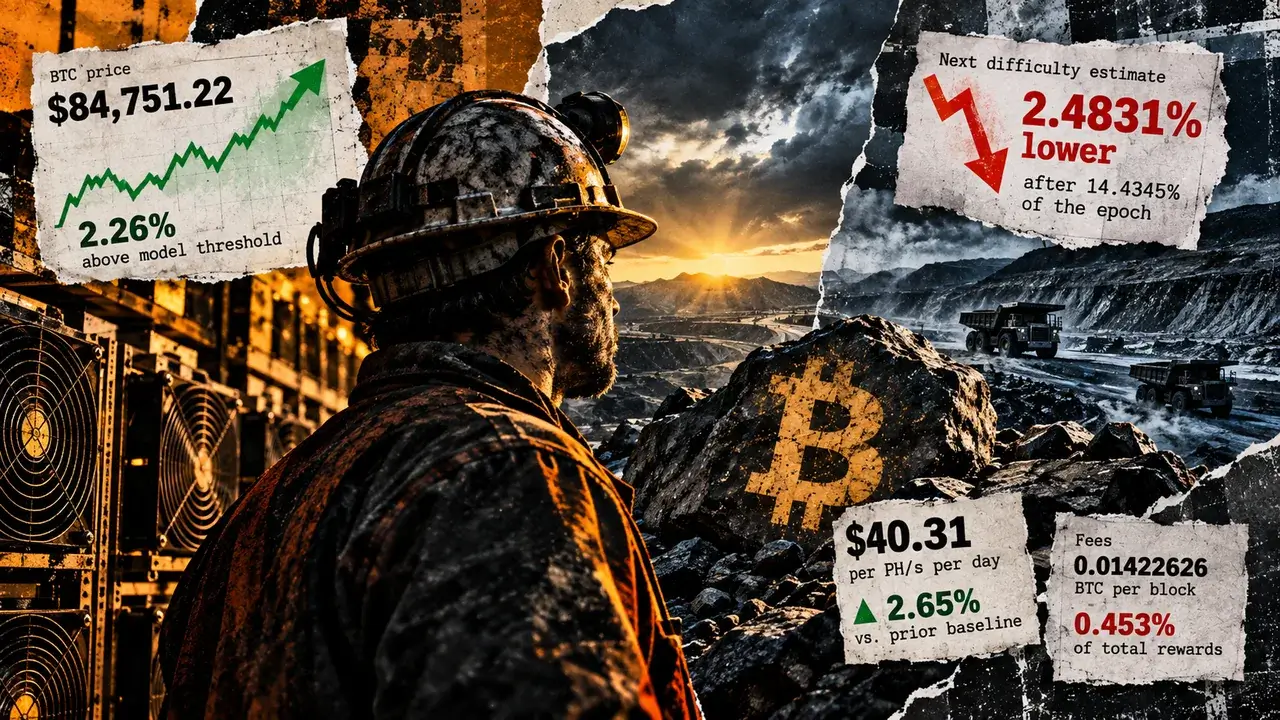
Bitcoin’s $84K rally isn’t saving miners as difficulty signals already flash caution
Bitcoin’s post-retarget relief for miners was real, but narrow. Using a BTC price of $84,751, the completed difficulty increase an...

Russian Crypto Industry Could Be Operating Legally by Year-End: Central Bank
Bitcoin Magazine Russian Crypto Industry Could Be Operating Legally by Year-End: Central Bank Russia’s crypto industry may have al...
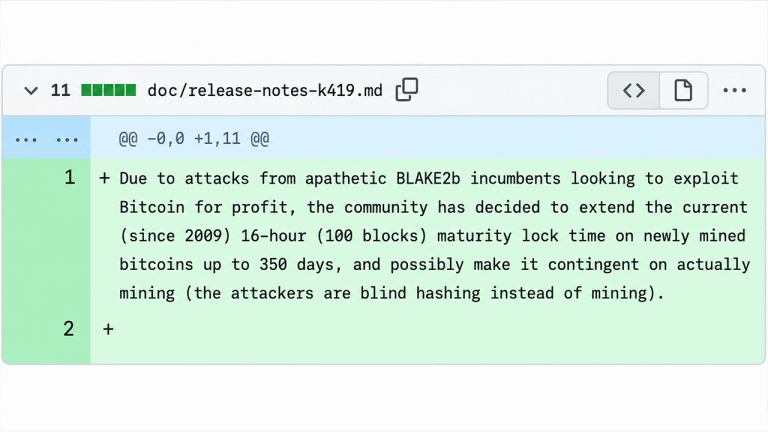
BLAKE2b Bitcoin Fork Wants Miners to Wait 45 Days to Touch Their Coins
The developers who maintain the minority chain that forked away from Bitcoin on Aug. 8, 2026, plan to make it so miners cannot unl...

Bitcoin breaks one-year downtrend, analyst says bullish momentum returns
Bitcoin's trend reversal could spark renewed investor confidence, potentially driving significant capital inflows and market momen...