Russia Considers Extended Ban on Cryptocurrency Mining in Irkutsk Region
Key Takeaways: Beginning on April 1, 2025, and extending until at least 2031, Russia may impose a year-round moratorium on cryptocurrency mining in the southern Irkutsk region. Igor Kobzev, the governor of Irkutsk, has a...
Archive context
Older archive item. Useful for background and entity history, but not a fresh market-moving signal.

Key Takeaways:
- Beginning on April 1, 2025, and extending until at least 2031, Russia may impose a year-round moratorium on cryptocurrency mining in the southern Irkutsk region.
- Igor Kobzev, the governor of Irkutsk, has advocated for the restriction in order to address the energy shortages caused by big Crypto mining operations that utilize up to 650 MW.
- If adopted, this legislation might have a severe influence on the mining industry in the area by compelling miners to relocate or discontinue operations completely.
The Irkutsk area, Russia’s biggest Crypto mining hotspot, is concerned about a prospective cryptocurrency mining ban. Reports imply that authorities are considering raising limitations beyond the present seasonal limits, therefore restricting mining operations throughout the full year. If passed, this prohibition would take effect on April 1, 2025, and remain in place until at least March 15, 2031.
Government Push for a Full Ban Governor’s Proposal and Federal ConsiderationIrkutsk Governor Igor Kobzev has advocated a complete ban on crypto mining in the energy-deficient southern part of the region. The governor’s petition stresses the huge impact mining operations have on the local power infrastructure and supports shifting electricity to other socially and economically beneficial businesses. This has attracted large-scale mining farms that utilize around 650 megawatts of power—equivalent to the energy needs of a mid-sized metropolis.
Read More: Bank of Russia Plans to Permit Crypto Investments For Affluent Investors
Impact of Existing Seasonal RestrictionsThe Russian government previously implemented periodic prohibitions on crypto mining to prevent winter energy shortages. A directive signed by Prime Minister Mikhail Mishustin in late 2024 restricted mining from November 15 to March 15 in many energy-strained regions, including southern Irkutsk, sections of the Trans-Baikal Territory, and Buryatia. These procedures were implemented to maintain enough electrical supply for residential and industrial consumers throughout the hard Siberian winters.
If the current plan is granted, the seasonal prohibition would expand to a permanent, year-round ban, substantially altering the landscape of Russia’s crypto mining sector.
Struggles for Mining BusinessesThe proposed year-round mining prohibition has aroused concerns among industry players. Cryptocurrency mining has been a major engine of economic activity in Irkutsk, attracting investments from both domestic and international enterprises. Large-scale mining facilities, which have relied on the region’s inexpensive electricity, would confront an ambiguous future.
Industry experts warn that the restriction might leave mining operations stranded, as many facilities are strongly connected into the local infrastructure. Relocating to another region would create logistical and financial hurdles, particularly as other Russian territories have already implemented mining limitations. Some researchers think that an outright prohibition could cause miners to operate surreptitiously, leading to more criminal activity and challenges in regulatory enforcement.
Read More: Belarus Eyes Crypto Mining Boom Amid Electricity Surplus
Legal and Regulatory Considerations Uncertain Legal Framework for Crypto in RussiaRussia’s stance on cryptocurrencies remains highly flexible, with shifting policies influencing many areas of the industry. While mining is not explicitly forbidden countrywide, it works in a legal gray area. Lawmakers have repeatedly debated regulatory measures, including taxation regimes and licensing requirements for miners. However, the continued energy crisis has spurred harsher regional measures, such as the one suggested in Irkutsk.
Despite these restrictions, Russia continues to research the use of blockchain technology for financial and governmental purposes. Some officials argue for regulated crypto exchanges to ensure that Russia does not lag behind in global digital asset adoption. However, energy-intensive mining remains a challenging problem, especially in locations suffering with power constraints.
Russia is now one of the primary actors in worldwide crypto mining, ranking among the top five countries in hash rate contribution. A protracted embargo in Irkutsk might harm its position, helping competing mining hubs in Kazakhstan, the United States, and the Middle East.
The post Russia Considers Extended Ban on Cryptocurrency Mining in Irkutsk Region appeared first on CryptoNinjas.
Why this matters
This mining story adds another data point to the current market tape and is useful when read alongside nearby source coverage.
Original source
Read on CryptoNinjasRelated market context

Russia Crypto: Diesel Deal Falters as Zelensky Resumes Refinery Strikes, What Now for Oil Bitcoin?
In Russia crypto news, Donald Trump’s announced plan to release 300,000 tonnes of Russian diesel to the US and global markets face...

FBI helps smash crypto scam targeting Russian speakers in Brooklyn
The FBI has helped take down a crypto scam network that targeted Russian-speaking individuals living in the US and likely stole te...
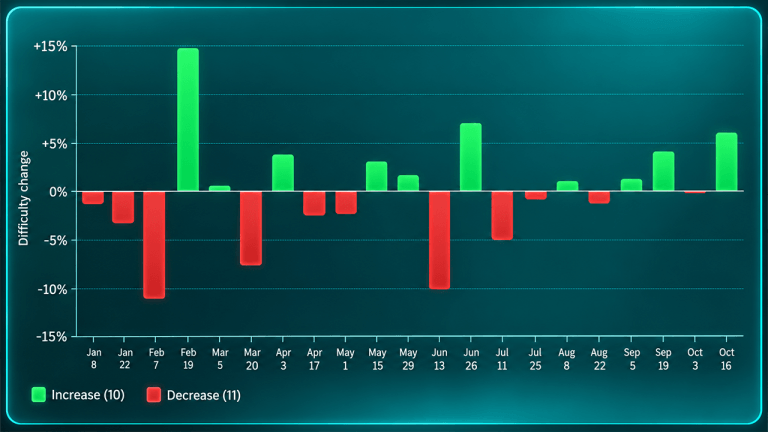
Bitcoin Mining Difficulty Jumps 5.92% in Third-Largest Hike of 2026
On Friday, at block height 971712, bitcoin mining grew considerably more demanding as the network’s latest difficulty adjustment c...

Block’s Proto Bitcoin Mining Hardware Now Available to Own via Sazmining
Bitcoin mining services provider Sazmining has launched a new offering that allows individual investors to purchase mining hardwar...
Russia Will Soon Ban Peer-to-Peer Bitcoin Trading, Central Bank Confirms
Russians have until July 1, 2027 to buy and sell crypto directly with each other. After that, every trade runs through a broker or...

Russia’s central bank bans Bitcoin transfers to self-custody wallets
The Bank of Russia bans transfers from regulated accounts to self-custody wallets as Sberbank wins approval to offer crypto exchan...