Tether Open-Sources Bitcoin Mining OS, Targeting Home Rigs to Global Industrial Farms
Key Takeaways: Tether unveiled Mining OS (MOS), a complete Bitcoin mining platform designed according to open-source model The system can implement from small-sized mining rigs at home to big multi-site industrial system...
Archive context
Older archive item. Useful for background and entity history, but not a fresh market-moving signal.

Key Takeaways:
- Tether unveiled Mining OS (MOS), a complete Bitcoin mining platform designed according to open-source model
- The system can implement from small-sized mining rigs at home to big multi-site industrial system operating
- MOS deploys security peer-to-peer network and supports operation with many hardware with various tools
Tether is leveling up its competition, not limited to stablecoins but moving into Bitcoin infrastructure. The company says its new Mining OS aims to simplify how miners run, monitor, and scale operations without relying on closed vendor software.
Read More: Tether’s USDT Hits 12.6M MiniPay Wallets as $153M Flows Power Emerging Markets Push
Tether Releases Open-Source Bitcoin Mining OSTether CEO Paolo Ardoino said the company has made Tether Mining OS fully open source, describing it as a complete operational platform for real-world mining environments. The announcement follows an earlier preview where Tether positioned MOS as a way to reduce complexity across energy, hardware, and data layers.
Tether indicates that MOS is capable of supporting a single home miner up to the large industrial location elsewhere. It is modular and thus the operator can simply drop the module that they really require.
According to Tether, it has collaborated with tens of thousands of miners, containers, sensors, power meters, mining pools, and even weather equipment, which means you can squeeze up operations without needing to create bespoke integrations.
Read More: Tether Posts $10B+ Profit as USDT Supply Hits $186B and U.S. Treasury Exposure Tops $141B
Designed to Remove Vendor Lock-InMany mining operations depend on proprietary management platforms that limit flexibility and transparency. Tether said MOS addresses this problem by offering a self-hosted stack that operators fully control.
How MOS Is BuiltMOS uses a peer-to-peer encrypted networking layer, allowing devices to communicate directly without centralized servers. This setup lets miners manage infrastructure locally or across sites while keeping data flows private.
The platform is hardware-agnostic and designed to integrate with different energy sources and monitoring systems. Operators can adjust configurations based on output goals, power conditions, and site size.
Tether previously said mining software should not be a barrier to entry. By open-sourcing MOS, the company aims to lower costs for new miners while giving larger operators more control over their infrastructure.
Scaling From Hobbyists to Industrial SitesTether says MOS can scale horizontally across locations, making it suitable for operators running fleets in different regions. The modular architecture also allows the mining farms to expand capacity without necessarily rewriting their software stack.
The launch places Tether in the company of a larger initiative of open-source mining software across the entire Bitcoin ecosystem. Open platforms enable the miners to verify the code, adjust workflows and not necessarily be trapped into one vendor.
They are not giving a number of operations which have already tested MOS but they say that it is ready to travel into the real world. It is one of the fits into the larger strategy of the company supporting Bitcoin infrastructure but maintaining core tools open and accessible.
The post Tether Open-Sources Bitcoin Mining OS, Targeting Home Rigs to Global Industrial Farms appeared first on CryptoNinjas.
Why this matters
Bitcoin is showing up inside the Stablecoins theme, so this story is worth tracking for follow-through rather than treating it as a one-off headline.
Original source
Read on CryptoNinjasRelated market context
Tether Freezes $1.45M in THORChain USDT Vaults, Then Reverses Blacklist Hours Later
Key Takeaways: The amount of about $1.45 million in USDT was temporarily frozen in THORChain vault addresses. According to THORCha...
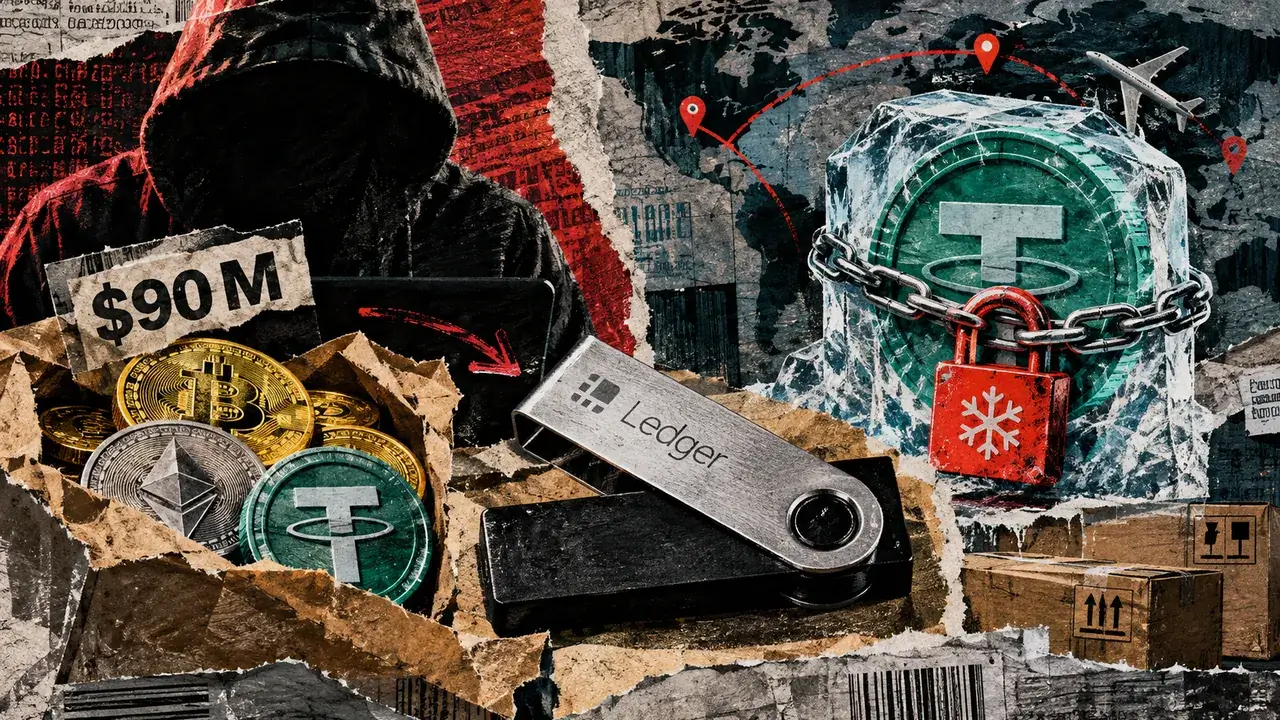
Ledger hack scare nears $90 million as Tether moves to freeze stolen USDT
Suspected Ledger wallet thefts are approaching $90 million as Tether freezes USDT stablecoin linked to the incident, according to...

Luxor’s reported 6–13% annualized Bitcoin yield depends on mining delivery
Luxor, a Bitcoin mining derivatives provider, reported a 6–13% annualized Bitcoin financing spread in its September lookback, publ...

Stealing $1.5B in crypto is easy, cashing out is the trap
North Korean hackers stole around $1.5 billion from Bybit in February 2025. While the hack itself has been widely covered and anal...

Ledger theft-linked funds shift from USDT to USDD to dodge Tether freezes
The shift from USDT to USDD underscores vulnerabilities in stablecoin freeze mechanisms, prompting scrutiny on regulatory and secu...

Tether froze 1.45 million USDT in THORChain vaults, then reversed course three hours later
The incident highlights the vulnerability of DeFi protocols to centralized issuer actions, emphasizing the need for diversified as...