Tether Unveils Open-Source Mining Libraries as Bitcoin Hyper Emerges as Top Layer 2 Contender
Tether isn’t just the issuer of the world’s largest stablecoin anymore; it is systematically rewiring the Bitcoin network’s guts. In a move challenging the proprietary grip of major hardware giants, Tether recently relea...
Archive context
Older archive item. Useful for background and entity history, but not a fresh market-moving signal.

Tether isn’t just the issuer of the world’s largest stablecoin anymore; it is systematically rewiring the Bitcoin network’s guts.
In a move challenging the proprietary grip of major hardware giants, Tether recently released open-source mining libraries designed to boost efficiency for mining rigs. By targeting the software running WhatsMiner, Avalon, and Antminer units, Tether is effectively democratizing hashrate production.
Source: X
Now, individual miners can optimize performance without relying on ‘black box’ closed-source firmware.
That signals a massive shift: Bitcoin is maturing from a speculative asset to an industrial-grade network. But there’s a catch. While Tether optimizes block creation, the usage of those blocks is still stuck in traffic.
Bitcoin’s base layer continues to struggle with slow finality and steep costs, making it impractical for the high-frequency commerce happening on Solana or Ethereum.
With a mean block time of 10 minutes and a throughput rarely exceeding 7 TPS, the mainnet simply cannot support complex smart contracts or sub-second trading. This creates a massive ‘utility gap’: while Bitcoin boasts a $1.5T market cap, the vast majority of that value remains ‘lazy’ and unable to participate in decentralized finance (DeFi) due to these L1 constraints.
Naturally, the industry’s focus is shifting from Layer 1 hardware to Layer 2 scalability. As miners hunt for better margins, investors are seeking infrastructure that can migrate this massive store of value into active, yield-bearing environments.
Amidst this pivot, Bitcoin Hyper ($HYPER) has surfaced as a clear beneficiary. By introducing a high-performance execution layer that offloads congestion from the mainnet, it serves as the essential bridge between Bitcoin’s institutional-grade security and the execution speeds required for modern finance.
Bringing Solana Speeds to Bitcoin’s Base LayerHere is the disconnect: Bitcoin is the most secure asset, but frankly, it is also the least productive. Bitcoin Hyper fixes this by integrating the Solana Virtual Machine (SVM) directly as a Bitcoin Layer 2. It’s not just another sidechain. It aims to be a modular execution environment letting developers write smart contracts in Rust while settling finality on the Bitcoin mainnet.
Source: Bitcoin Hyper
For developers, this is huge. They can finally port high-performance dApps, think gaming, lending protocols, and NFT marketplaces needing sub-second latency, without leaving the Bitcoin ecosystem. The project plans to use a decentralized Canonical Bridge to move BTC trustlessly into the L2 environment, effectively turning ‘digital gold’ into usable payment collateral.
The architecture splits the workload. Bitcoin L1 handles settlement and security; the SVM-powered L2 handles the speed. This setup tackles the blockchain ‘trilemma’ by keeping Bitcoin’s trust model intact while delivering the throughput needed for mass adoption.
As the first Bitcoin Layer 2 with this specific SVM integration, it’s catching the eye of builders who find existing solutions like Lightning a bit too limited for complex programmability.
Explore the SVM-powered ecosystem at Bitcoin Hyper.
Smart Money Targets $HYPER as Fundraising Breaks $31 MillionTechnical architecture is nice, but on-chain data tells the real story. The market has responded to the Bitcoin Hyper value proposition with serious liquidity inflows. According to the official presale page, the project has raised over $31M, a figure placing it among the cycle’s largest infrastructure raises.
Whale interest seems to be heating up alongside retail. Etherscan records show hefty whale purchases, the most notable being, $500K, $379.9K and $274K. Whilst not guarantees of anything, it shows big money is taking the project seriously and can see the potential in the project.
You can track the latest whale activity on Etherscan. With tokens currently priced at $0.013675, these aggressive buys suggest a belief that the asset is undervalued relative to its utility. See how far we think $HYPER can go in our ‘Bitcoin Hyper Price Prediction.’
The economic model is built to keep holders happy. Bitcoin Hyper offers immediate staking opportunities post-TGE (Token Generation Event) with a 7-day vesting period for presale stakers.
This setup reduces immediate sell pressure while rewarding governance participants. For investors watching capital rotate from legacy coins into functional infrastructure, the data points to a growing consensus around Hyper’s potential.
Check out the official Bitcoin Hyper presale site.
This article is for informational purposes only and does not constitute financial advice. Cryptocurrency investments, including presales and Layer 2 tokens, carry inherent risks. Always conduct independent due diligence before investing.
Why this matters
Bitcoin is showing up inside the Stablecoins theme, so this story is worth tracking for follow-through rather than treating it as a one-off headline.
Original source
Read on NewsBTCRelated market context
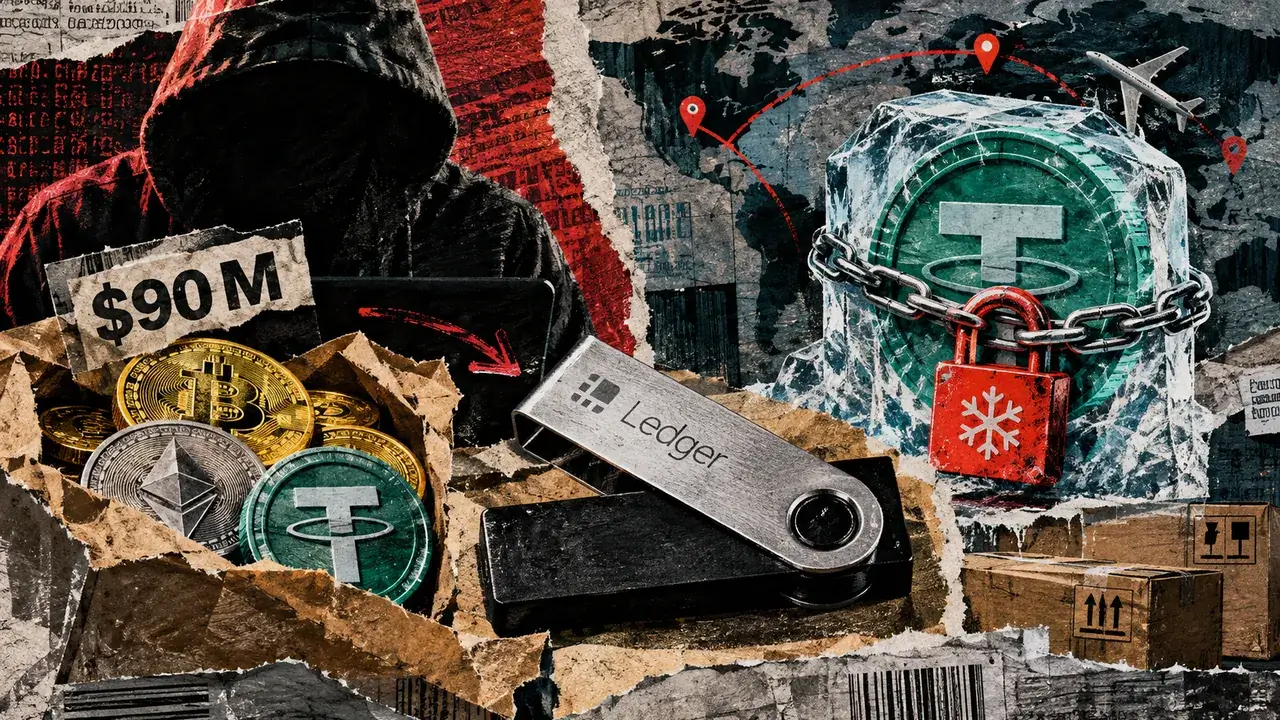
Ledger hack scare nears $90 million as Tether moves to freeze stolen USDT
Suspected Ledger wallet thefts are approaching $90 million as Tether freezes USDT stablecoin linked to the incident, according to...
Tether Freezes $1.45M in THORChain USDT Vaults, Then Reverses Blacklist Hours Later
Key Takeaways: The amount of about $1.45 million in USDT was temporarily frozen in THORChain vault addresses. According to THORCha...

Tether froze 1.45 million USDT in THORChain vaults, then reversed course three hours later
The incident highlights the vulnerability of DeFi protocols to centralized issuer actions, emphasizing the need for diversified as...

Sui’s Hashi Launches With $500M to Turn Bitcoin Into Productive DeFi Collateral Markets
Key Takeaways: With more than $500 million in locked-in tokens, Hashi will launch its phased mainnet launch. The protocol enables...

STRK rallies as Starknet weighs a move from Ethereum layer 2 to its own layer 1
Starknet's potential shift to layer 1 could redefine blockchain security priorities, challenging Ethereum's timeline and reshaping...

Ledger theft-linked funds shift from USDT to USDD to dodge Tether freezes
The shift from USDT to USDD underscores vulnerabilities in stablecoin freeze mechanisms, prompting scrutiny on regulatory and secu...