While Bitcoin’s Hashrate Grew by 22,900% in 6 Years, Discovering Block Rewards Is Far More Difficult
Over the past 12 months, Bitcoin’s hashrate has increased by 85.77%, while 53,547 blocks were mined and 334,668.75 new bitcoin were minted into circulation. More than two dozen bitcoin mining pools have dedicated hashrat...
Archive context
Older archive item. Useful for background and entity history, but not a fresh market-moving signal.
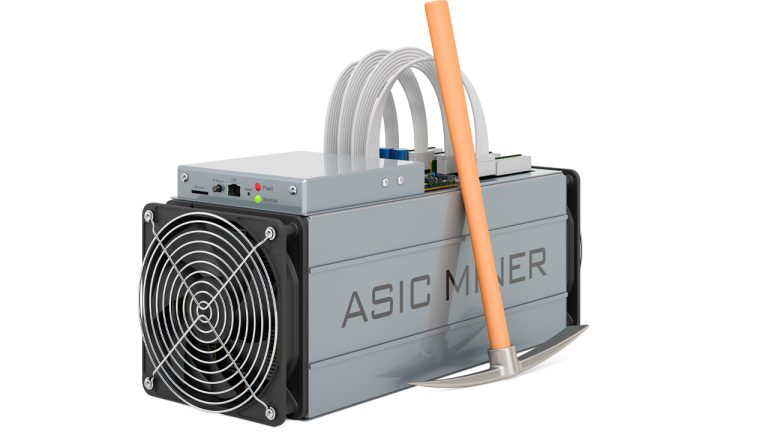
Over the past 12 months, Bitcoin’s hashrate has increased by 85.77%, while 53,547 blocks were mined and 334,668.75 new bitcoin were minted into circulation. More than two dozen bitcoin mining pools have dedicated hashrate toward the Bitcoin blockchain during the last six years, and while the hashrate is 22,900% higher, the number of bitcoins found per year is a whole lot less.
334,668 Bitcoin Minted Since September 2021 — Foundry USA Captures the Most BlocksMiners accrued just over 334,668 BTC since September 10, 2021, and 53,547 blocks were found during the past 12 months. Foundry USA has been the top mining pool out of the 28 mining pools that found blocks during the past year.
Foundry captured 18.14% of the year’s global hashrate average and found 9,716 blocks. Antpool was the second largest miner during the past year, capturing 15.31% of the global hashrate. Antpool managed to discover 8,198 blocks, or 51,237.50 BTC (not including fees) in 12 months.
Antpool is followed by F2pool’s 14.79% of the year’s hashrate, after the pool found 7,919 block rewards. Binance Pool was the year’s fourth largest mining pool with 10.72% of the 12-month hashrate average.
Binance Pool found 5,738 blocks this past year, which equates to 35.862.50 BTC (not including fees). Poolin took 10.69% of the global hashrate during the past 12 months finding 5,724 blocks. Unknown hash or stealth miners represented the 12th largest mining entity with 1.74% of the year’s global hashrate after stealth miners found 934 blocks.
Annual Block Reward Production Was the Same in 2016 and 2019, but Miners Discovered a Lot More Bitcoin Back ThenThings are a whole lot different than they were six years ago from today, as the hashrate hit 1 exahash per second (EH/s) in 2016. 27 pools were mining BTC in 2016 and 55,077 blocks were found that year.
The top mining pool in November 2016 was F2pool with 21.71% of the year’s global hashrate after it found 11,958 blocks that year. F2pool was followed by Antpool, BTCC, Bitfury, and BW.com, respectively. While the last 12 months has seen an 85.77% hashrate increase, since 2016 the hashrate has jumped 22,900% higher.
While the hashrate is a whole lot bigger than it was six years ago, the difficulty has increased a great deal as well. The number of bitcoins miners get nowadays is also much smaller. While 334,668.75 BTC was minted this past year, during the first six months of 2016, miners found 688,462.50 BTC, because the block reward was 25 BTC per block.
Moreover, during the latter half of 2016, only 344,231.25 BTC was found, but that’s still more than the 334,668 coins minted since last September. During the second half of 2016, miners got 12.5 BTC per block rather than the 6.25 BTC per-block reward miners get today and since May 2020.
In April 2019, 53,522 blocks were found that year and 669,025 new bitcoin were minted into circulation. Btc.com was the top miner at the time, after finding 10,468 blocks, and Antpool was the second largest pool, capturing 7,122 blocks in 2019.
While unknown hashrate represented 1.74% of the past year’s hashpower, in 2016 stealth miners were virtually non-existent. In April 2019, however, unknown hashrate captured 3.76% of the global hashrate during the 12-month span and found 2,013 blocks that year.
Despite the fact that miners get a lot fewer bitcoins per block than they did three years ago or six years ago, the price is higher, creating enough equilibrium to where miners still profit with all the expenditures they put into mining.
In February 2019, bitcoin’s price was $3,464 per BTC and the USD value at the time made it so only a few mining rigs were profitable. Using Bitcoin’s February 2019 difficulty metric, the price, and $0.12 per kilowatt-hour in electricity costs, only three SHA256 mining rigs were profitable.
What do you think about the last 12 months of bitcoin block production? Let us know what you think about this subject in the comments section below.
Why this matters
This mining story adds another data point to the current market tape and is useful when read alongside nearby source coverage.
Original source
Read on Bitcoin NewsRelated market context
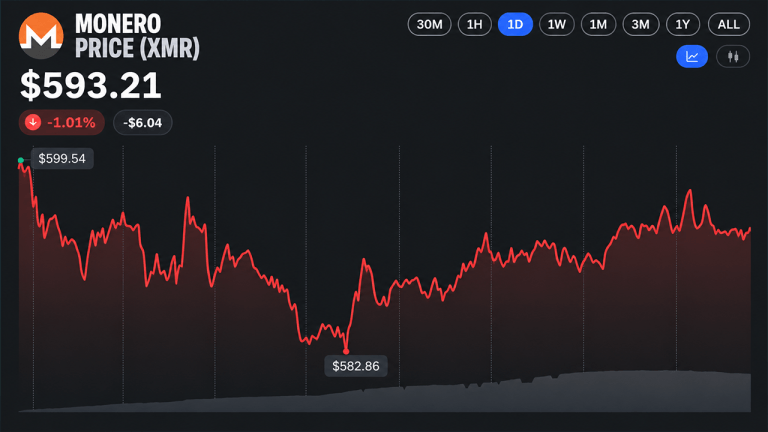
Monero Hashrate Nears Record Highs as XMR Price Gains 70% in a Year
Monero’s network hashrate is hovering near historic highs, but its mining distribution tells an equally compelling story. On Monda...

Blockstream Executive Peter Bain: Institutional Clients Say Bitcoin “Poised for a Big Bull Run”
▶Bitcoin Magazine Blockstream Executive Peter Bain: Institutional Clients Say Bitcoin “Poised for a Big Bull Run” Bitcoin is holdi...
Bitcoin’s 7-Day Hashrate Returns to 1 ZH/s After Nearly 8 Months
Bitcoin’s computational firepower, measured by its network hashrate, has reclaimed the 1 zettahash per second (ZH/s) threshold, wi...

Passport Wallet Maker Foundation Traces Phishing Emails to Backend Breach, Promises Report
Foundation, the company behind the Passport bitcoin hardware wallet, said customer funds and devices are safe after attackers sent...

Stablecoin deposits in DeFi hit $24B, up 560.8% in three years
The surge in DeFi stablecoin deposits highlights growing trust in decentralized finance, yet potential risks and market shifts rem...

Muneeb Ali says Bitcoin has about two years to start its post-quantum upgrade
Bitcoin's post-quantum upgrade could reshape transaction dynamics, pushing more activity off-chain and impacting fee structures si...