Invictus NFT Lab Blazes Trail for a New Fine Art Paradigm
In our view, blockchain technology and non-fungible tokens (NFTs) present a perfect tool to revolutionize the traditional Fine Art industry, to the benefit of both artists and collectors. With this in mind, the Invictus...
Archive context
Older archive item. Useful for background and entity history, but not a fresh market-moving signal.
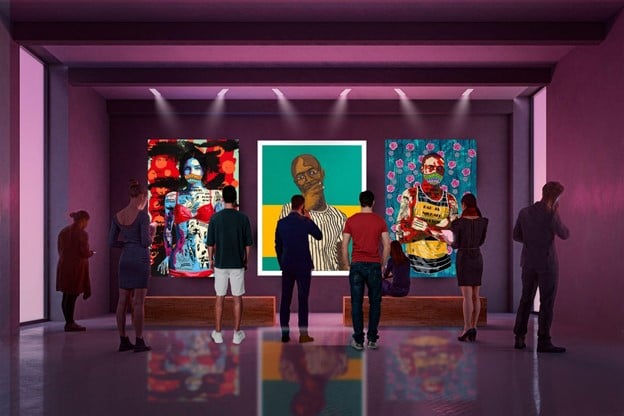
In our view, blockchain technology and non-fungible tokens (NFTs) present a perfect tool to revolutionize the traditional Fine Art industry, to the benefit of both artists and collectors. With this in mind, the Invictus NFT Lab’s inaugural Out of Africa collection aims to blaze the trail by facilitating, via the Ethereum blockchain, the sale of a professionally-curated collection of 118 unique physical artworks from Southern Africa’s top artistic talent.

Throughout history, major socioeconomic change has largely only taken place as new generations displace older generations that are more set in their ways. Often these changes are necessitated or enabled by technological development. For Millenials and Gen Z, growing up in a period that has seen computers, the internet and smartphones revolutionize our way of life has left these generations to look with skepticism at many traditional institutions that have failed to adapt.
The world of Fine Art is a sphere that is dangerously at risk of falling behind. A static business model unchanged in decades passes on significant middleman costs — hampering the market’s ability to attract new demand, ultimately resulting in unfulfilled artistic potential.
A generational divide
Around the world, younger generations currently control a tiny share of global wealth — with the Baby Boomer generation controlling over half of all wealth in the US. This is set to change over the coming decades wealth is passed on to the younger generations via inheritance.
When we consider that:
- The younger generations are familiar with ascribing value to assets for collectible value and exclusivity — as evidenced by crazes around collectibles such as rare Pokemon cards and purely cosmetic items in online games that fetch astronomic prices.
- These generations are far more comfortable with new online technology, including cryptocurrencies and NFTs, than their parents.
It becomes clear to see that much of this wealth will find its way into this new class of digital assets.
Blockchain brings benefits
Up until now, the NFT industry has tapped into a relatively niche sphere of demand for digital art and collections of generative NFT avatars, such as CryptoPunks or Bored Apes. However, adopting NFTs to serve as transferable certificates of ownership for physical Fine Art can provide key benefits for both artists and collectors. This is the approach we are taking with the Out of Africa collection.
The first improvement relates to driving down costs and improving industry efficiency. Galleries and auction houses provide valuable services to industry participants, however, these premium businesses come with high overheads — necessitating large middlemen costs on art transactions. These are often charged to both the purchaser and seller. Delivery costs can also add to a buyers’ final price — even if the artwork is purchased as an investment, with no desire to display the art.
Blockchain provides an opportunity to aggressively drive down these costs, while preserving sufficient margins for traditional galleries and auction houses to continue operating. For secondary market sales of NFTs in the Out of Africa collection, a total of 10% of the sales price is taken by the protocol, however, instead of finding its way into the sales platforms’ hands, the distribution is far more equitable — with the community and artists sharing in these spoils. Taking delivery is also not required if you’re holding the NFT purely as a speculative investment, and the NFT can be sold on to a new owner who can then elect to take delivery (or not).

The second addressable issue is opacity and concerns around provenance. With over half of all art sales private transactions, it becomes difficult to get a sense of what a fair market valuation for an artwork may be, as it’s not possible to see the sales history in many cases. Furthermore, even in public sales such as auctions, bidders’ identities are often not revealed — leaving onlookers to question the veracity of sales that can drive exploding valuations for artists. Another area that NFT technology can improve upon concerns authenticity and provenance. Adopting the blockchain to track art transactions helps solve these issues.
Aside from these issues, other benefits include allowing for a royalty-driven revenue model for physical fine art, as well as unlocking truly global demand and helping eliminate unnecessary transport costs. This translates into greater demand and improved outcomes for artists. In the case of the Out of Africa collection, these artworks are stored securely on behalf of the NFT holder and delivery costs do not need to be incurred by the owner if they are holding for speculative purposes and do not have a need to take custody.
“The Out of Africa Collection is made up of 118 unique NFTs on the Ethereum blockchain and is the first time many of the artists have worked in the NFT space. This collection is a triumph for these artists and represents some of the finest new, upcoming and established talent.” – Marelize van Zyl, curator for the Out of Africa collection
While it’s clear that the art world is ripe for disruption, legal frameworks are still playing catch up. The Out of Africa collection is hoping to blaze a trail towards widespread acceptance of the utility that NFT technology can provide outside of digital art — and hopes to kickstart an industry revolt against unfair and inefficient practices.
If you would like to stay up to date with ongoing developments, sign up to our newsletter and follow us on our social media channels. If you’d like to learn more about how the project works, including the sales process and innovative community features (including a series of 1770 deflationary poster NFTs that you can own for free!) check out our previous Medium article or the LitePaper.
This is a sponsored post. Learn how to reach our audience here. Read disclaimer below.
Why this matters
This nft story adds another data point to the current market tape and is useful when read alongside nearby source coverage.
Original source
Read on Bitcoin NewsRelated market context
Retail Sales and Fed Minutes Put Bitcoin’s Rate Outlook Back in Focus
TL;DR October US retail sales are scheduled for November 17 at 8:30 a.m. ET / 13:30 GMT. Minutes of the October 27–28 Fed meeting...

The Role of Cryptocurrency in Digital Entertainment
Cryptocurrency is no longer limited to assets such as Bitcoin or activities such as trading and price speculation. In recent years...
Sam Altman’s ChatGPT AI Predicts an Explosive 2027 for ETH
Ethereum trades near $1,780–$1,820 in mid-November 2026, well below its 2025 peak. Yet Sam Altman’s ChatGPT AI predicts a single t...
Solana data storage costs set to drop 7x in two weeks, says Anza CEO
Lower Solana storage costs could significantly boost developer activity and innovation, enhancing the network's scalability and ut...
Bitcoin Policy Institute Renames to Finney Foundation for Open Technology
Bitcoin Magazine Bitcoin Policy Institute Renames to Finney Foundation for Open Technology The Bitcoin Policy Institute announced...
“We Need to Change Our Management”: Ricardo Salinas on Mexico’s Future, Bukele and Bitcoin
Bitcoin Magazine “We Need to Change Our Management”: Ricardo Salinas on Mexico’s Future, Bukele and Bitcoin Key Takeaways • Mexico...