Real-world assets could revitalize dying NFT lending market: DappRadar
Real-world assets linking up with non-fungible tokens (NFTs) is one of a few key catalysts that could reignite the waning NFT lending sector, which is suffering from a collapse in volumes and user activity, says blockcha...
Archive context
Older archive item. Useful for background and entity history, but not a fresh market-moving signal.
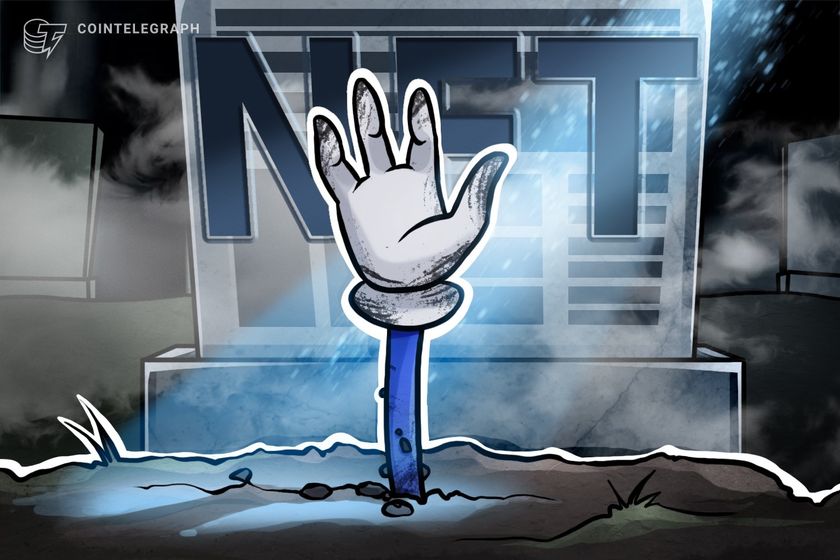
Real-world assets linking up with non-fungible tokens (NFTs) is one of a few key catalysts that could reignite the waning NFT lending sector, which is suffering from a collapse in volumes and user activity, says blockchain analytics platform DappRadar.
Volumes in the NFT lending market, which allows NFT holders to take out a loan against their token, have dropped 97% from a peak of around $1 billion in January 2024 to $50 million in May, DappRadar analyst Sara Gherghelas said in a May 27 report.
Gherghelas said for NFT lending to “move beyond survival mode,” it needs “new catalysts” to reignite the sector, such as real-world asset NFTs, like tokenized real estate or yield-bearing assets that could unlock more stable, trusted collateral sources.
“So far, 2025 has not delivered a compelling reason for NFT lending to bounce back,” she said. “While the infrastructure is still here and the platforms remain active, activity has slowed across the board.”
Borrower and leading activity have taken a big hit in the NFT lending sector. Source: DappRadar“For now, the sector seems to be in a holding pattern, waiting either for market recovery or a new use case to reignite interest.”
Gherghelas added that other catalysts that could rekindle NFT lending were tools that make it easier for NFT holders to borrow against their tokens, and that protocols should create “smart infrastructure” such as undercollateralized loans, credit scores and artificial intelligence risk matching.
The report adds that since January last year, borrower activity has declined by 90% and those willing to lend have shrunk by 78%.
The average NFT loan size has also taken a hit from a peak of $22,000 in 2022 to $4,000 in May, a 71% year-over-year drop.
Gherghelas said this shift “shows that either users are borrowing against lower-value assets or simply becoming more conservative with leverage.”
NFT lending overall trading volume and market activity have dropped off from the all-time highs of past years. Source: DappRadarThe average loan duration is also lower; after hitting an average of roughly 40 days in 2023, it’s been down to 31 days and has held steady throughout 2024 and into 2025.
Gherghelas said this could indicate that “loans are being taken more frequently but for shorter periods, perhaps a sign of more tactical liquidity plays.”
NFT market downturn also hurts lendingPart of the slowdown in NFT lending is connected to the overall NFT market decline, which has seen volumes drop 61% in the first quarter to $1.5 billion compared to $4.1 billion a year ago.
“With collateral value collapsing, the lending activity naturally followed,” Gherghelas said. “There are a few exceptions that managed to hold or regain traction, but they’ve been outliers, not enough to lift the sector.”
Related: AI decentralized apps are coming for the Web3 throne: DappRadar
The protocol landscape has also narrowed, and the number of active NFT lending apps is limited, with only eight protocols holding any meaningful share.
“The flip-for-liquidity model that worked during bull markets isn’t built for a quieter, more risk-averse environment. But that doesn’t mean NFT lending is finished; it’s simply shifting focus,” Gherghelas said.
“Platforms are diversifying, use cases are shifting, and collateral preferences are changing. If the next wave builds on utility, culture, and better design, NFT lending might just find its second wind — one built to last.”
Magazine: Bitcoin bears eye $69K, CZ denies WLF ‘fixer’ rumors: Hodler’s Digest, May 18 – 24
Why this matters
This nft story adds another data point to the current market tape and is useful when read alongside nearby source coverage.
Original source
Read on CointelegraphRelated market context

Strategy Bitcoin vs. BitMine Ethereum: Which Crypto Treasury Is Better Positioned for a Market Recovery?
Strategy is buying more Bitcoin while Tom Lee’s BitMine keeps loading up on Ethereum. Both companies are doubling down as crypto p...

Sam Altman’s ChatGPT AI Predicts a Crazy ADA Crypto Price
Building on the recent Cradano mainnet activation of CIP-0113 (which allows issuers to embed transfer restrictions, identity rules...

CoinGecko Gets Solana Foundation Backing and Plans Solana-Powered Trading
CoinGecko, one of the most widely used crypto price and market data sites, has a new backer in the Solana Foundation, the nonprofi...

Bitrue Research Institute Releases Report Finding Growing Interest in AI-Assisted Crypto Trading
San Jose, Costa RIca, November 17th, 2026, Chainwire Bitrue Research Institute report pairs the survey with open-source data showi...
“We Need to Change Our Management”: Ricardo Salinas on Mexico’s Future, Bukele and Bitcoin
Bitcoin Magazine “We Need to Change Our Management”: Ricardo Salinas on Mexico’s Future, Bukele and Bitcoin Key Takeaways • Mexico...
Evernorth’s XRP Treasury Carries $505 Million of Write-Downs Under an Unusual Accounting Rule
TL;DR The SEC filing shows roughly $505 million in accumulated write-downs on a large pre-listing XRP holding. Evernorth’s carryin...