Advanced Forex Robot Solutions for Consistent Trade Execution
Between escalating US-Iran rhetoric, shifting central bank policies and ongoing trade disputes, the forex market is moving fast and punishing hesitation.And for those of us trying to keep up, the pressure on execution co...
Archive context
Older archive item. Useful for background and entity history, but not a fresh market-moving signal.

Between escalating US-Iran rhetoric, shifting central bank policies and ongoing trade disputes, the forex market is moving fast and punishing hesitation.And for those of us trying to keep up, the pressure on execution consistency has never been higher.
This is where a reliable forex robot trading solution earns its place. When volatility clusters and headlines shift by the hour, an automated system follows its logic without flinching. It doesn’t second-guess a stop-loss at 2am or chase a move it missed at the London open. It runs the plan.
What follows is a closer look at how advanced forex robots use adaptive execution, real-time risk controls and multi-pair strategies to keep traders on track when markets would rather knock them off it.
Why Volatility Rewards the DisciplinedThe Bank for International Settlements confirmed in its 2025 Triennial Survey that daily FX turnover reached $9.6 trillion in April 2025, up 28% from $7.5 trillion three years earlier. That survey was conducted during a period of elevated volatility triggered by major trade policy announcements. FX spot alone accounted for $3 trillion a day.
Those numbers keep climbing. Entering 2026, FX and commodity volatility remain elevated as dollar weakness, uneven inflation dynamics and geopolitical friction collide. When volume surges like this, the gap between what a trader plans to do and what they actually do under pressure gets wider.
A disciplined system doesn’t have that gap. It reads its parameters, checks conditions and executes, whether the trigger fires during a quiet Asian session or in the middle of a rate decision. There’s no ‘I’ll wait for the next candle.’ In a market printing $9.6 trillion a day, that kind of consistency matters more than being right on any single trade.
Rigid Rules to Real-Time AdaptationThere’s a common misconception that forex robots are ‘set and forget’ tools running the same fixed logic regardless of conditions. That might have been true ten years ago. In 2026, the most capable EAs work very differently.
A BIS Markets Committee report on FX execution algorithms documents this progression. Early algorithms were mechanical; they sliced large orders into evenly sized pieces at regular intervals. Today’s adaptive versions respond dynamically to real-time changes in market conditions. The same report estimates that execution algorithms account for $200–400 billion in daily FX spot turnover globally.
This change is also seen in the larger industry. Research and Markets issued a study in March 2026 that says the algorithmic trading industry would expand from $21.89 billion in 2025 to $25.04 billion in 2026 .Most advanced forex robots have a few basic features in common:
- Position sizing that changes based on how volatile the market is
- Watching the spread conditions and liquidity depth in real time
- Execution of several pairs in both connected and unrelated markets
- Changing stop-loss and take-profit levels based on factors like Average True Range
- Logic that knows what session it is and can tell the difference between high-liquidity overlaps and quieter times
When ATR goes up swiftly around a central bank decision or a non-farm payrolls statement, a well-designed EA increases its stop distances and decreases the size of its positions. When volatility goes down, it tightens stops and changes its strategy to match. The system reads the room before acting.
It’s worth noting that the institutional world adopted adaptive execution years ago. Retail traders are only now gaining access to tools built on similar principles, and that access is growing quickly.
Consistency Over PredictionHere’s the part most traders already know but struggle to act on. Regulatory data from ESMA, the FCA, and the CFTC consistently shows that between 70% and 89% of retail forex traders lose money. The reasons are well documented.
Behavioural finance research tells us that losses feel roughly 2 to 2.5 times more painful than equivalent gains. In trading, that asymmetry creates predictable mistakes: holding losing positions too long, hoping for a reversal, cutting profitable trades too early to lock something in, and revenge trading after a drawdown. Stress has a measurable negative correlation with returns, and most retail traders operate under far more of it than they realise.
A forex robot doesn’t feel the sting of a losing trade. It doesn’t get greedy after three winners in a row. It doesn’t overtrade because the market is ‘feeling active.’ It applies the same risk parameters always.
If most retail traders already know what good execution looks like but consistently fail to deliver it under pressure, the logical step is to let a properly configured system handle that part of the process.
The Structural Bet Worth MakingThe thread running through all of this is straightforward. The forex market in 2026 is volatile, fast-moving and shaped by forces that are genuinely difficult to predict. Record daily turnover confirms the scale, JPMorgan’s survey confirms the uncertainty and the data on retail trader psychology confirms that human execution breaks down exactly when it matters most.
Advanced forex robots address each of those pressure points. They operate without emotional interference, adapt to changing conditions and execute across multiple pairs and sessions with a consistency that manual trading struggles to match.
With the algorithmic trading sector on a trajectory that analysts project will roughly double by the end of the decade, the tools available to individual traders will only become sharper and more accessible. And in a market that rewards consistency above all else, are you better served by your own discipline under fire, or by a system specifically designed to stay disciplined for you?
This is a sponsored article. Opinions expressed are solely those of the sponsor and readers should conduct their own due diligence before taking any action based on information presented in this article.
Why this matters
CFTC is showing up inside the Regulation theme, so this story is worth tracking for follow-through rather than treating it as a one-off headline.
Original source
Read on Brave New CoinRelated market context

What happens when crypto trades stocks while Wall Street sleeps?
Wall Street closes at 4 p.m., but apparently that's becoming more of a suggestion than a rule. You can now spend the evening watch...

What Is Crypto Spot Trading?
For example, a token can be up 70% and still be a terrible trade if you have no idea when to take profits. Likewise, a 30% dip can...

Coinbase Completes Deribit Integration for Institutional Traders
Former International Exchange clients gain Deribit's options suite and margin system, while US Prime options trading follows a sep...

Bitcoin hedge funds face a liquidation trap when their collateral is split across markets
Here's a hypothetical situation: a hedge fund is making money, but one of its exchanges is about to liquidate its position anyway....
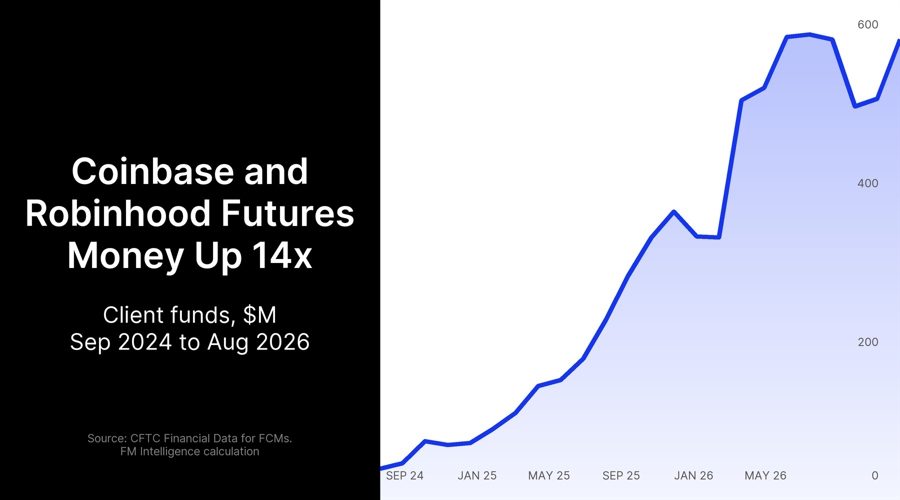
Coinbase and Robinhood Futures Arms Now Hold More Client Money Than the US Retail Forex Pool
The futures brokers of Coinbase and Robinhood held $581.4 million of segregated client money at the end of August. That is more th...
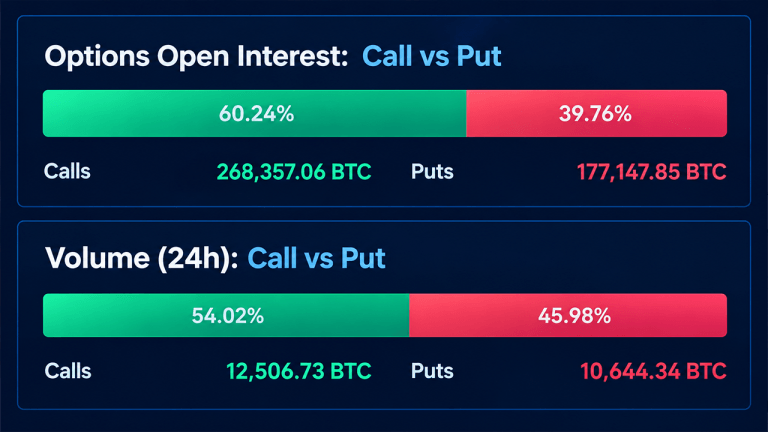
Bitcoin Traders Stack $4.5 Billion in Calls as $95K Bets Take Shape
Bitcoin’s options market is sending a curious message. With bitcoin trading above $82,000, calls account for 60.24% of outstanding...