Alex Mashinsky Pleads Guilty
The Rise and Fall of Celsius Network Established in 2017, Celsius Network positioned itself as a crypto lending platform, offering users high interest rates on their digital asset deposits. At its zenith, Celsius managed...
Archive context
Older archive item. Useful for background and entity history, but not a fresh market-moving signal.

Established in 2017, Celsius Network positioned itself as a crypto lending platform, offering users high interest rates on their digital asset deposits. At its zenith, Celsius managed approximately $25 billion in assets, attracting a substantial retail investor base. However, the crypto market downturn in 2022 led to a surge in withdrawal requests, culminating in Celsius halting customer withdrawals in June 2022 and filing for bankruptcy the following month. The bankruptcy filings unveiled a staggering $1.2 billion deficit, leaving many investors in financial distress.
Source: X
Mashinsky’s Legal TroublesIn July 2023, Mashinsky faced a seven-count indictment, including charges of fraud, conspiracy, and market manipulation. Prosecutors alleged that he misled investors about Celsius’s financial health and engaged in schemes to artificially inflate the value of the company’s proprietary token, CEL. Notably, Mashinsky was accused of personally profiting approximately $42 million from these activities.
Initially pleading not guilty, Mashinsky reversed his stance during a December 3, 2024, hearing according to Reuters. He admitted to providing false assurances regarding regulatory approvals and failing to disclose his personal sales of CEL tokens. Expressing remorse, Mashinsky stated, “I know what I did was wrong, and I want to try to do whatever I can to make it right.”
Under the plea agreement, Mashinsky faces a maximum sentence of 30 years in prison, with sentencing scheduled for April 8, 2025. This case is part of a broader crackdown on fraudulent activities within the cryptocurrency industry, highlighting the increasing regulatory scrutiny and the imperative for transparency and accountability.
The Aftermath for Celsius and Its InvestorsFollowing its bankruptcy, Celsius has been navigating the complex process of restructuring and attempting to compensate affected investors. The company’s downfall serves as a cautionary tale about the risks inherent in the rapidly evolving crypto lending space, emphasizing the necessity for robust regulatory frameworks to protect investors and maintain market integrity.
Mashinsky’s guilty plea underscores the potential consequences of deceptive practices in the financial sector, reinforcing the message that fraudulent behavior will be met with significant legal repercussions.
Why this matters
This research story adds another data point to the current market tape and is useful when read alongside nearby source coverage.
Original source
Read on Brave New CoinRelated market context
Circle mints approximately $3.5 billion USDC on Solana in the past seven days
Circle's USDC minting on Solana may boost liquidity and network activity, potentially influencing Solana's market dynamics and pri...

SUI Crypto Up +2% Following $30M DATA Network Investment
SUI crypto trades at $1.12, up +2.2% over 24 hours, as traders weigh a sharp recent rebound against overhead resistance. The Sui F...

State of TRON Q3 2026 Report Highlights $2.21 Trillion in Stablecoin Settlement Amid Network Activity Growth
Geneva, Switzerland, October 12, 2026 — TRON DAO, the community-governed DAO dedicated to accelerating the decentralization of the...
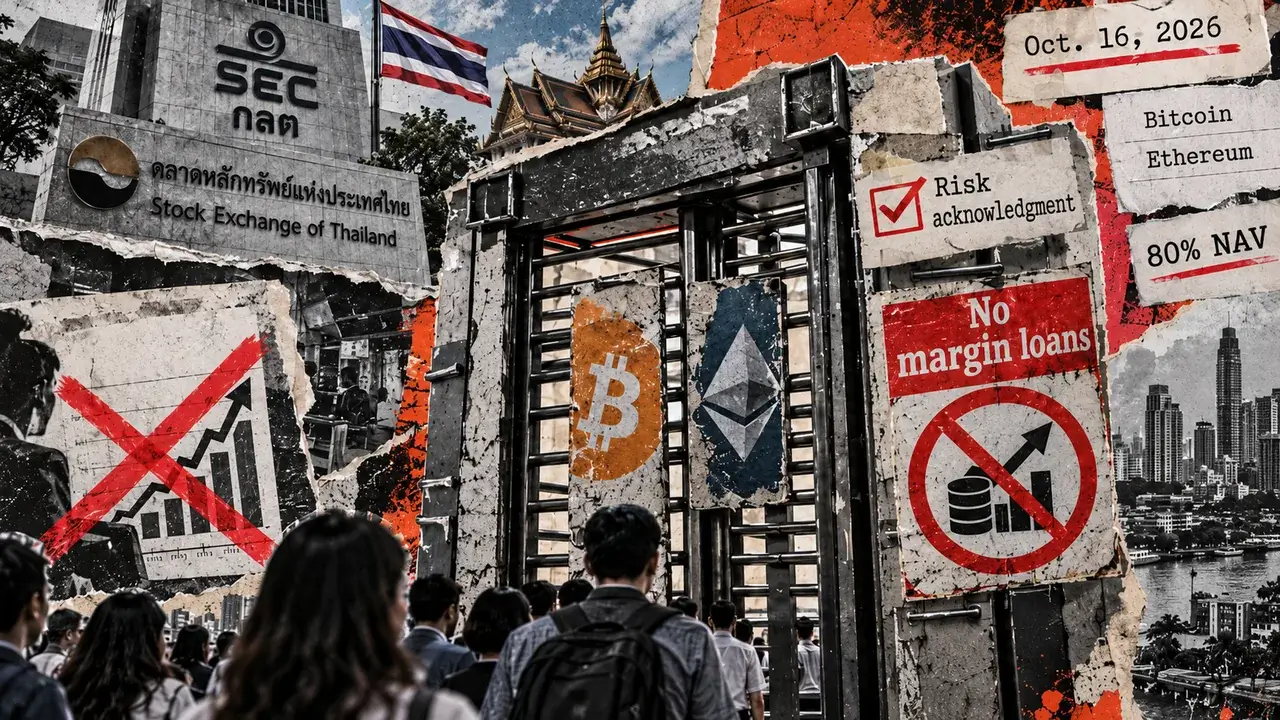
Thailand wants a piece of the $120 billion Bitcoin and Ethereum ETF market, but on its own terms
Thailand has finalized rules allowing domestic Bitcoin and Ethereum ETFs while restricting retail access to competing overseas inv...

China Crypto Strategy Expands as Beijing Backs National Blockchain Network
China announced crypto plans for a national blockchain network. The proposal appeared in a policy document from the Communist Part...

FTX’s former Bitcoin mining bet gets new life as parent raises €800 million for AI
SWI Group has raised €800 million to expand AI infrastructure, advancing its plan to repurpose FTX-backed Bitcoin miner Genesis Di...