All Eyes Are On The Consumer Price Index
The consumer price index will define market moves and the new Magma protocol on the Lighting Network will allow Bitcoin to grow even bigger.This is a transcribed excerpt of the “Bitcoin Magazine Podcast,” hosted by P and...
Archive context
Older archive item. Useful for background and entity history, but not a fresh market-moving signal.
The consumer price index will define market moves and the new Magma protocol on the Lighting Network will allow Bitcoin to grow even bigger.
This is a transcribed excerpt of the “Bitcoin Magazine Podcast,” hosted by P and Q. In this episode, they are joined by Joe Consorti to talk about inflation and exciting new developments on the Lightning Network.
Watch This Episode On YouTube Or Rumble
Listen To The Episode Here:
Q: Specifically, you guys at the Bitcoin Layer spend so much more time focusing on bonds and interest rates. What are you guys seeing? What are you guys paying attention to? What is your definition of a recession?
Joe Consorti: There are a couple of things we're monitoring, right? Again, we use rates to lead all of our discussion, but there's also a few key economic releases this week that will, as you mentioned, push us closer to a recession. As of right now, the expected consumer price index is 8.7% year-on-year and that's releasing August 10, 2022. Any miss on CPI whatsoever, and a miss to the upside, that'd be very bad.
That would basically give the Federal Reserve the green light to absolutely decimate the economy in terms of continuing the rate hikes, pushing for a higher terminal rate, pushing for a terminal rate that's further out. Basically, before the labor report, there was consensus in the market. There was, to a pretty large degree, [the idea] that the Fed was going to have to wrap up relatively soon, specifically because, taking a look at the two-year yield, that was coming down. Essentially, the two-year yield leads Fed funds. So the two-year yield is forward policy-rate expectations. And so when, wherever that moves, the Fed essentially has to move.
The two-year yield was coming down because presumably the rate market was telling the Fed, “Hey, it seems you've already tightened enough,” but with the strong labor report, that basically is the Fed's first green light that they can continue hiking higher and, potentially into Q1 2023, because the economy seems stronger than we anticipated.
Obviously, their mandate is to kill inflation. If the CPI print comes in hot, if it accelerates year-on-year, those are nightmare scenarios that would basically give the Fed full steam ahead. Their runway was already extended. Seeing that we have a strong labor market, a CPI miss would give the Fed full steam ahead to just absolutely plow the markets and say, “Alright, 3.5% terminal rate in Q1, naw, we're going for 4%.” Which obviously isn't a sustainable thing, CPI accelerating, that's their number one concern right now. So all eyes are on CPI on Wednesday.
That's one of the big things we're watching right now, but take a look at rates. As I mentioned, the two-year yield really leads the Fed. If you take a look at a graph of the two-year yield mapped against the federal funds rate, you could really see that when the two-year yield falls below the federal funds rate, the Fed is forced to pause their cycle.
As of right now, there's a 71 basis point or 0.71% spread between the two-year yield and fed funds. So, the Fed still has 71 basis points of clearance to continue hiking. If all of a sudden, the two-year yield were to fall pretty expeditiously, that could happen if CPI prints the way we want it to. The two-year yield could begin its descent back down to Earth because that's the market basically saying, all right, Fed, you've done enough work: CPI is decelerating. Then that would be the case for the Fed pausing after September potentially, and then we'll see what the two-year yield does. Essentially that's one of the big things we're monitoring.
We're also monitoring the 10-year yield, which represents forward growth and inflation expectations. If that's coming down, that's also the market signaling that they feel the Fed has done enough work to slow down inflation and slow down the economy. That’s begun to sell off again in the recent couple of weeks and the yield on that has bounced up from a low of 2.5%, which we actually called over the Bitcoin Layer a couple of months ago. It’s bounced back up to 2.7% now. This is mirroring what the economy believes growth and inflation to be. If we get a CPI miss then you could probably see this climb a little bit higher.
We’re also watching five-year, five-year inflation swaps, which are inflation expectations for six to 10 years out. That’s actually one of the instruments that the Fed watches to see if they're doing their job on fighting inflation. Those have started actually coming down in the last week. There are several different signals, basically all going back to this same road of, If the economy is still rip-roaring hot, we got this jobs report. If the economy is still rip-roaring hot from a consumer price index inflation standpoint, then the Fed could really put on their hats and hunker down with the hikes.
That's basically all we're watching right now. The two-year yield is still trading relatively wide above the federal funds [rate], but basically monitoring that. That is the most important thing to be monitoring: The relationship between the two-year treasury yield and the federal funds rate.
That is our signal for when the Fed is going to pause. People are calling for a pivot. I believe too soon. They forget that there is an intermediary phase between a hike cycle and a pivot, and that is a pause. Chances are, if things play out as I believe, we might be looking at a pause. Sooner than most think. I think people are conflating a pause and a pivot. A pause is far more likely than a pivot would be. If we have this massive, awful deflationary spike, asset surprises get sent through the floor, yeah, you'd get a pivot. But if the economy slows down, like the Fed wants to, you get a pause and you normalize around wherever we are now, right? Wherever they end up at 2.75% or 3%. Long-winded but that's essentially what we're looking at, what my personal market expectations are moving into CPI on Wednesday, all eyes on CPI.
Why this matters
This research story adds another data point to the current market tape and is useful when read alongside nearby source coverage.
Original source
Read on Bitcoin MagazineRelated market context

Ethereum Layer 2 Blast Is Shutting Down, Saying Costs Now Exceed What the Chain Earns
Blast, the Ethereum layer 2 network created by Blur founder Tieshun “Pacman” Roquerre, is shutting down, its team announced on X o...

Authors Withdraw Ethereum Staking Reward Burn Plan From Hegota Upgrade, Seek Separate Process
A proposal to burn a growing share of Ethereum staking rewards will not be part of the network’s Hegota upgrade. Ethereum France p...

Tokenized Stocks, Investor Rights, and Their Crypto Role
Tokenized stocks could give crypto-native investors access to equity exposure through crypto platforms, but a token that tracks a...
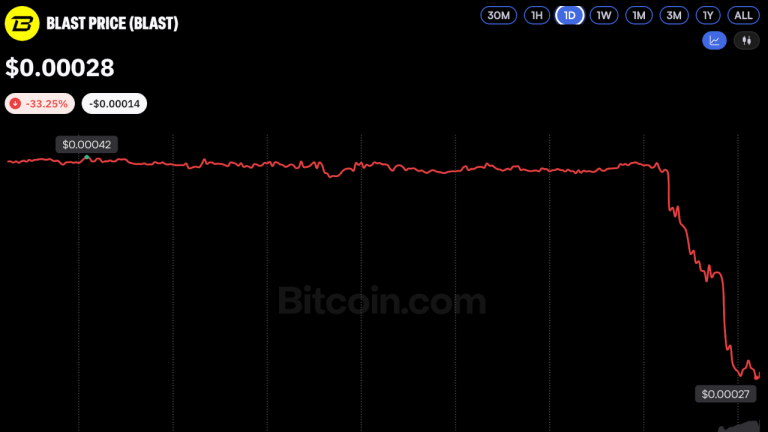
Ethereum Layer 2 Network Blast to Shut Down After Revenue Collapse
Blast, a once-buzzy Ethereum Layer 2 network, is set to shut down later this month after a dramatic decline in activity left the s...

Once a $2 billion Ethereum layer-2, Blast is shutting down after assets plunge 98%
Once home to more than $2 billion in crypto assets, Blast is shutting down as activity fades, costs rise, and bigger platforms lik...
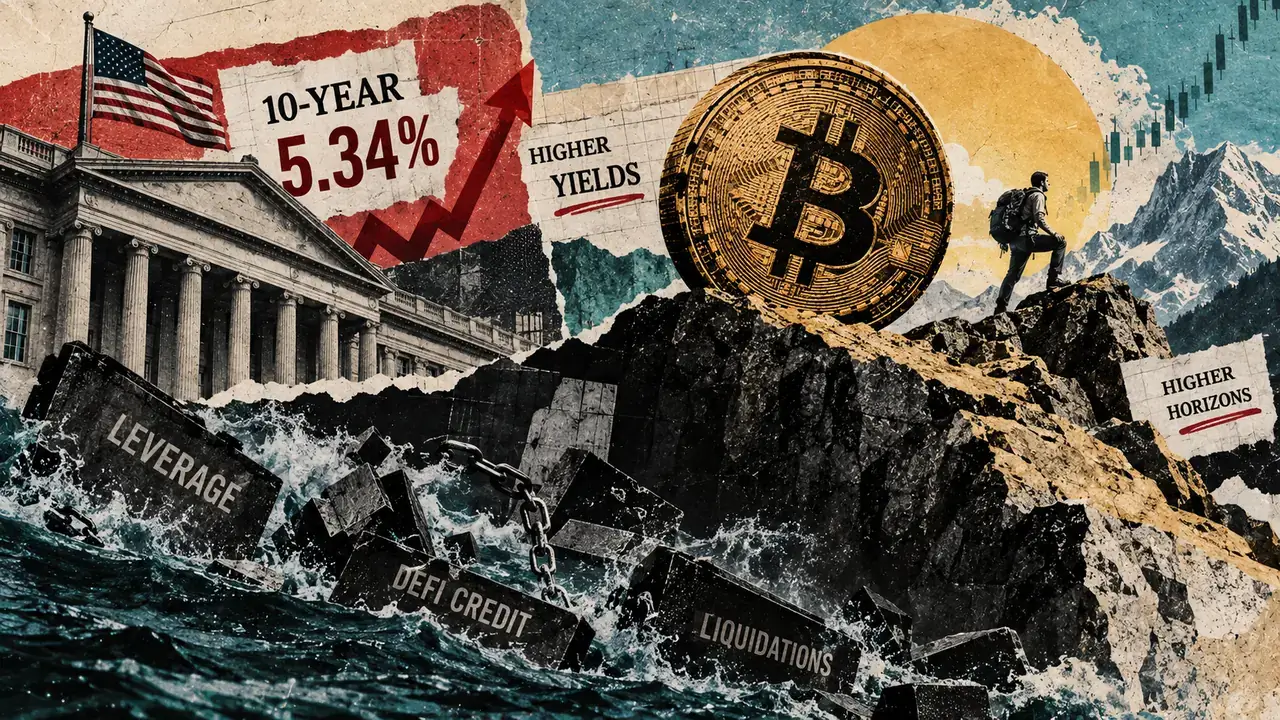
Bitcoin survived 5% yields but crypto’s cheap-money era did not
The US 10-year Treasury yield touched 5.34% on Oct. 1, its highest since 2002, capping a third quarter in which it climbed almost...