Blockcast – The Future of Content Delivery
Why you should listen Blockcast is a cutting-edge content delivery network (CDN) that utilizes multicast technology to revolutionize internet content distribution. Unlike traditional centralized CDNs, Blockcast operates...
Archive context
Older archive item. Useful for background and entity history, but not a fresh market-moving signal.

Blockcast is a cutting-edge content delivery network (CDN) that utilizes multicast technology to revolutionize internet content distribution. Unlike traditional centralized CDNs, Blockcast operates through a decentralized caching architecture. This approach aggregates capacity from a global network of nodes, enabling content providers, such as streaming platforms and gaming companies, to deliver high-quality experiences more efficiently. By leveraging this decentralized framework, Blockcast reduces delivery costs and extends its reach to even the most remote areas.
At the core of Blockcast’s offering is its Multicast Adaptive HTTP Proxy technology. This enables one-to-many content delivery, optimizing bandwidth usage and alleviating network congestion. Blockcast is creating a Capacity Marketplace where content providers can purchase delivery capacity from a diverse range of network operators, including ISPs, over-the-air broadcasters (ATSC, 5G, DVB, and satellite), and individual users hosting caching nodes. This system not only maximizes resource utilization but also opens up new revenue streams for participants.
Blockcast’s decentralized caching nodes play a vital role in enhancing content delivery speed and reliability. Individuals and organizations are incentivized to host these nodes through Web3 token rewards, encouraging widespread participation and bolstering the network’s robustness. The benefits of this setup extend across various stakeholders. Content providers can cut delivery expenses while maintaining high-quality service and expanding into underserved regions. The multicast capabilities further allow for the efficient delivery of high-resolution content like 4K streaming without additional cost burdens.
Broadcasters, including ATSC 3.0 television stations, cellular carriers, and satellite operators, can capitalize on their existing infrastructure by contributing data channel capacity to Blockcast. This not only helps them generate new revenue streams but also allows them to participate actively in the evolving digital content ecosystem. Similarly, CDNs and ISPs gain an opportunity to extend their capacity and reach, especially in geographies where deploying traditional infrastructure may not be economically feasible.
In April 2024, Blockcast joined the Advanced Television Systems Committee (ATSC) to support the development of ATSC 3.0 technologies. This collaboration underscores Blockcast’s dedication to mitigating network congestion and inefficiencies tied to unicast content delivery. By integrating over-the-air digital technologies, Blockcast is positioned at the forefront of content distribution innovation.
Blockcast’s decentralized approach addresses key challenges in the content delivery space, including high costs, network congestion, and infrastructure limitations. Its scalable solution is well-suited for the increasing demands of today’s digital content consumers, providing an efficient, cost-effective alternative to traditional CDNs.
Supporting linksIf you enjoyed the show please subscribe to the Crypto Conversation and give us a 5-star rating and a positive review in whatever podcast app you are using.
Why this matters
This research story adds another data point to the current market tape and is useful when read alongside nearby source coverage.
Original source
Read on Brave New CoinRelated market context
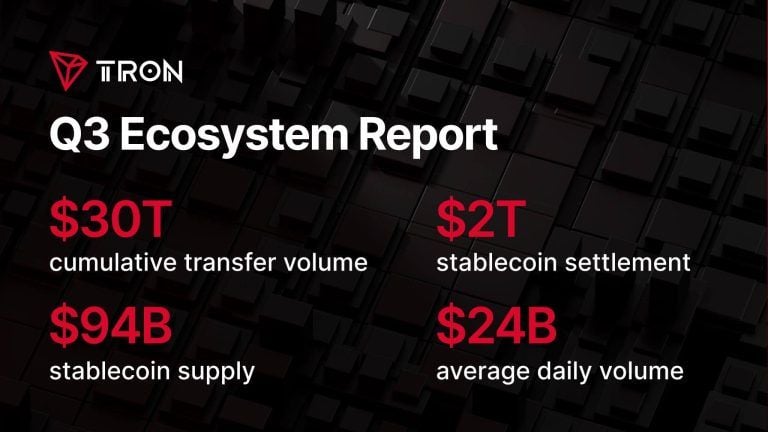
State of TRON Q3 2026 Report Highlights $2.21 Trillion in Stablecoin Settlement Amid Network Activity Growth
Geneva, Switzerland, October 12, 2026 — TRON DAO, the community-governed DAO dedicated to accelerating the decentralization of the...

State of TRON Q3 2026 Report Highlights $2.21 Trillion in Stablecoin Settlement Amid Network Activity Growth
Geneva, Switzerland, October 12, 2026 — TRON DAO, the community-governed DAO dedicated to accelerating the decentralization of the...

China’s top leadership calls for a national blockchain network, minus the tokens
China's blockchain push, sans tokens, may bolster state control over digital infrastructure, impacting global blockchain innovatio...

China Crypto Strategy Expands as Beijing Backs National Blockchain Network
China announced crypto plans for a national blockchain network. The proposal appeared in a policy document from the Communist Part...

SUI Crypto Up +2% Following $30M DATA Network Investment
SUI crypto trades at $1.12, up +2.2% over 24 hours, as traders weigh a sharp recent rebound against overhead resistance. The Sui F...

Anthropic’s Claude AI Predicts a Wild Price for Chainlink (LINK)
Anthropic’s Claude AI predicts that in a peak bull-market setup, Chainlink (LINK) could hit $150–$250 by January 1, 2027, with a s...