Bolivia to use crypto to pay for energy imports — Report
Bolivia’s state-owned energy firm YPFB is planning to use cryptocurrency to pay for energy imports, according to a March 13 report from Reuters. The move comes as the South American nation faces a shortage of foreign cur...
Archive context
Older archive item. Useful for background and entity history, but not a fresh market-moving signal.

Bolivia’s state-owned energy firm YPFB is planning to use cryptocurrency to pay for energy imports, according to a March 13 report from Reuters. The move comes as the South American nation faces a shortage of foreign currency reserves and a dwindling supply of domestic gas production.
A spokesperson for YPFB said that a system had been put in place to use cryptocurrency to purchase energy imports after the government approved the use of digital assets to meet the country’s demand. While YPFB has not used the system yet, it plans to do so.
The report does not reveal what cryptocurrency will be used for the payments. Stablecoins, which are digital assets pegged to fiat currency, are often used to make cross-border transactions, though it is unclear if that will be the case in Bolivia.
The fuel shortage in Bolivia has led to protests and the threat of strikes among some of the nation’s workers, including farmers, who say the lack of fuel threatens their summer harvest. Only 35%–50% of the country’s public transport system is functional. Alejandro Gallardo, the energy and hydrocarbons minister, said there are challenges due to foreign currency shortages.
The spokesperson for YPFB noted that the new purchasing system was designed to support national fuel subsidies in the country amid the shortage of foreign currency. “From now on, these (cryptocurrency) transactions will be carried out,” they said.
Related: Vibe killers: Here are the countries that moved to outlaw crypto in the past year
Crypto adoption in Bolivia increasesIn June 2024, Bolivia’s central bank, Banco Central de Bolivia, lifted its ban on Bitcoin (BTC) and crypto payments, allowing financial institutions to transact with digital assets. The ban had been in place since 2014.
In September 2024, Bolivia reported a 100% rise in virtual asset trading, with roughly $15.6 million worth of assets traded on a monthly basis between July and September. The $48.6 million traded was largely made up of stablecoins. Stablecoins are often used in developing countries whose local currency has experienced a high degree of devaluation or where there’s a shortage of foreign currency.
Related: Stablecoins will see explosive growth in 2025 as world embraces asset class
Stablecoin use gained further momentum in Bolivia in October 2024 when local bank Banco Bisa introduced a stablecoin custody service. That service, which was supported by the country’s financial regulator, allows the nation’s residents to buy, sell and trade Tether’s USDt (USDT), a US dollar-pegged stablecoin.
Cointelegraph wrote in September 2016 that Bolivia had much to gain from adopting cryptocurrencies. At that time, much of that country’s citizens were unbanked, with just 11% of residents using a debit card to make payments and only 5% using credit cards. However, the country continued upholding its ban until 2024, calling crypto a pyramid scheme in May 2017 and arresting crypto advocates.
Magazine: Bitcoin payments are being undermined by centralized stablecoins
Why this matters
This research story adds another data point to the current market tape and is useful when read alongside nearby source coverage.
Original source
Read on CointelegraphRelated market context

Stealing $1.5B in crypto is easy, cashing out is the trap
North Korean hackers stole around $1.5 billion from Bybit in February 2025. While the hack itself has been widely covered and anal...
Circle Brings USDC and EURC Into SAP Workflows Powering 84% of Global Commerce
Key Takeaways: Circle and Tereina are introducing USDC and EURC to the SAP payment flow. USDC will process eligible dollars while...

Samsung Wallet Brings USDC to 82M Galaxy Devices With Coinbase, Solana and Sui Support
Key Takeaways: Samsung Wallet will support 82 million U.S. Galaxy to add transfers on USDC. Coinbase will keep USDC in their Coinb...

Base creator Jesse Pollak says equities and non-dollar stablecoins will lead upcoming ‘tokenization supercycle’
Coinbase launched tokenized stocks on Base six weeks ago, with about $70 million to $100 million in daily volume, according to Pol...
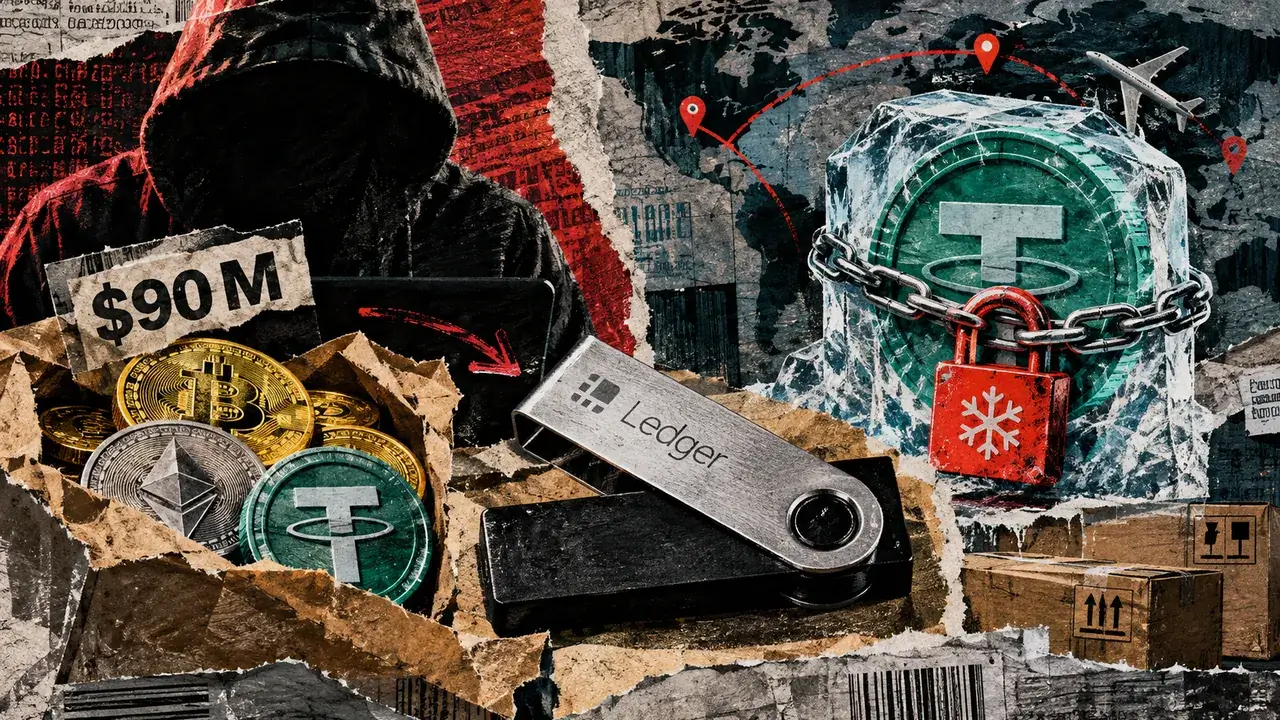
Ledger hack scare nears $90 million as Tether moves to freeze stolen USDT
Suspected Ledger wallet thefts are approaching $90 million as Tether freezes USDT stablecoin linked to the incident, according to...

Citrini Research Says Tokenized Assets and AI Agents Make Crypto a Fundamentals Trade
Citrini Research published a report on Thursday arguing that AI agents and tokenized assets have opened a new paradigm of “fundame...