CFTC Launches Initiative to Use Stablecoins as Derivatives Collateral
This move could change how financial institutions secure their trading positions and marks the first federal effort to integrate digital currencies into traditional finance. Acting Chairman Caroline Pham said the agency...
Archive context
Older archive item. Useful for background and entity history, but not a fresh market-moving signal.

This move could change how financial institutions secure their trading positions and marks the first federal effort to integrate digital currencies into traditional finance.
Acting Chairman Caroline Pham said the agency will work with industry leaders to develop rules for tokenized collateral, including popular stablecoins like USDC and Tether. The public can submit feedback on the proposal until October 20.
“The public has spoken: tokenized markets are here, and they are the future,” Pham stated. She called collateral management the “killer app” for stablecoins in markets.
Building on New Stablecoin LawsThis initiative builds on the GENIUS Act, which President Trump signed in July 2025. The law created the first federal rules for stablecoins, requiring companies to back each digital dollar with real assets like U.S. Treasury bonds or cash.
The new law requires stablecoin companies to publish monthly reports about their reserves. Companies must also follow strict rules about how they market their products to prevent misleading claims.
Under the GENIUS Act, only licensed banks, credit unions, or approved companies can issue stablecoins in America. This creates a safer environment for using these digital currencies in traditional finance.
How Derivatives Markets WorkDerivatives are financial contracts that get their value from other assets, like stocks, bonds, or commodities. Traders use them to bet on price changes or protect against losses. The global derivatives market handles over $700 trillion in notional value, with the United States accounting for about 27% of this massive market.
Currently, traders must put up cash or government bonds as collateral when they make these trades. This protects against losses if trades go wrong. The problem is that moving this collateral around the traditional banking system can be slow and expensive.
Stablecoins could make this process much faster. Because they run on blockchain networks, they can move instantly, 24 hours a day. This could free up billions of dollars that companies currently have tied up in slow-moving collateral systems.
Strong Industry SupportMajor crypto companies quickly backed the CFTC’s initiative. Circle, which makes the USDC stablecoin, said the new rules would “lower costs, reduce risk, and unlock liquidity across global markets.”
Source: @cftc.gov
Coinbase called stablecoins “the future of money” and said tokenized collateral represents the beginning of a bigger change in financial markets.
Ripple’s stablecoin executive Jack McDonald said clear rules for valuation and custody would give institutions the certainty they need to adopt this technology.
Even Tether’s CEO Paolo Ardoino supported the move, saying it would strengthen America’s leadership in global finance. The stablecoin market is now worth over $300 billion, with transaction volumes that exceed Mastercard’s and are catching up to Visa’s.
Timeline and Next StepsThe CFTC’s announcement starts a multi-year process. After collecting public comments through October 20, regulators will analyze the feedback to address key questions about valuation, custody, and security.
A pilot program could launch in early 2026, allowing selected companies to test using stablecoins as collateral under close regulatory oversight. The full framework might not take effect until late 2026.
The initiative follows a February 2025 meeting where the CFTC brought together CEOs from Circle, Coinbase, Crypto.com, and other major firms to discuss digital asset pilot programs.
This gradual approach gives companies time to adjust their systems and ensures proper safeguards are in place before full implementation.
Breaking New Ground in FinanceThis initiative could make America the first major economy to formally allow stablecoins as collateral in traditional derivatives markets. The move comes as other countries are also creating stablecoin rules, but none have gone this far in integrating them with existing financial systems.
The tokenized asset market has grown rapidly, jumping from $300 million in 2023 to $24 billion by June 2025. U.S. Treasury bonds now lead this trend, with companies like BlackRock offering tokenized versions worth over $2 billion.
The CFTC’s initiative represents a significant shift from previous regulatory approaches that focused on enforcement rather than enabling innovation. Acting Chairman Pham has consistently pushed for a more collaborative approach with the crypto industry.
For retail traders, this could eventually make derivatives markets more accessible since many already own stablecoins. However, derivatives remain risky investments that can lead to significant losses.
The Dollar’s Digital FutureThe CFTC’s stablecoin initiative signals a major shift toward integrating blockchain technology into America’s financial infrastructure. While still in early stages, this could transform how institutions manage collateral and reduce costs across the $20 trillion derivatives market.
Success depends on addressing technical challenges around custody, valuation, and system integration. But with strong industry support and a clear regulatory framework from the GENIUS Act, this initiative positions America at the forefront of financial innovation.
Why this matters
This research story adds another data point to the current market tape and is useful when read alongside nearby source coverage.
Original source
Read on Brave New CoinRelated market context

Tokenized Stocks, Investor Rights, and Their Crypto Role
Tokenized stocks could give crypto-native investors access to equity exposure through crypto platforms, but a token that tracks a...

Visa Says Business Payments Now Drive 17% Of Stablecoin-Linked Card Volume
TL;DR Visa says roughly 17% of its stablecoin-linked card volume in fiscal 2026 year-to-date came from business and commercial car...

Circle urges EU to rethink stablecoin reserve rules in MiCA review
Circle's proposal could reshape EU stablecoin regulations, potentially enhancing financial stability and fostering cross-border in...
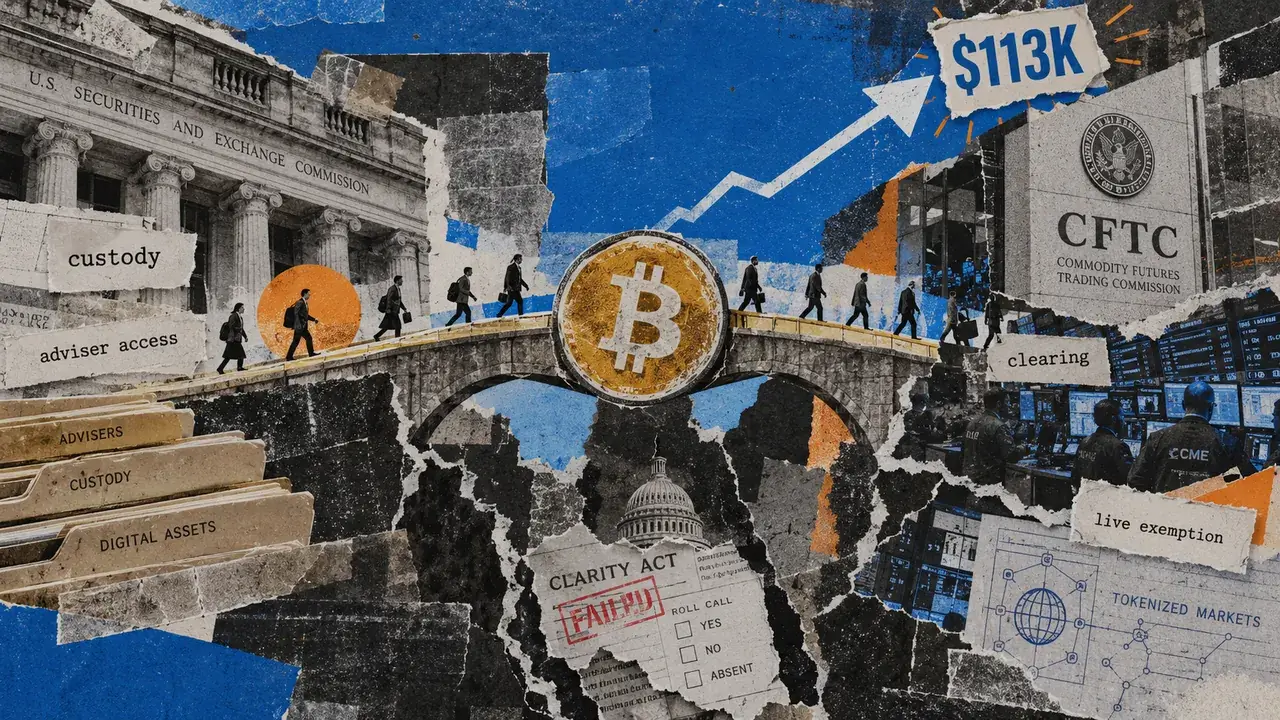
Bitcoin’s $113,000 case strengthens as US regulators push 9 crypto actions
The US Securities and Exchange Commission (SEC) proposed a custody framework on Oct. 1 that would let investment advisers and regu...

Congress weighs letting banks hold crypto, issue stablecoins
The proposal could accelerate institutional crypto adoption, potentially stabilizing digital asset markets and influencing Bitcoin...
SEC Proposes New Rules On Crypto Custody
Bitcoin Magazine SEC Proposes New Rules On Crypto Custody The U.S. Securities and Exchange Commission has proposed new rules to up...