Crypto License News: Global Trends, Regulatory Shifts, and What Businesses Need to Know in 2026
Over the past few years, governments and financial authorities worldwide have moved from uncertainty and skepticism toward structured frameworks designed to legitimize and control crypto-related activities. In 2025–2026,...
Archive context
Older archive item. Useful for background and entity history, but not a fresh market-moving signal.

Over the past few years, governments and financial authorities worldwide have moved from uncertainty and skepticism toward structured frameworks designed to legitimize and control crypto-related activities. In 2025–2026, this trend has accelerated significantly, making crypto licensing one of the most important topics for startups, exchanges, brokers, and fintech innovators.
This article explores the latest news, emerging trends, and key developments in crypto licensing across major jurisdictions, while also analyzing what these changes mean for businesses operating in the digital asset space.
The Global Shift Toward Regulation
The early days of cryptocurrency were marked by minimal oversight. However, as digital assets gained mainstream attention and institutional adoption increased, regulators recognized the need to establish clear rules. Today, crypto licensing is no longer optional—it is a requirement in most developed markets.
Recent developments show a clear pattern: governments are prioritizing investor protection, anti-money laundering (AML) compliance, and financial stability. As a result, companies offering crypto-related services must obtain licenses similar to traditional financial institutions.
In 2026, regulatory clarity has become a competitive advantage. Businesses operating with proper licenses are gaining trust from users, partners, and investors, while unregulated entities are increasingly being pushed out of the market.
Europe: MiCA Takes the Lead
One of the biggest regulatory milestones in crypto licensing is the full implementation of the Markets in Crypto-Assets (MiCA) regulation across the European Union. This framework has introduced a unified licensing system for crypto service providers, replacing fragmented national regulations.
Key Highlights of MiCA:- A single license allows companies to operate across all EU member states.
- Strict requirements for transparency, capital reserves, and risk management.
- Clear classification of crypto assets, including stablecoins and utility tokens.
- Strong consumer protection measures.
Recent news indicates that many crypto firms are racing to secure MiCA licenses in countries like France, Germany, and Lithuania. These jurisdictions are emerging as crypto hubs due to their proactive approach and efficient licensing procedures.
However, MiCA is not without challenges. Smaller startups are struggling with compliance costs, and some companies are relocating to more flexible jurisdictions. Still, the overall impact has been positive, bringing legitimacy and stability to the European crypto market.
United States: Gradual but Firm Progress
In the United States, crypto regulation has historically been fragmented, with multiple agencies overseeing different aspects of the industry. However, recent developments suggest a move toward a more unified approach.
Recent Licensing Trends in the U.S.:- Increased enforcement actions against unlicensed crypto businesses.
- Expansion of state-level licensing requirements, such as the BitLicense in New York.
- Growing discussions around a federal crypto framework.
One of the most notable updates is the push for clearer definitions of digital assets—whether they are securities, commodities, or something else. This classification directly impacts licensing requirements and compliance obligations.
While the U.S. remains a challenging environment for crypto companies, it is also one of the most lucrative markets. Businesses willing to navigate the complex regulatory landscape can gain significant advantages.
Asia: Innovation Meets Regulation
Asia continues to be a major player in the crypto space, with countries adopting diverse approaches to licensing.
SingaporeSingapore remains a leading crypto hub due to its balanced regulatory framework. The Monetary Authority of Singapore (MAS) has tightened licensing requirements in recent years, focusing on risk management and consumer protection. Recent news highlights a more selective approach, with fewer licenses being granted but to higher-quality applicants.
Hong KongHong Kong has re-emerged as a crypto-friendly jurisdiction, introducing a new licensing regime for virtual asset service providers (VASPs). This move is part of a broader strategy to position the city as a global crypto center.
United Arab Emirates (UAE)Although not geographically in Asia, the UAE plays a crucial role in the region’s crypto landscape. Dubai and Abu Dhabi have introduced specialized licensing frameworks, attracting major crypto exchanges and blockchain companies.
The trend across Asia is clear: regulators are encouraging innovation while maintaining strict oversight. This balance is helping the region attract both startups and established players.
Offshore Jurisdictions: Still Relevant but Changing
Offshore jurisdictions like Seychelles, Belize, and the British Virgin Islands have long been popular for crypto licensing due to their low costs and flexible requirements. However, recent global pressure for transparency and compliance is changing the landscape.
Key Changes:- Increased scrutiny from international organizations.
- Stronger AML and KYC requirements.
- Reduced appeal for companies targeting regulated markets.
While offshore licenses are still used, especially for early-stage startups, they are no longer sufficient for businesses aiming to operate globally. Most companies now combine offshore registration with licenses in reputable jurisdictions.
The Rise of Specialized Licenses
Another important trend in crypto licensing news is the emergence of specialized licenses tailored to specific activities.
Examples Include:- Crypto exchange licenses
- Crypto broker licenses
- Custody licenses
- Stablecoin issuer licenses
- DeFi platform regulations (in development)
This specialization reflects the growing complexity of the crypto ecosystem. Regulators are moving away from one-size-fits-all approaches and instead focusing on the unique risks associated with different business models.
Compliance and Technology: A Growing Connection
As licensing requirements become more stringent, technology is playing a crucial role in helping companies stay compliant.
Key Innovations:- Automated AML and transaction monitoring systems
- Blockchain analytics tools
- AI-driven risk assessment platforms
Regulators are also leveraging technology to improve oversight. For example, some authorities are using blockchain tracking tools to monitor suspicious activities in real time.
This intersection of compliance and technology is creating new opportunities for RegTech companies, which specialize in regulatory solutions for the financial sector.
Challenges Facing Crypto Licensing
Despite progress, several challenges remain in the crypto licensing space:
1. High CostsObtaining and maintaining a crypto license can be expensive, especially in top-tier jurisdictions. Costs include application fees, legal services, compliance staff, and ongoing reporting requirements.
2. Regulatory UncertaintyWhile many countries have introduced clear frameworks, others are still in the early stages of regulation. This uncertainty makes it difficult for businesses to plan long-term strategies.
3. Cross-Border ComplexityCrypto is inherently global, but licensing is not. Companies often need multiple licenses to operate in different regions, increasing complexity and costs.
4. Rapid Industry ChangesThe crypto industry evolves faster than regulation. New trends like decentralized finance (DeFi), NFTs, and tokenized assets challenge existing licensing frameworks.
Opportunities for Businesses
Despite these challenges, the current regulatory environment offers significant opportunities:
1. Increased TrustLicensed companies are more likely to gain user confidence and attract institutional investors.
2. Market ExpansionClear regulations enable businesses to expand into new markets with reduced legal risks.
3. Competitive AdvantageEarly adopters of licensing frameworks can establish themselves as industry leaders.
4. Partnerships with Traditional FinanceBanks and financial institutions are more willing to collaborate with licensed crypto companies.
What to Expect in the Future
Looking ahead, several trends are likely to shape the future of crypto licensing:
Global HarmonizationEfforts are underway to align regulations across jurisdictions, making it easier for companies to operate internationally.
DeFi RegulationDecentralized finance remains a gray area, but regulators are actively working on frameworks to address it.
Central Bank Digital Currencies (CBDCs)The rise of CBDCs will influence crypto licensing, as governments seek to integrate digital assets into the traditional financial system.
Stricter EnforcementAuthorities are expected to increase enforcement actions against non-compliant businesses, further emphasizing the importance of licensing.
Crypto licensing has become a cornerstone of the digital asset industry. What was once a largely unregulated space is now governed by increasingly sophisticated frameworks designed to protect users and ensure financial stability.
The latest news shows a clear direction: regulation is here to stay, and it is becoming more comprehensive and coordinated. For businesses, this means adapting to new requirements, investing in compliance, and choosing the right jurisdictions for licensing.
While challenges remain, the overall outlook is positive. Clear regulations are paving the way for mainstream adoption, institutional involvement, and long-term growth. Companies that embrace this new reality will be well-positioned to succeed in the evolving crypto landscape.
In 2026 and beyond, crypto licensing is not just a legal necessity—it is a strategic asset.
This is a sponsored article. Opinions expressed are solely those of the sponsor, and readers should conduct their own due diligence before taking any action based on information presented in this article.
Why this matters
This maps to the Stablecoins hub, so it can help confirm whether that theme is gaining breadth across the crypto news cycle.
Original source
Read on Brave New CoinRelated market context
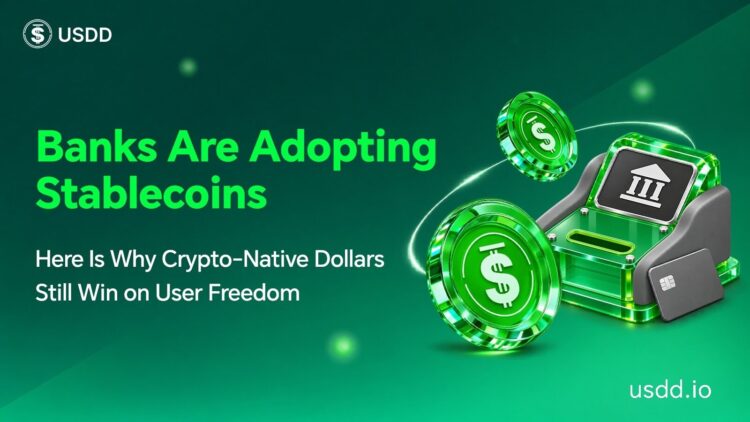
As traditional giants rush into digital dollars, USDD’s Yvonne Chia explains why 24/7 access, self-custody, and transparent yield give decentralized stablecoins an edge banks can’t replicate. 20 November – Road Town, Totorla, British Virgin Islands – Decentralized stablecoin protocol USDD is accelerating its multichain utility across TRON, Ethereum, and BNB Chain—combining automated sUSDD yield via its Smart Allocator with GasFree zero-TRX transfers—as traditional financial giants race to build competing stablecoin rails. In a recent industry interview with instant exchange partner ChangeNOW, USDD Head of Communications Yvonne Chia outlined why self-custody, 24/7 settlement, and transparent onchain reserves give decentralized digital dollars a structural advantage over bank-issued alternatives. 1. Permissionless Access vs. Gatekept Accounts For billions of people globally, opening and maintaining a traditional bank account still involves paperwork, minimum balance requirements, geographic restrictions, and approval delays. Even when banks integrate stablecoin rails behind the scenes, those services remain gated behind legacy compliance walls and intermediary control. Crypto-native stablecoins flip that model on its head. As Yvonne Chia highlighted during the interview: “Compare this to a stablecoin like USDD, where all you need is a phone, a working internet connection, you can immediately start a wallet and you have access to your funds right away.” With USDD, users can access and manage their digital dollars directly through their own wallets, without depending on traditional financial intermediaries. This represents a fundamental shift in financial access: users are no longer limited to the services, operating hours, or account structures of a single institution. Instead, they have the freedom to hold, manage, and transfer their assets on their own terms. Self-custody also gives users greater autonomy over their financial decisions. They can choose which wallets to use, where to transfer their assets, and which supported decentralized applications to interact with, without needing to route every transaction through a centralized financial institution. With USDD, users’ digital dollars can move with them across an open blockchain ecosystem, rather than remaining tied to a particular bank or service provider. 2. 24/7 Global Settlement vs. “Banking Hours” Legacy payment networks still operate on decades-old schedules: weekend cutoffs, bank holidays, and multi-day cross-border settlement delays accompanied by hefty wire fees. Blockchain networks never close. Whether it is a Sunday night or a public holiday, USDD moves globally without depending on traditional banking operating hours or settlement windows. “We are able to have transfers 24/7 and we’re not limited to any traditional banking hours. So I think that in some ways, stablecoins are not just becoming banks, but exceeding what traditional banks can offer to users.” To make everyday transfers even smoother than fintech apps, USDD introduced GasFree integration on TRON, allowing users on supported wallets to pay network fees directly in USDD without needing to hold TRX. This removes another practical barrier to stablecoin adoption: having to acquire and maintain a separate gas token just to transfer digital dollars. With GasFree, eligible users can pay approximately 0.5 USDD per transaction, compared with around 1.5 USDT for a standard USDT transfer under the referenced fee conditions. These improvements matter because the usefulness of a stablecoin is not determined by its peg alone. Low-cost transfers, straightforward wallet experiences, and around-the-clock availability are what make digital dollars practical for everyday payments and global value transfers. 3. Passing Yield Back to Users vs. Bank Spreads Perhaps the sharpest contrast between banks and decentralized stablecoins lies in how yield is distributed. In traditional banking, institutions take customer deposits, deploy them into yield-generating markets, and retain a significant portion of the returns. Everyday depositors may receive relatively low interest rates, while higher-yielding products often come with eligibility requirements, minimum deposits, or fixed maturity periods. Stablecoins introduce another way to participate in digital-dollar opportunities. Rather than keeping capital entirely within a traditional deposit account, users can access onchain yield opportunities through decentralized protocols and transparent investment mechanisms. USDD was built to return that value directly to holders. Through USDD Earn, users can deposit USDD to receive sUSDD, earning automated, competitive yield powered by our Smart Allocator system, with no fixed lock-up periods restricting access to their capital. For users, the distinction is important: USDD Earn provides access to a productive stablecoin while maintaining flexibility, rather than requiring users to commit their capital to a conventional fixed-term product. 4. Onchain Verification vs. Institutional Trust Traditional banks ask customers to trust closed-door balance sheets and periodic regulatory filings—until a crisis proves otherwise. USDD takes a different approach through its “Don’t trust, verify” ethos, emphasizing publicly accessible onchain information and independent verification. Onchain Transparency: Smart contract addresses, collateral reserves, and Smart Allocator deployments are publicly viewable, allowing users to examine relevant information directly on the blockchain. Structured Disclosures: Quarterly Treasury Reports provide additional information about reserve positions, financial performance, and operational developments. Independent Security Reviews: USDD undergoes third-party security audits to assess its smart contracts and identify potential vulnerabilities. Transparency does not eliminate financial or technical risks, but it changes how users can evaluate them. Instead of relying exclusively on an institution’s assurances, users have access to information that can be independently examined and verified. 5. Beyond a Single Network: An Open, Multichain Financial Ecosystem Financial freedom is not just about holding digital dollars. It is also about being able to use them wherever opportunities and applications exist. A stablecoin confined to a single network or limited use case cannot fully realize the potential of open blockchain finance. Following its January 2025 protocol upgrade, USDD expanded natively from TRON onto Ethereum and BNB Chain, extending its reach across multiple blockchain ecosystems. This multichain presence allows USDD to connect with different communities, liquidity environments, and decentralized applications. Its sUSDD product has also expanded into DeFi integrations, including Pendle and Morpho, giving users additional ways to access yield strategies across supported ecosystems. The bigger picture is an interconnected financial ecosystem in which users can move between holding, transferring, exchanging, and deploying their stablecoins according to their own needs. These are not isolated functions. Together, they make stablecoins more useful as everyday financial infrastructure. The Future: Interconnected, Open, and Multichain Banks will undoubtedly continue using stablecoin rails to modernize their back-end settlement. However, true financial freedom comes from open networks where assets flow freely across protocols without intermediaries. For USDD, the opportunity goes beyond offering a dollar-pegged asset. It is about making digital dollars accessible, transferable, and productive across an interconnected financial ecosystem. From self-custody and 24/7 transfers to flexible yield opportunities and multichain DeFi access, these capabilities give users more ways to put their money to work. Banks may be bringing stablecoins into traditional finance. Crypto-native protocols are showing what stablecoins can make possible beyond it.
As traditional giants rush into digital dollars, USDD’s Yvonne Chia explains why 24/7 access, self-custody, and transparent yield...

Tether Backs SCRYPT to Scale Institutional Stablecoin Payments Across Global Markets
Key Takeaways: Tether has staked money in the Swiss stablecoin platform called SCRYPT. This deal is meant for institutional paymen...
Coinbase moves 127,745,921 USDC from institutional arm to its exchange
Coinbase's internal USDC transfers highlight the growing importance of stablecoins in liquidity management and operational efficie...

Mark Zuckerberg’s Meta AI Predicts the Flippening: How Does ADA Flip XRP?
Could 2027 finally be the year Cardano (ADA) overtakes Ripple (XRP) in the cryptocurrency rankings? Mark Zuckerberg’s Meta AI pred...
NYSE taps Avalanche for tokenized securities, Bitwise cites privacy, security, and compliance
NYSE's adoption of Avalanche for tokenized securities highlights a shift towards blockchain solutions prioritizing privacy and com...

DeFi Development Corp’s CHAD preferred stock funds another 800-plus SOL
DFDV's strategy exemplifies innovative crypto treasury funding, balancing non-dilutive growth with high dividend obligations and m...