Crypto won the ETF fight but now the SEC is questioning if things have gone too far
The ETF became one of Wall Street’s most powerful distribution tools because it turned market exposure into an easy-to-use and easy-to-understand retail product. Investors could buy an index, a basket of bonds, a commodi...
Archive context
Older archive item. Useful for background and entity history, but not a fresh market-moving signal.
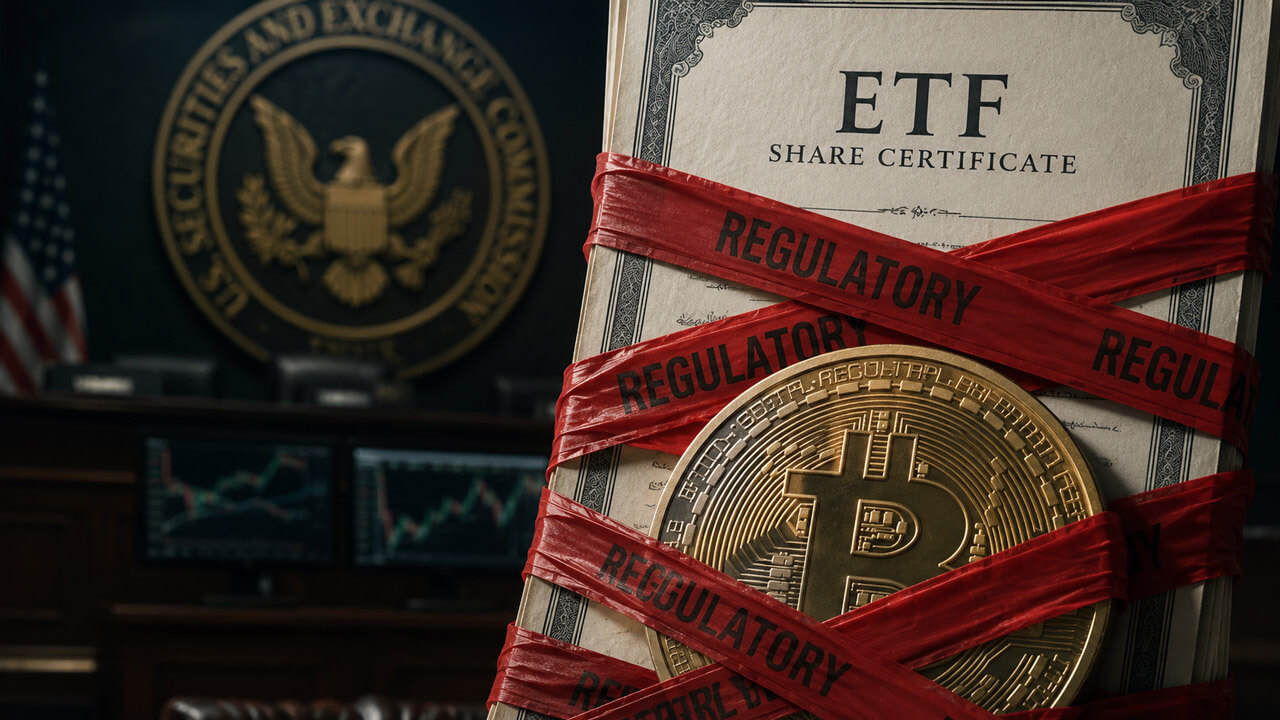
The ETF became one of Wall Street’s most powerful distribution tools because it turned market exposure into an easy-to-use and easy-to-understand retail product.
Investors could buy an index, a basket of bonds, a commodity thesis, or a tightly packaged theme from the same account they use for blue-chip stocks. This was so convenient that it changed both investor behavior and issuer incentives at the same time.
Once the ETF wrapper became the default way for millions of buyers to gain exposure, issuers had every reason to keep stretching it into new territory.
Related Reading Crypto wanted to replace Wall Street – Instead, Wall Street took over crypto Crypto set out to remove financial intermediaries, but the industry's most successful products now depend on them. Jul 4, 2026 · Andjela RadmilacThat’s the backdrop for the SEC’s latest review of what it calls “novel” ETFs. The agency seems to be revisiting a broader boundary: how much leverage, derivatives exposure, structural complexity, and valuation risk can sit inside a product that most investors still treat as simple by habit.
That’s the backdrop for the SEC’s June 30 request for public comment on “novel” ETFs, which it defines as funds that invest in innovative asset classes or use novel strategies.
The agency listed crypto assets, commodity-focused instruments, single-stock strategies, heightened leverage, blockchain-enabled opportunities, private assets, and event contracts as products under consideration.
It also asked whether existing rules need new portfolio limits, strategy restrictions, or exclusions, beginning an exploratory review ahead of any proposed changes.
An ETF carries a lot of trust, and regulators are now asking whether that trust is being asked to do too much.
Crypto is one of several categories named in the request and is likely to draw particular scrutiny because digital-asset products combine volatile underlying markets with a familiar retail wrapper.
Crypto ETFs bring together several traits regulators tend to watch closely in newer ETF structures. They wrap volatile underlying assets in a familiar format, rely on markets that behave differently from ordinary equity markets, and have a customer base that sees approval as a judgment about the legitimacy of the asset and its wrapper.
An unfamiliar product in a familiar packagingFor years, the crypto ETF fight was about access: would the SEC allow mainstream investors to buy spot Bitcoin through a fund, or would it keep that exposure outside the traditional brokerage channel?
The legal terminology matters here. Spot Bitcoin products such as Fidelity’s FBTC are exchange-traded products rather than ETFs governed by the Investment Company Act of 1940, even though they are widely called ETFs.
The SEC’s request separately asks whether ETPs outside the investment-company framework should use the “ETF” or “fund” label.
That was the first and biggest fight because approval itself was the barrier. However, once a category gets through the door, access is no longer the issue, and product design takes its place.
An ETF can hold a broad stock index and behave in ways most advisers and investors understand immediately. But it can also hold derivatives, use leverage, concentrate exposure in a single issuer, or package an asset whose underlying market couldn't be more different from the exchange where the shares trade.
Those differences all affect liquidity, valuation, investor understanding, and their behavior under stress. They also affect how quickly an ETF can become a complicated, high-risk structure.
Related Reading Bitcoin ETFs built a powerful bid, but the same machine can now accelerate selling Spot Bitcoin ETFs have widened access to BTC, but the same flows that support price can reverse quickly when macro pressure rises. Apr 29, 2026 · Gino MatosThe SEC has strong reason to focus on that line because much of the ETF boom has come from importing riskier exposure into a format retail investors often treat as safe by convention. Issuers want to satisfy demand and keep innovating, but regulators have to decide whether that innovation is making the market easier to use or just easier to sell.
Crypto funds are one of the biggest issues here because the wrapper makes them too familiar. The shares trade through known brokers and sit inside ordinary accounts, while the underlying assets bring weekend trading, fragmented liquidity, custody issues, and an unusually politicized approval process.
Even the trading-hours explanation on Fidelity’s FBTC page shows how the wrapper and the underlying market operate on different schedules. When the SEC looks at novel ETFs, it’s also looking at how long a familiar wrapper can mask an unfamiliar market structure.
That’s why the next phase of crypto ETF regulation is likely to focus on limits. Straightforward spot exposure is easier to explain, supervise, and distribute. Pressure builds once issuers move toward leveraged products, engineered income vehicles, broader token baskets, or hybrid structures that depend on layered assumptions about liquidity and pricing.
At that point, the SEC needs to decide what kind of complexity public-market investors should be asked to absorb through an ETF.
Crypto turns a debate about ETF design into a debate about legitimacyCrypto ETFs will face more scrutiny because they carry structural complexity and political symbolism.
The crypto market behaves differently from equities, bonds, or broad commodity products with long histories in mainstream portfolios. At the same time, every new crypto ETF approval is seen as a signal about the federal government’s stance toward the asset class.
That symbolism was evident in the SEC’s own 2024 statement approving spot Bitcoin ETPs. The agency stressed that approval did not amount to an endorsement of Bitcoin, underscoring how much political meaning investors attach to a decision the SEC framed as a legal and market-structure judgment.
That’s why this broader ETF debate will shape crypto long after the fight over spot Bitcoin approval fades. If the SEC imposes firmer boundaries around complexity, crypto funds are likely to be among the products most affected.
Approvals may slow, disclosure expectations may get stricter, and issuers may have less room to build products that depend on investors trusting the wrapper more than they understand the underlying exposure.
That's an important distinction for the crypto industry because access only helps normalize an asset class when the products themselves are sufficiently legible for advisers, fiduciaries, and ordinary investors to use with confidence.
Once access begins to resemble a delivery system for engineered complexity, its benefit weakens. At that point, wider distribution starts to expose fragility in the product design.
The broader market should pay attention for the same reason. ETF policy shapes what mainstream investing looks and feels like in retirement accounts, advisory platforms, and self-directed brokerage portfolios.
A category that reaches the public through transparent structures helps build one kind of investor culture. A category that arrives through opaque or heavily engineered products builds another.
Crypto’s long-term place in public markets will depend as much on which of those cultures takes hold as on whether the next fund gets approved.
The SEC’s scrutiny is more than a clash between Washington and the crypto industry. The commission appears to be deciding how much complexity the ETF wrapper should continue carrying and how much of that complexity public investors can reasonably be expected to evaluate for themselves.
Crypto funds are at the center of that problem because they place a volatile, politically charged asset class inside a format investors still associate with simplicity, liquidity, and convenience.
The industry has every reason to want broader access. It has just as much reason to want access that remains understandable once the wrapper is stripped away, and the product design has to stand on its own.
The post Crypto won the ETF fight but now the SEC is questioning if things have gone too far appeared first on CryptoSlate.
Why this matters
SEC is showing up inside the Bitcoin ETF theme, so this story is worth tracking for follow-through rather than treating it as a one-off headline.
Original source
Read on CryptoSlateRelated market context
As traditional giants rush into digital dollars, USDD’s Yvonne Chia explains why 24/7 access, self-custody, and transparent yield give decentralized stablecoins an edge banks can’t replicate. 20 November – Road Town, Totorla, British Virgin Islands – Decentralized stablecoin protocol USDD is accelerating its multichain utility across TRON, Ethereum, and BNB Chain—combining automated sUSDD yield via its Smart Allocator with GasFree zero-TRX transfers—as traditional financial giants race to build competing stablecoin rails. In a recent industry interview with instant exchange partner ChangeNOW, USDD Head of Communications Yvonne Chia outlined why self-custody, 24/7 settlement, and transparent onchain reserves give decentralized digital dollars a structural advantage over bank-issued alternatives. 1. Permissionless Access vs. Gatekept Accounts For billions of people globally, opening and maintaining a traditional bank account still involves paperwork, minimum balance requirements, geographic restrictions, and approval delays. Even when banks integrate stablecoin rails behind the scenes, those services remain gated behind legacy compliance walls and intermediary control. Crypto-native stablecoins flip that model on its head. As Yvonne Chia highlighted during the interview: “Compare this to a stablecoin like USDD, where all you need is a phone, a working internet connection, you can immediately start a wallet and you have access to your funds right away.” With USDD, users can access and manage their digital dollars directly through their own wallets, without depending on traditional financial intermediaries. This represents a fundamental shift in financial access: users are no longer limited to the services, operating hours, or account structures of a single institution. Instead, they have the freedom to hold, manage, and transfer their assets on their own terms. Self-custody also gives users greater autonomy over their financial decisions. They can choose which wallets to use, where to transfer their assets, and which supported decentralized applications to interact with, without needing to route every transaction through a centralized financial institution. With USDD, users’ digital dollars can move with them across an open blockchain ecosystem, rather than remaining tied to a particular bank or service provider. 2. 24/7 Global Settlement vs. “Banking Hours” Legacy payment networks still operate on decades-old schedules: weekend cutoffs, bank holidays, and multi-day cross-border settlement delays accompanied by hefty wire fees. Blockchain networks never close. Whether it is a Sunday night or a public holiday, USDD moves globally without depending on traditional banking operating hours or settlement windows. “We are able to have transfers 24/7 and we’re not limited to any traditional banking hours. So I think that in some ways, stablecoins are not just becoming banks, but exceeding what traditional banks can offer to users.” To make everyday transfers even smoother than fintech apps, USDD introduced GasFree integration on TRON, allowing users on supported wallets to pay network fees directly in USDD without needing to hold TRX. This removes another practical barrier to stablecoin adoption: having to acquire and maintain a separate gas token just to transfer digital dollars. With GasFree, eligible users can pay approximately 0.5 USDD per transaction, compared with around 1.5 USDT for a standard USDT transfer under the referenced fee conditions. These improvements matter because the usefulness of a stablecoin is not determined by its peg alone. Low-cost transfers, straightforward wallet experiences, and around-the-clock availability are what make digital dollars practical for everyday payments and global value transfers. 3. Passing Yield Back to Users vs. Bank Spreads Perhaps the sharpest contrast between banks and decentralized stablecoins lies in how yield is distributed. In traditional banking, institutions take customer deposits, deploy them into yield-generating markets, and retain a significant portion of the returns. Everyday depositors may receive relatively low interest rates, while higher-yielding products often come with eligibility requirements, minimum deposits, or fixed maturity periods. Stablecoins introduce another way to participate in digital-dollar opportunities. Rather than keeping capital entirely within a traditional deposit account, users can access onchain yield opportunities through decentralized protocols and transparent investment mechanisms. USDD was built to return that value directly to holders. Through USDD Earn, users can deposit USDD to receive sUSDD, earning automated, competitive yield powered by our Smart Allocator system, with no fixed lock-up periods restricting access to their capital. For users, the distinction is important: USDD Earn provides access to a productive stablecoin while maintaining flexibility, rather than requiring users to commit their capital to a conventional fixed-term product. 4. Onchain Verification vs. Institutional Trust Traditional banks ask customers to trust closed-door balance sheets and periodic regulatory filings—until a crisis proves otherwise. USDD takes a different approach through its “Don’t trust, verify” ethos, emphasizing publicly accessible onchain information and independent verification. Onchain Transparency: Smart contract addresses, collateral reserves, and Smart Allocator deployments are publicly viewable, allowing users to examine relevant information directly on the blockchain. Structured Disclosures: Quarterly Treasury Reports provide additional information about reserve positions, financial performance, and operational developments. Independent Security Reviews: USDD undergoes third-party security audits to assess its smart contracts and identify potential vulnerabilities. Transparency does not eliminate financial or technical risks, but it changes how users can evaluate them. Instead of relying exclusively on an institution’s assurances, users have access to information that can be independently examined and verified. 5. Beyond a Single Network: An Open, Multichain Financial Ecosystem Financial freedom is not just about holding digital dollars. It is also about being able to use them wherever opportunities and applications exist. A stablecoin confined to a single network or limited use case cannot fully realize the potential of open blockchain finance. Following its January 2025 protocol upgrade, USDD expanded natively from TRON onto Ethereum and BNB Chain, extending its reach across multiple blockchain ecosystems. This multichain presence allows USDD to connect with different communities, liquidity environments, and decentralized applications. Its sUSDD product has also expanded into DeFi integrations, including Pendle and Morpho, giving users additional ways to access yield strategies across supported ecosystems. The bigger picture is an interconnected financial ecosystem in which users can move between holding, transferring, exchanging, and deploying their stablecoins according to their own needs. These are not isolated functions. Together, they make stablecoins more useful as everyday financial infrastructure. The Future: Interconnected, Open, and Multichain Banks will undoubtedly continue using stablecoin rails to modernize their back-end settlement. However, true financial freedom comes from open networks where assets flow freely across protocols without intermediaries. For USDD, the opportunity goes beyond offering a dollar-pegged asset. It is about making digital dollars accessible, transferable, and productive across an interconnected financial ecosystem. From self-custody and 24/7 transfers to flexible yield opportunities and multichain DeFi access, these capabilities give users more ways to put their money to work. Banks may be bringing stablecoins into traditional finance. Crypto-native protocols are showing what stablecoins can make possible beyond it.
As traditional giants rush into digital dollars, USDD’s Yvonne Chia explains why 24/7 access, self-custody, and transparent yield...

Elon Musk’s Grok AI Predicts ETH Vs SOL For 2027: Who Wins?
Ethereum vs. Solana in 2027: Elon Musk’s Grok AI predicts which is positioned for bigger gains at the end of this article. As of m...

Bitcoin (BTC) Price Today: Glassnode Warns of Holder Losses as BTC Approaches Critical $61K Support
Glassnode data also points to a shrinking profit margin for the average Bitcoin holder, raising concerns that another decline coul...

Tether Backs SCRYPT to Scale Institutional Stablecoin Payments Across Global Markets
Key Takeaways: Tether has staked money in the Swiss stablecoin platform called SCRYPT. This deal is meant for institutional paymen...

Mark Zuckerberg’s Meta AI Predicts the Flippening: How Does ADA Flip XRP?
Could 2027 finally be the year Cardano (ADA) overtakes Ripple (XRP) in the cryptocurrency rankings? Mark Zuckerberg’s Meta AI pred...
Bitcoin Price Slips Near $61,500 as Tech Selloff Spreads to Asia
Bitcoin Magazine Bitcoin Price Slips Near $61,500 as Tech Selloff Spreads to Asia The bitcoin price slipped to near $61,500 on Fri...