CZ’s Kyrgyzstan visit highlights why state backing cannot guarantee a stablecoin exit
Changpeng Zhao’s September 5 visit to Kyrgyzstan’s crypto council came as President Sadyr Japarov set a three-month deadline for new regulations and officials discussed the risks posed by international sanctions. The dec...
Archive context
Older archive item. Useful for background and entity history, but not a fresh market-moving signal.
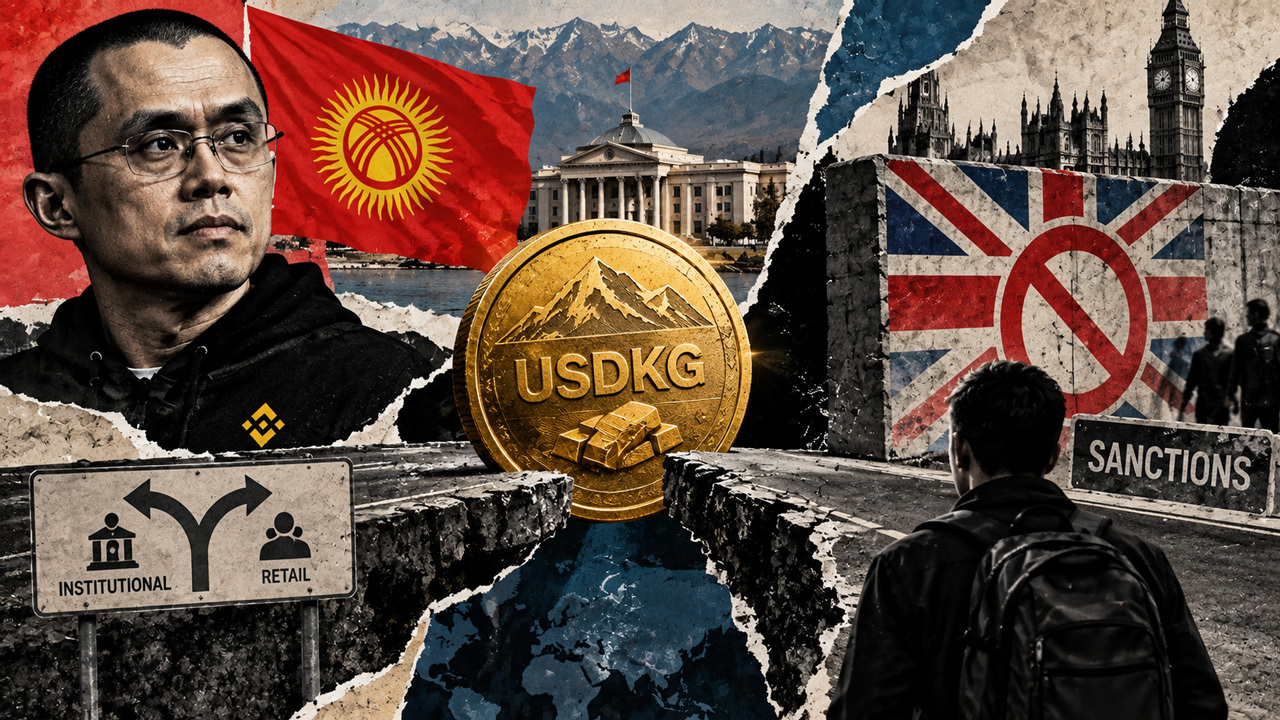
Changpeng Zhao’s September 5 visit to Kyrgyzstan’s crypto council came as President Sadyr Japarov set a three-month deadline for new regulations and officials discussed the risks posed by international sanctions. The decisions put the limits of domestic crypto policy in focus: approval at home does not ensure access abroad.
Zhao, known as CZ, said in a post that he attended in person and praised progress including a circulating KGST stablecoin. His post did not name USDKG, the separate gold-backed, dollar-pegged project whose issuer is on the UK sanctions list.
USDKG provides a concrete example of the limits of government backing. Its published framework combines a state-owned issuer, reserve management and administrative token controls. Yet its own FAQ reserves direct redemption for institutional clients, while UK-facing services have separate legal obligations. For a retail holder, the practical exit route is a trade with an available counterparty.
Kyrgyzstan sets regulatory deadlinesAccording to the National Agency for Virtual Assets’ account, Japarov chaired the third council meeting in Cholpon-Ata on September 5. Participants discussed regulation, security and risks from international sanctions and restrictions affecting the country’s virtual-asset market.
The agency, known as NAVA, received two three-month assignments: secure adoption of a package of secondary regulations and work through possible amendments to the virtual-assets law and related legislation.
The timetable extends beyond legislation. The State Tax Service was given two months to review tax regulation. NAVA has one month to determine the cost and funding sources for a digital licensing and supervision platform, with pilot testing planned from Jan. 1, 2027. Kabar, citing the presidential press service, also reported those directions.
The central bank has a separate assignment to develop and pilot a basic digital-som platform by Dec. 31, 2026, followed by real-world testing from 2027 and phased national deployment.
The projects should remain distinct. In a Nov. 6, 2025 statement, the Finance Ministry said USDKG was separate from KGST and the digital som, with different goals, mechanisms and backing.
State ownership does not determine foreign accessFor USDKG, the state connection is through its issuer. The ministry’s November 2025 statement said it owned 100% of OJSC Virtual Asset Issuer. USDKG’s May 22, 2026 announcement continued to describe the issuer as a state-owned entity under the Finance Ministry.
Four days later, the UK designated the issuer under reference RUS3618. Its May 26 sanctions notice identifies the entity through names including USDKG. The current designation record lists an asset freeze, trust-services sanctions, director disqualification and internet-services sanctions.
The UK’s stated rationale is that it has reasonable grounds to suspect the issuer obtained a benefit from or supported Russia’s government through business of economic significance to that government.
For financial sanctions, the relevant boundary includes both location and legal identity. OFSI guidance says the rules apply to persons within UK territory and territorial sea, as well as UK persons worldwide, including entities established under UK law and their branches.
The internet-services measure addresses another part of access. Specified services must take reasonable steps to prevent users in the UK from accessing content, websites or applications provided by the designated issuer.
These restrictions do not amount to proof of a worldwide shutdown of USDKG transfers. They show why domestic authorization cannot settle every access question: a foreign service may have legal duties that Kyrgyz state ownership does not remove.
Related Reading UK is hunting the $86 billion Russia-linked crypto pipeline as it moves to double sanctions fines USDKG redemption depends on holder eligibilityUSDKG’s current redemption FAQ makes the holder distinction explicit. Retail users are directed to supported exchanges for liquidity. Direct minting and redemption are available only to institutional clients, subject to identity and anti-money-laundering checks and issuer-defined procedures. Gold redemption is handled case by case.
For retail holders, the reserve asset and the immediate source of liquidity are therefore different things. Gold may support the issuer’s backing model, but the published retail route relies on somebody else being willing and able to buy the token.
Related Reading US bank lobby wants stablecoin holders to open an account before cashing outThe issuer’s December 2025 tokenomics explanation describes tokens being issued after gold enters custody and is verified. It also describes a fiat liquidity buffer intended to support redemptions without requiring immediate gold sales.
That arrangement depends on reserve management and the execution of issuer procedures. USDKG’s transparency page says its gold valuation uses prices at the audit date and displays a 2025 fourth-quarter report.
The available market observations are limited. A CoinGecko market page on September 6 displayed Ethereum Uniswap V3 and Curve USDKG market rows flagged inactive, indicating no trades in the preceding three hours on those displayed rows.
Likewise, the May 22 issuer announcement said USDKG/USDT was available to professional investors through OSL HK’s over-the-counter platform.
Token ownership still sits inside an administrative systemAccess also depends on the token’s design. USDKG’s current project documentation assigns the owner the ability to pause transfers and issue tokens. It assigns compliance administrators the ability to blacklist addresses and burn balances held by blacklisted accounts. The documented redemption function burns tokens from the owner’s own balance.
Those are distinct powers with different consequences. A transfer pause concerns token movement, while a blacklist targets addresses. Direct redemption remains an issuer process subject to the eligibility conditions described in its FAQ. Possession of tokens alone does not remove those dependencies.
The Ethereum contract page labels its source an exact verified match and exposes administrative functions including pausing, blacklisting, issuance and redemption in its published interface. That corroborates the existence of the interfaces.
The January 2025 Consensys Diligence audit reviewed a specific code revision and described substantial trust in administrators. Its historical findings should not be treated as a complete account of every current deployed permission, or as evidence of present reserve solvency.
Related Reading Tether freezes 134 wallets as stablecoins now sit inside the sanctions machineThe documented controls add a separate dependency to the exit process. Eligibility determines who can redeem directly; counterparties provide retail liquidity; administrators retain specified powers over token movement.
Japarov’s September deadlines now create concrete milestones for Kyrgyzstan’s domestic framework: secondary regulations, possible legislative amendments and the licensing-platform pilot. Those measures can shape how the country supervises virtual assets.
For USDKG holders, the practical test is whether those services connect to an exit they can use. A retail sale still needs a counterparty, institutional redemption still requires issuer approval, and UK-facing services still have sanctions obligations. The next regulations will shape domestic supervision; access depends on how those separate conditions are met.
The post CZ’s Kyrgyzstan visit highlights why state backing cannot guarantee a stablecoin exit appeared first on CryptoSlate.
Why this matters
Ethereum is showing up inside the Stablecoins theme, so this story is worth tracking for follow-through rather than treating it as a one-off headline.
Original source
Read on CryptoSlateRelated market context
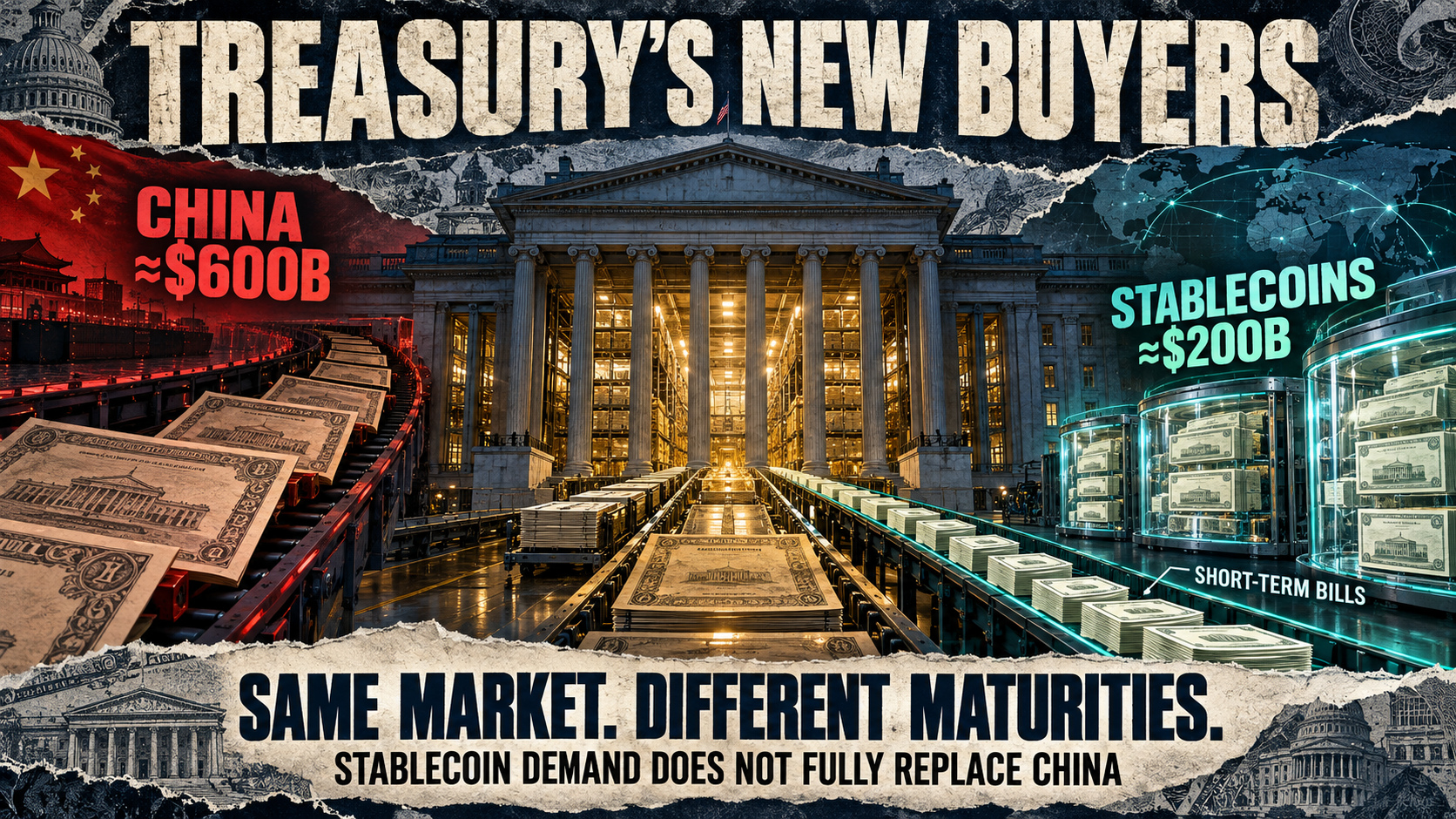
Stablecoin issuers have replaced 40% of China’s lost US Treasury demand
Stablecoin issuers are emerging as a new source of demand for US government debt as foreign official holdings lose ground. Tether...
Circle and Tether find common ground against MiCA’s bank reserve rules
Circle is urging the European Union to open its Markets in Crypto-Assets Regulation (MiCA) to foreign-regulated stablecoins and lo...

Ethereum Price Prediction: ETH Liquidity Drops 45% Below BTC
Ethereum price prediction is dropping as its order-book depth has fallen to 35–45% of Bitcoin’s. Ethereum trades at $2,725, up 1%...
US expands Hamas sanctions after tracing crypto transfers from France
The US sanctioned two French charities and three individuals after alleging they helped channel cryptocurrency and other funds to...
The same Fed rate hike can help stablecoins and hurt Bitcoin borrowers
When you hold a dollar stablecoin, somebody else may be earning interest on the assets backing your balance, while a company borro...

XRP Price Prediction: Analyst Calls $750 Ripple Next Year
XRP traded at $1.51, printing 1% gain as its price prediction was pinned near the middle of its recent range. Jake Claver is still...