Elon Musk Faces Backlash Over Alleged Election Interference in Germany
Musk, who has openly supported the far-right Alternative for Germany (AfD) party, recently wrote an opinion piece in Welt am Sonntag endorsing the controversial party as “Germany’s last hope.” This endorsement, alongside...
Archive context
Older archive item. Useful for background and entity history, but not a fresh market-moving signal.

Musk, who has openly supported the far-right Alternative for Germany (AfD) party, recently wrote an opinion piece in Welt am Sonntag endorsing the controversial party as “Germany’s last hope.” This endorsement, alongside Musk’s inflammatory remarks on X, has drawn sharp criticism from German officials and the public.
German government spokesperson Christiane Hoffmann addressed the issue in a press conference, stating, “It is indeed the case that Elon Musk is trying to influence the federal election.” While Hoffmann acknowledged Musk’s right to free speech, she referred to his comments as “nonsense.”
AfD: A Controversial AllyMusk’s endorsement of the AfD comes at a sensitive time for Germany as the country prepares for its February 23 election following the collapse of Chancellor Olaf Scholz’s coalition government. The AfD, often labeled as far-right and under domestic intelligence surveillance for alleged extremism, has seen a rise in popularity, polling second behind the opposition CDU/CSU at 19%.
Source:X
Musk’s opinion piece portrayed the AfD as a misunderstood entity, arguing that its leader Alice Weidel’s same-sex relationship undermines accusations of extremism. “Does that sound like Hitler to you? Come on!” Musk wrote, sparking further controversy. The publication of his column led to the resignation of the newspaper’s opinion editor in protest.
Political Leaders ReactThe backlash from German politicians has been severe. Lars Klingbeil, co-leader of Scholz’s Social Democrats (SPD), likened Musk’s actions to those of Russian President Vladimir Putin, accusing him of attempting to destabilize Germany. “Both want to influence our elections and specifically support the AfD’s enemies of democracy,” Klingbeil stated.
Friedrich Merz, leader of the CDU/CSU and a leading contender for chancellor, called Musk’s intervention “intrusive and pretentious.” Merz emphasized the unprecedented nature of a foreign individual interfering in a Western democracy’s election campaign.
Criticism Extends Beyond GermanyMusk’s involvement in German politics reflects his broader political engagement. As a key supporter of U.S. President-elect Donald Trump, Musk has been appointed as co-chair of the Department of Governmental Efficiency (DOGE) alongside Republican politician Vivek Ramaswamy. Trump praised the duo for their plans to overhaul federal regulations, promising a crypto-friendly environment.
Source:X
Musk’s role as a political influencer has raised questions about the extent of his impact. Critics argue that his statements, particularly those targeting Scholz and advocating for the AfD, could polarize public opinion. In one X post, Musk called Scholz “fool” and demanded his resignation following a car attack in Magdeburg that killed five people.
Implications for Germany’s DemocracyWith Germany’s mainstream parties vowing not to cooperate with the AfD, Musk’s endorsements add complexity to an already tense election. While his remarks are protected under free speech, they have reignited debates about the influence of foreign billionaires on national politics.
As the election approaches, Germany faces the challenge of navigating heightened political rhetoric and ensuring its democratic process remains unaffected by external influences. Whether Musk’s actions will impact voter behavior or remain a footnote in the election’s history will become clear after the February vote
Elon Musk’s support for the AfD has placed him at the center of Germany’s political discourse. While he asserts his right to express opinions as a business stakeholder in the country, his actions have sparked fierce debates about democracy, extremism, and the ethical boundaries of political engagement by influential figures. For Germany, this election marks a critical test of resilience in the face of external pressures.
Why this matters
This research story adds another data point to the current market tape and is useful when read alongside nearby source coverage.
Original source
Read on Brave New CoinRelated market context

AI super PAC’s strategy fails to replicate crypto’s election success
AI's internal divisions and lack of a unified strategy weaken its political influence, contrasting with crypto's focused legislati...
Aave MCP now connects with MetaMask Agent Wallet for AI-driven DeFi actions
AI-driven DeFi integration enhances automation and security, empowering users with greater control and developers with streamlined...

WhiteBIT Integrates Lightning Network for Fast and Cheap Bitcoin Transactions
Bitcoin Magazine WhiteBIT Integrates Lightning Network for Fast and Cheap Bitcoin Transactions The Lightning Network continues to...
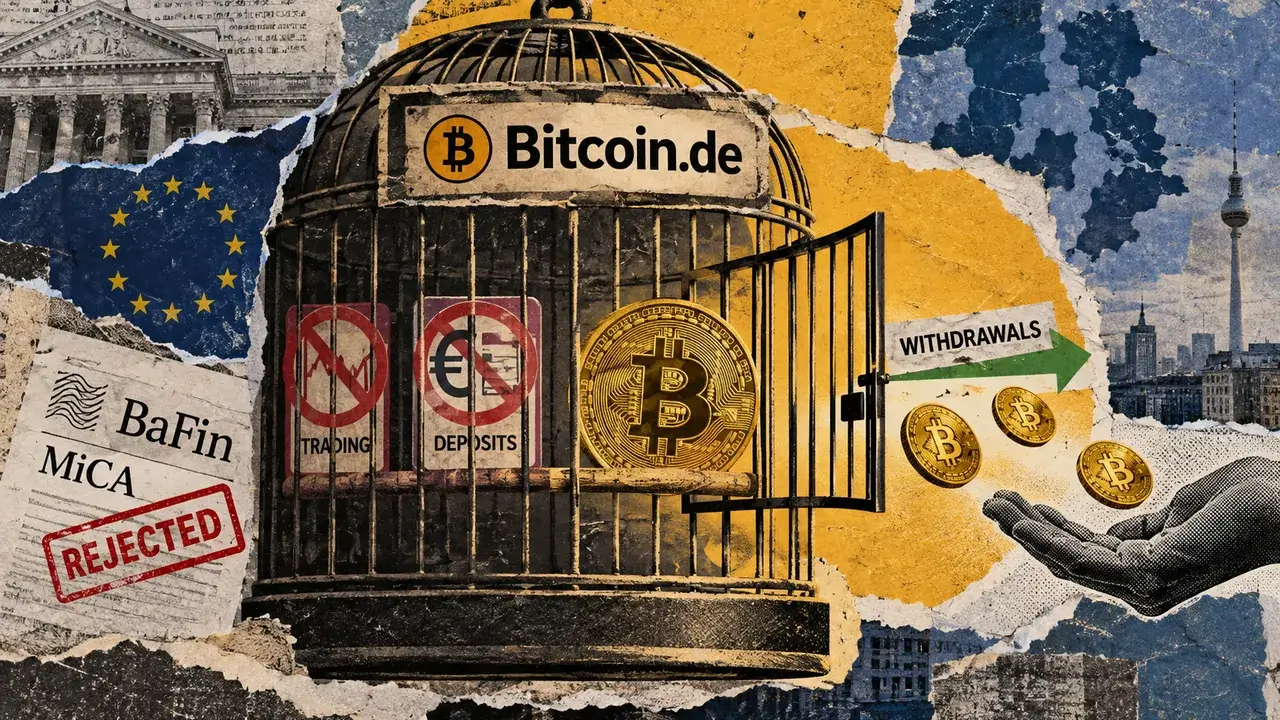
MiCA rejection forces German crypto platform into operational overhaul
Bitcoin.de is rebuilding its operating model after German regulators rejected its MiCA authorization, forcing it to outsource trad...
Greece Plans Crypto Capital Gains Tax: Report
Bitcoin Magazine Greece Plans Crypto Capital Gains Tax: Report Greece is planning a law to tax crypto investors’ capital gains at...

From TOKEN2049 to Ecosystem Co-Building: HTX Advances Its Multifaceted Engagement Across the Global Crypto Industry
Singapore, October 12, 2026 – From October 6 to 8, the global crypto industry turned its attention to Singapore for TOKEN2049, a m...