Fed Research Compares Wholesale CBDC Settlement With Tokenized Deposits
A Federal Reserve research paper has compared wholesale CBDC settlement with tokenized commercial bank deposits, adding another official research layer to the debate over how future digital money systems might operate. T...
Archive context
Older archive item. Useful for background and entity history, but not a fresh market-moving signal.

A Federal Reserve research paper has compared wholesale CBDC settlement with tokenized commercial bank deposits, adding another official research layer to the debate over how future digital money systems might operate.
The paper does not mean the Fed is launching a CBDC. It does not amount to an endorsement of crypto assets. It is research, and that distinction matters.
Still, the topic is important because banks, regulators, and payment networks are studying how tokenized deposits, wholesale central bank money, and blockchain-style settlement systems could change financial market plumbing.
For more details, visit the official Federalreserve platform.
TL;DR- Federal Reserve research examined wholesale CBDC settlement and tokenized deposits.
- The paper is research, not a launch plan or policy announcement.
- The debate centers on liquidity, settlement efficiency, and future payment infrastructure.
Most public CBDC debates center on retail use.
That means a central bank digital currency held or used by the general public. Wholesale CBDCs are different. They are designed for financial institutions, settlement systems, banks, and market infrastructure.
That difference changes the political and technical debate.
A wholesale CBDC could be used to settle transactions between regulated institutions without becoming a consumer payment tool. It may affect interbank settlement, securities settlement, liquidity management, and collateral movement.
That is why wholesale CBDC research often receives attention even from institutions that are skeptical of retail CBDCs.
Tokenized Deposits Offer Another PathTokenized deposits are commercial bank money represented on digital rails.
Instead of issuing central bank money directly to a broader set of users, banks could issue deposit tokens that remain liabilities of commercial banks. Those tokens could then move across controlled digital infrastructure.
This model appeals to parts of the banking sector because it preserves a familiar role for commercial banks.
It may also reduce some concerns associated with retail CBDCs, while still allowing faster settlement and programmable financial workflows.
The question is whether tokenized deposits can deliver the same efficiency and trust benefits as wholesale central bank settlement.
Settlement Efficiency Is The Core DebateModern financial markets rely on settlement systems that can be slow, layered, and operationally complex.
If tokenized cash instruments can reduce friction, they could improve how institutions move money, settle securities, manage collateral, or transfer liquidity across market infrastructures.
But efficiency is not the only test.
Systems must also handle legal finality, resilience, privacy, compliance, cyber risk, operational controls, and central bank oversight.
That is why official research papers tend to be careful. They examine models and trade-offs rather than making sweeping claims.
Not A Crypto EndorsementCrypto markets often react strongly to CBDC or tokenization headlines.
But this paper should not be framed as the Fed endorsing cryptocurrencies. Wholesale CBDCs and tokenized bank deposits are institutional money systems, not speculative tokens.
They may use some similar design ideas, but their purpose is different.
The value for crypto readers is that central banks are still studying the same underlying shift: financial assets and money may move onto more programmable settlement rails.
The Bigger PictureThe future of digital money may not be one system.
It could involve wholesale CBDCs, tokenized deposits, stablecoins, tokenized money-market funds, and traditional payment networks operating side by side. Each will serve different users and carry different risks.
The Fed research paper adds to that conversation.
It shows that tokenized settlement is no longer only a crypto-industry idea. It is being examined inside mainstream monetary and financial infrastructure debates.
That makes the paper important, even without a launch plan attached.
This article draws on Federal Reserve research into wholesale CBDCs and tokenized deposits.
This article was written by the News Desk and edited by Samuel Rae.
Why this matters
Federal Reserve is showing up inside the Institutional Adoption theme, so this story is worth tracking for follow-through rather than treating it as a one-off headline.
Original source
Read on NewsBTCRelated market context

Morgan Stanley Builds Crypto Lab to Test Stablecoins, Tokenization and DeFi at Scale
Key Takeaways: Morgan Stanley has opened a Digital Asset Lab dedicated to blockchain technologies. The test is to be applied to th...

Binance bStocks Hits $1 Billion As Tokenized Stock Trading Accelerates
TL;DR: Binance says its bStocks tokenized-equity offering has surpassed $1 billion in assets under management, four months after l...

BlackRock pushes deeper into tokenization with funds, portfolios and stablecoin reserves
BlackRock's tokenization efforts could revolutionize financial markets by enhancing transparency, efficiency, and accessibility gl...

Coinbase crypto-backed loans hit $2.3 billion as banks build tokenized deposits
Coinbase's crypto-backed loans and banks' tokenized deposits signal a shift towards blockchain integration in traditional finance...
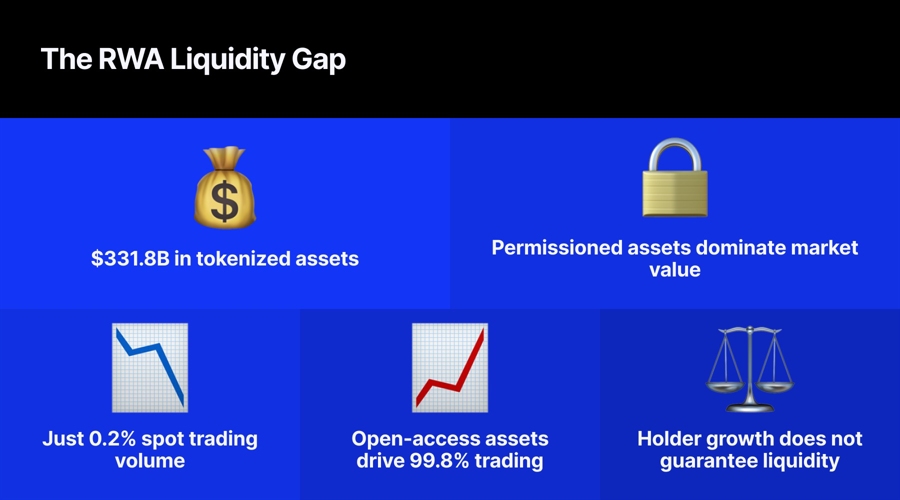
More Holders, Little Trading: The RWA Liquidity Problem Is Worse Than You Think
Let me ask you something straight. Does real-world asset trading on crypto exchanges feel like a genuine revolution, or does it fe...

BitTorrent Ushers in Next-Gen Web3 Infrastructure with Strategic Rebrand and Inaugural BTT Burn
The first round of BTT repurchased with decentralized service revenue has been completely burned, as BitTorrent leverages its reim...