Federal Reserve Bank of Boston and MIT Release Central Bank Digital Currency Research and Open-Source Code
The Federal Reserve Bank of Boston and the Massachusetts Institute of Technology (MIT) have jointly published the initial findings of their central bank digital currency (CBDC) research. They also published the open-sour...
Archive context
Older archive item. Useful for background and entity history, but not a fresh market-moving signal.

The Federal Reserve Bank of Boston and the Massachusetts Institute of Technology (MIT) have jointly published the initial findings of their central bank digital currency (CBDC) research. They also published the open-source code for the CBDC project.
The Federal Reserve Bank of Boston and the Digital Currency Initiative at the Massachusetts Institute of Technology (MIT) released the initial findings of their central bank digital currency (CBDC) research on Thursday.
This research is separate from the digital dollar research conducted by the Federal Reserve Board. The Federal Reserve also recently published its long-awaited CBDC report.
The collaboration between the Boston Fed and MIT, known as Project Hamilton, “focuses on technological experimentation and does not aim to create a usable CBDC for the United States,” they explained. The initiative was announced in 2020.
Boston Fed Executive Vice President and Interim Chief Operating Officer Jim Cunha said, “It is critical to understand how emerging technologies could support a CBDC and what challenges remain,” adding:
This collaboration between MIT and our technologists has created a scalable CBDC research model that allows us to learn more about these technologies and the choices that should be considered when designing a CBDC.
“The work produced one code base capable of handling 1.7 million transactions per second,” the project whitepaper details.
The researchers also released the code for Project Hamilton, OpenCBDC. The open-source code is available in github for contributions.
Neha Narula, director of MIT’s Digital Currency Initiative, commented: “There are still many remaining challenges in determining whether or how to adopt a central bank payment system for the United States.”
According to the announcement:
In the coming years, the second phase of this partnership will allow Project Hamilton to explore alternative technical designs to improve the already robust privacy, resiliency, and functionality of the technology outlined in the first phase.
What do you think of the Boston Fed and MIT releasing their initial research and open-source code on central bank digital currency? Let us know in the comments section below.
Why this matters
This research story adds another data point to the current market tape and is useful when read alongside nearby source coverage.
Original source
Read on Bitcoin NewsRelated market context

Circle and Tether find common ground against MiCA’s bank reserve rules
Circle is urging the European Union to open its Markets in Crypto-Assets Regulation (MiCA) to foreign-regulated stablecoins and lo...
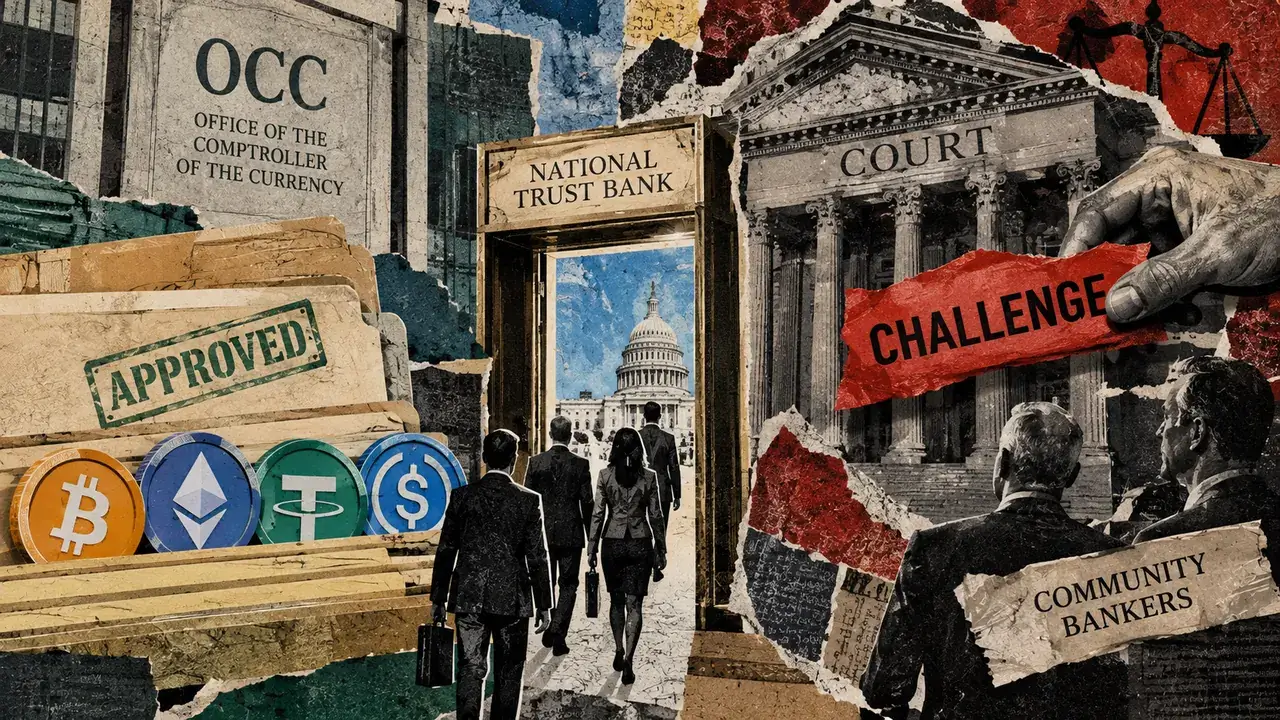
Bankers sue to overturn OCC trust-bank rule used by crypto firms
The Independent Community Bankers of America sued the OCC in federal court in Washington on Oct. 2, two weeks after the agency app...

Central Bank of Iran plans to block rial accounts tied to crypto exchanges
Iran's crypto restrictions could stifle local exchanges, complicate rial-to-crypto conversions, and heighten economic isolation am...

American Bankers Sue OCC Over Crypto Bank Charters, Challenging Coinbase and Circle
The lawsuit, filed October 2 in the U.S. District Court for the District of Columbia, puts the growing role of crypto firms within...

Circle can delay European USDC redemptions if reserves cannot cross borders
European USDC holders seeking dollars from Circle could have to wait if reserves cannot move between its French and U.S. issuers,...

IMF Praises El Salvador — But Still Tries To Scale Back Its Bitcoin Project
Bitcoin Magazine IMF Praises El Salvador — But Still Tries To Scale Back Its Bitcoin Project The International Monetary Fund has p...