Four Crypto Firms Obtain First MiCA Licenses in the Netherlands, Signaling New EU Regulatory Phase
The new development aligns with the EU’s requirements that crypto firms be licensed as Crypto Asset Service Providers (CASPs) to serve customers throughout the bloc. While member states faced a December 30 deadline to ad...
Archive context
Older archive item. Useful for background and entity history, but not a fresh market-moving signal.

The new development aligns with the EU’s requirements that crypto firms be licensed as Crypto Asset Service Providers (CASPs) to serve customers throughout the bloc. While member states faced a December 30 deadline to adopt MiCA, not all jurisdictions have moved at the same pace. Observers say the Netherlands’ swift implementation underscores its position as a frontrunner in European crypto regulation.
Tether Under ScrutinyTether’s USDT stablecoin is under scrutiny in the European Union as the Markets in Crypto-Assets (MiCA) regulation comes into full effect on December 30, 2024. MiCA introduces stringent requirements for stablecoin issuers, including obtaining e-money licenses, maintaining reserves in recognized banks, and adhering to detailed disclosure obligations.
In anticipation of these regulations, Coinbase has proactively delisted USDT for its EU customers, citing compliance concerns. Other major exchanges like Binance and Crypto.com continue to offer USDT, adopting a wait-and-see approach pending explicit directives from European regulators.
The potential delisting of USDT across European platforms raises concerns about market liquidity and stability. USDT is the largest stablecoin by market capitalization and plays a crucial role in facilitating cross-border transactions and providing liquidity on digital asset exchanges. Its removal could lead traders to seek alternatives like Circle’s USDC, which is already MiCA-compliant, though this transition may introduce challenges such as increased trading fees and reduced liquidity.
Tether has expressed concerns over MiCA’s reserve management rules, suggesting they could disrupt its business model and introduce risks to both local banking systems and stablecoins. The company has not yet obtained the official license required under MiCA, in contrast to competitors like Circle, which has been MiCA-compliant since mid-2024.
Tether CEO Paolo Ardoino defiant in Response, Source: X
A Pivotal Moment“MiCA represents a pivotal moment for the European digital asset industry, and we’re proud to have worked collaboratively with the Dutch AFM to be among the first to embrace this new regulatory framework,” said the chief executive and co-founder of MoonPay, one of the newly licensed companies. Backed by prominent investors, MoonPay has been valued at more than $3 billion, reflecting broader market optimism for regulated crypto services in Europe.
The licenses come as the EU’s crypto landscape undergoes significant changes. MiCA, introduced in 2020 and passed in 2023, establishes a uniform rulebook for digital assets. By requiring CASPs to hold one license recognized across the entire bloc, the legislation aims to replace the patchwork of national regulations that have previously governed the sector. Many crypto firms operating in the EU have navigated various regulations and applied for multiple operating permissions in different countries.
Beyond the Netherlands, other jurisdictions are also taking steps to align with emerging EU norms. In Malta, the fan engagement platform Socios.com announced that it had obtained a Class 3 Virtual Financial Assets Act (VFAA) license from the Malta Financial Services Authority. This authorization allows the company to operate as a regulated Virtual Financial Asset service provider under Maltese law, which officials say is compatible with MiCA rules.
The United Kingdom, which has been closely following EU regulatory standards despite no longer being a member of the bloc, recently added trading firm GSR Markets to its crypto register. This move signals the U.K.’s intent to keep pace with Europe’s heightened focus on anti-money laundering and investor protection requirements in the digital assets sector.
MiCA’s overarching goal is to enhance legal clarity, protect investors, and curb market manipulation in the crypto sphere. The framework outlines a phased implementation, beginning with regulations on stablecoins, termed asset-referenced tokens (ARTs) and e-money tokens (EMTs). The next stage involves the licensing of CASPs, with a transitional period allowing existing providers to continue operations while applying for full authorization.
Under MiCA, businesses that offer digital asset management, custody, or crypto-exchange services must adhere to stricter transparency and security requirements. Firms are expected to meet capital thresholds, publish clear whitepapers, and implement robust anti-money laundering measures. Although non-fungible tokens (NFTs) and decentralized applications (dApps) generally fall outside MiCA’s scope, any token resembling a financial instrument could still prompt legal scrutiny.
Why this matters
This research story adds another data point to the current market tape and is useful when read alongside nearby source coverage.
Original source
Read on Brave New CoinRelated market context
Tether Freezes $1.45M in THORChain USDT Vaults, Then Reverses Blacklist Hours Later
Key Takeaways: The amount of about $1.45 million in USDT was temporarily frozen in THORChain vault addresses. According to THORCha...
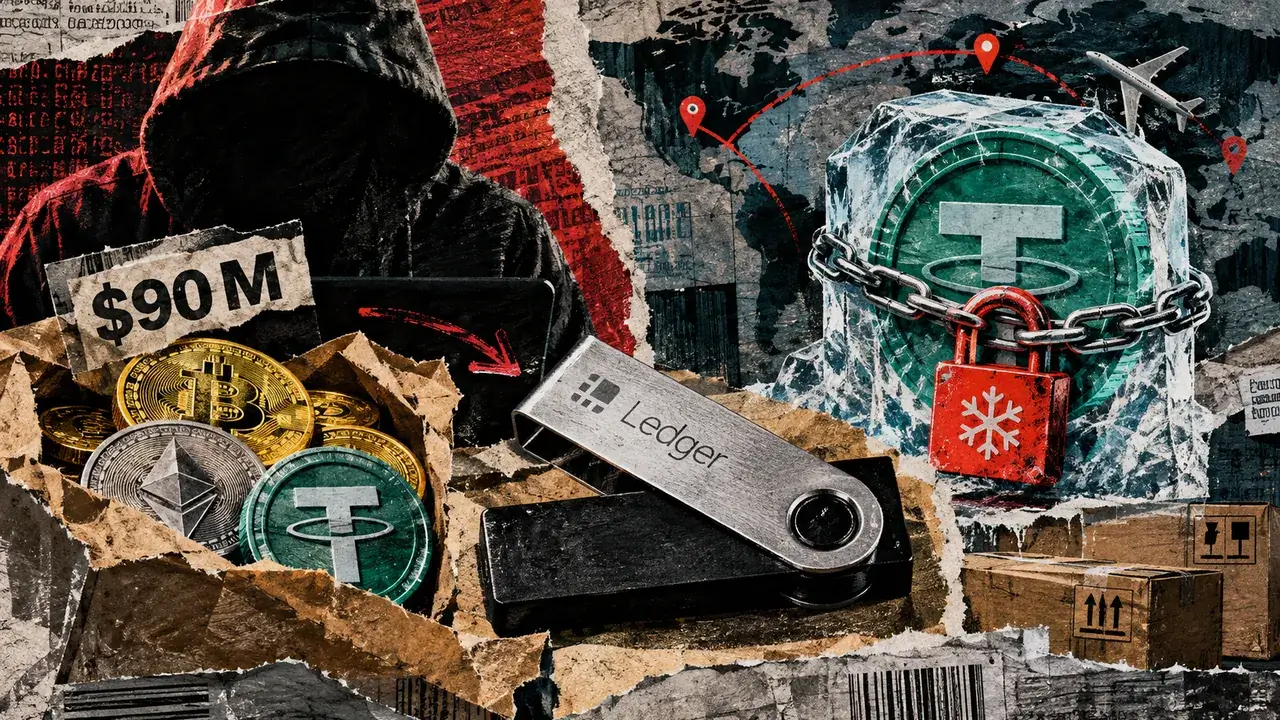
Ledger hack scare nears $90 million as Tether moves to freeze stolen USDT
Suspected Ledger wallet thefts are approaching $90 million as Tether freezes USDT stablecoin linked to the incident, according to...

Tether froze 1.45 million USDT in THORChain vaults, then reversed course three hours later
The incident highlights the vulnerability of DeFi protocols to centralized issuer actions, emphasizing the need for diversified as...

Ledger theft-linked funds shift from USDT to USDD to dodge Tether freezes
The shift from USDT to USDD underscores vulnerabilities in stablecoin freeze mechanisms, prompting scrutiny on regulatory and secu...
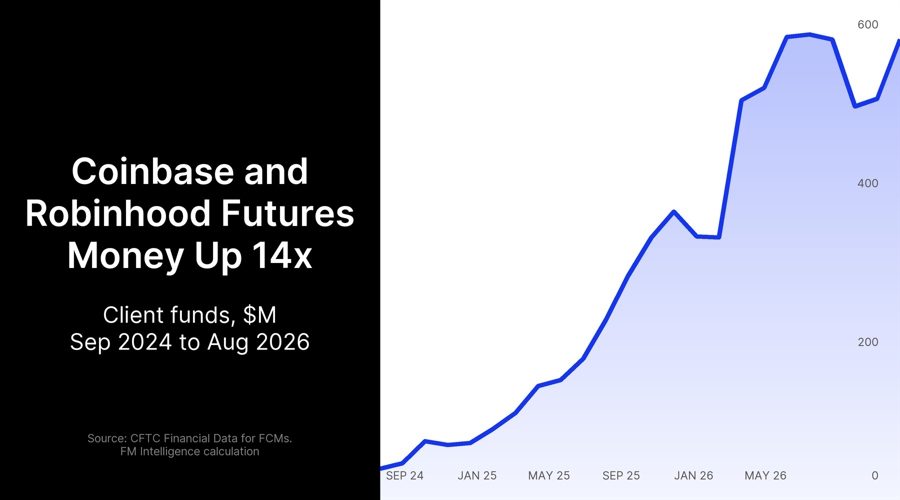
Coinbase and Robinhood Futures Arms Now Hold More Client Money Than the US Retail Forex Pool
The futures brokers of Coinbase and Robinhood held $581.4 million of segregated client money at the end of August. That is more th...

Stealing $1.5B in crypto is easy, cashing out is the trap
North Korean hackers stole around $1.5 billion from Bybit in February 2025. While the hack itself has been widely covered and anal...