France’s crypto kidnapping surge exposes the personal data trail behind wrench attacks
France’s crypto security problem is expanding beyond private keys to include the people whom attackers can identify, threaten, and force to authorize transfers. Interior Minister Laurent Nuñez said French authorities hav...
Archive context
Older archive item. Useful for background and entity history, but not a fresh market-moving signal.

France’s crypto security problem is expanding beyond private keys to include the people whom attackers can identify, threaten, and force to authorize transfers.
Interior Minister Laurent Nuñez said French authorities have recorded 77 cases this year involving unlawful confinement, abduction, extortion, or attempted extortion tied to crypto-sector actors, according to BFM TV.
Le Parisien, in a report published with AFP, said the figure compares with 45 cases across 2025, giving the new total a clear reference point.
The increase is pushing France beyond the familiar playbook of cold storage, seed phrases, and wallet hygiene.
Nuñez said 200 people had been arrested either after incidents or in anticipation, while 724 crypto-sector participants had been enrolled in immediate-identification systems intended to help emergency services recognize high-risk individuals more quickly. The plan he described points to a different kind of crypto security model: intelligence sharing, an expert network linking the industry and the state, and tighter operational cooperation between French services and foreign jurisdictions where organizers may be based.
France is becoming a test case for a problem the industry has often treated as peripheral. Public wealth, liquid assets, leaked personal data, and online visibility can turn crypto ownership into a physical-security exposure for founders, executives, public investors, employees, families, and high-profile holders.
Related Reading Crypto holders in France are being violently targeted again — and it’s no longer just insiders Once the target pool expands beyond executives, the security playbook shifts to delays, multisig, secrecy, and physical protection. Mar 13, 2026 · Gino Matos France’s new numbers change the risk modelThe headline figure marks the point at which French authorities are treating crypto-linked coercion as a recurring organized-crime problem.
Figure What it measures Why it changes the response 77 Crypto-linked sequestration, kidnapping, extortion, or attempted extortion cases reported this year Shows the threat has become frequent enough to drive a dedicated state response 45 Comparable cases recorded in 2025 Gives the new figure a year-over-year reference point 200 People arrested after incidents or in anticipation Shows police are trying to disrupt networks before attacks occur 724 Crypto-sector beneficiaries registered on immediate-identification platforms Shows the response is becoming operationalThe attack surface now includes more than an exchange, a smart contract, or a wallet. The person behind an account can become the attack surface.
A founder whose address is exposed, an employee whose role is visible, or a major holder whose wealth is signaled online may face risks that software controls alone cannot absorb.
The risk boundary is still tighter than broad crypto ownership. The French figures and official response are centered on crypto-sector actors and exposed people.
The practical takeaway is targeted: firms and visible holders need to treat personal information, travel patterns, public appearances, home addresses, and emergency-response channels as part of their security posture.
Crypto security culture has long focused on preventing unauthorized digital access. Hardware wallets, multisig, withdrawal delays, and custody controls all reduce the chance that a remote attacker can drain funds without consent.
Physical coercion changes the problem. Once criminals identify a person with access, the technical barrier becomes one layer of defense among several.
The aim is to pressure, threaten, or detain someone who can authorize a transfer.
That dynamic explains why the French plan leans toward intelligence and coordination. Le Parisien reported that Nuñez described three axes: reinforced intelligence sharing, a deeper partnership with ADAN through a network of experts from the sector and relevant state agents, and stronger operational coordination among services and with countries where organizers may be present.
France is building a police-industry bridgeThe French approach treats attackers as networks first and opportunists second. It also assumes that the useful data may sit outside the blockchain: addresses, family links, executive roles, social media trails, leaked customer records, company filings, conference attendance, and information about who has authority to move assets.
Related Reading Ledger customer data breached including info that leads violent criminals to your door A third-party ecommerce compromise can doxx buyers and sharpen social-engineering attacks even when private keys remain safe. Jan 6, 2026 · Gino MatosCrypto’s public ledgers can help investigators trace stolen funds. Blockchain visibility still cannot prevent coercion before it starts.
Chainalysis has warned in its 2026 Crypto Crime Report introduction that physical coercion and violence are increasingly intersecting with on-chain activity as criminals force victims to transfer assets.
CertiK separately reported 72 verified physical coercion incidents worldwide in 2025, up 75% from 2024, with kidnapping as the primary vector and physical assaults up 250%.
Methodologies differ between security researchers and French officials, so the figures should sit beside each other as context instead of a direct comparison.
They still point in the same direction: crypto wealth is creating a risk category that sits between cybercrime, organized crime, executive protection, and financial intelligence.
France had already begun building a crypto-sector protection framework before the latest figures.
In May 2025, the Interior Ministry said after meeting sector actors that measures would include priority emergency access, home-security audits for exposed people, briefings by elite units including GIGN, RAID, and BRI, a cybercrime contact point, and an ADAN-linked working group.
The June 30 update suggests that architecture is becoming more formal. Immediate-identification platforms are meant to give registered high-risk people a faster way to be recognized by emergency services.
Intelligence sharing is meant to help authorities move from reacting to attacks toward mapping organizers and logistics. Cross-border coordination has become central because commanditaires, recruiters, or handlers may be outside France.
The kidnapping of Ledger co-founder David Balland showed why that blend matters.
The Gendarmerie described a response involving judicial organized-crime coordination, GIGN deployment, cyber specialists, crypto ransom tracing and freezing, and more than 230 gendarmes.
That is a full law-enforcement operation in which the digital asset and the physical victim are part of the same case.
France has also begun addressing the data-exposure side of the problem. A 2025 decree published on Légifrance allows company officers and indefinitely liable partners to request that personal home addresses be kept confidential in company registry filings.
Although broader than crypto, the measure speaks directly to one of the mechanisms that can make executives and entrepreneurs easier to target.
The next security layer is operationalFor the crypto industry, the implication is practical and uncomfortable. A firm can have strong custody controls and still expose people through public records, staff profiles, predictable routines, conference schedules, or weak internal escalation procedures.
That makes physical security and data minimization operational issues for any business with exposed leadership or staff who can authorize movement of funds.
Companies may need clearer threat models for who can authorize transfers, who appears in public materials, what information is available about family members or home addresses, and how quickly they can reach law enforcement if a threat emerges.
The same applies to high-profile holders and influencers, though the risk is unevenly distributed. Public status, visible wealth, and identifiable location data create a different exposure profile from simple asset ownership.
The more an attacker can connect a person, an address, a role, and an assumed balance, the less the threat looks like generic crypto crime and the more it looks like targeted extortion.
Related Reading Lamborghini Bitcoin carjacking puts crypto's wrench-attack crisis in a US courtroom A Missouri man's guilty plea links a Danbury kidnapping to the same human-targeting pattern already visible in France. Jun 9, 2026 · Liam 'Akiba' WrightCryptoSlate has previously covered the rise in physical wrench attacks and the way France became a focal point for violent targeting.
The new development is that French officials are now describing an expanded response around numbers, registration systems, intelligence flows, and international coordination.
That is the signal to watch. If the French approach works, the next phase of crypto security may look less like a wallet tutorial and more like the risk programs used in banking, executive protection, and organized-crime investigations.
If it fails, attackers may keep adapting through proxies, foreign organizers, leaked data, and lower-level recruits who can be replaced after arrests.
The market’s security frontier is moving offline. For visible crypto operators, the next test is whether enough personal, corporate, and law-enforcement infrastructure exists to stop digital wealth from becoming a physical target.
The post France’s crypto kidnapping surge exposes the personal data trail behind wrench attacks appeared first on CryptoSlate.
Why this matters
Bitcoin is showing up inside the Regulation theme, so this story is worth tracking for follow-through rather than treating it as a one-off headline.
Original source
Read on CryptoSlateRelated market context
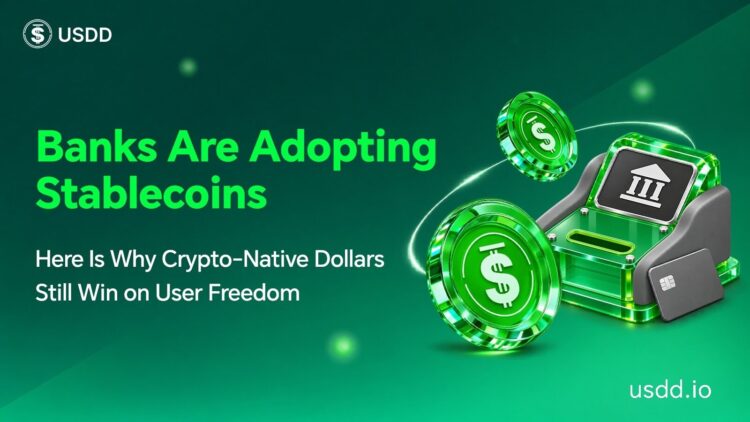
As traditional giants rush into digital dollars, USDD’s Yvonne Chia explains why 24/7 access, self-custody, and transparent yield give decentralized stablecoins an edge banks can’t replicate. 20 November – Road Town, Totorla, British Virgin Islands – Decentralized stablecoin protocol USDD is accelerating its multichain utility across TRON, Ethereum, and BNB Chain—combining automated sUSDD yield via its Smart Allocator with GasFree zero-TRX transfers—as traditional financial giants race to build competing stablecoin rails. In a recent industry interview with instant exchange partner ChangeNOW, USDD Head of Communications Yvonne Chia outlined why self-custody, 24/7 settlement, and transparent onchain reserves give decentralized digital dollars a structural advantage over bank-issued alternatives. 1. Permissionless Access vs. Gatekept Accounts For billions of people globally, opening and maintaining a traditional bank account still involves paperwork, minimum balance requirements, geographic restrictions, and approval delays. Even when banks integrate stablecoin rails behind the scenes, those services remain gated behind legacy compliance walls and intermediary control. Crypto-native stablecoins flip that model on its head. As Yvonne Chia highlighted during the interview: “Compare this to a stablecoin like USDD, where all you need is a phone, a working internet connection, you can immediately start a wallet and you have access to your funds right away.” With USDD, users can access and manage their digital dollars directly through their own wallets, without depending on traditional financial intermediaries. This represents a fundamental shift in financial access: users are no longer limited to the services, operating hours, or account structures of a single institution. Instead, they have the freedom to hold, manage, and transfer their assets on their own terms. Self-custody also gives users greater autonomy over their financial decisions. They can choose which wallets to use, where to transfer their assets, and which supported decentralized applications to interact with, without needing to route every transaction through a centralized financial institution. With USDD, users’ digital dollars can move with them across an open blockchain ecosystem, rather than remaining tied to a particular bank or service provider. 2. 24/7 Global Settlement vs. “Banking Hours” Legacy payment networks still operate on decades-old schedules: weekend cutoffs, bank holidays, and multi-day cross-border settlement delays accompanied by hefty wire fees. Blockchain networks never close. Whether it is a Sunday night or a public holiday, USDD moves globally without depending on traditional banking operating hours or settlement windows. “We are able to have transfers 24/7 and we’re not limited to any traditional banking hours. So I think that in some ways, stablecoins are not just becoming banks, but exceeding what traditional banks can offer to users.” To make everyday transfers even smoother than fintech apps, USDD introduced GasFree integration on TRON, allowing users on supported wallets to pay network fees directly in USDD without needing to hold TRX. This removes another practical barrier to stablecoin adoption: having to acquire and maintain a separate gas token just to transfer digital dollars. With GasFree, eligible users can pay approximately 0.5 USDD per transaction, compared with around 1.5 USDT for a standard USDT transfer under the referenced fee conditions. These improvements matter because the usefulness of a stablecoin is not determined by its peg alone. Low-cost transfers, straightforward wallet experiences, and around-the-clock availability are what make digital dollars practical for everyday payments and global value transfers. 3. Passing Yield Back to Users vs. Bank Spreads Perhaps the sharpest contrast between banks and decentralized stablecoins lies in how yield is distributed. In traditional banking, institutions take customer deposits, deploy them into yield-generating markets, and retain a significant portion of the returns. Everyday depositors may receive relatively low interest rates, while higher-yielding products often come with eligibility requirements, minimum deposits, or fixed maturity periods. Stablecoins introduce another way to participate in digital-dollar opportunities. Rather than keeping capital entirely within a traditional deposit account, users can access onchain yield opportunities through decentralized protocols and transparent investment mechanisms. USDD was built to return that value directly to holders. Through USDD Earn, users can deposit USDD to receive sUSDD, earning automated, competitive yield powered by our Smart Allocator system, with no fixed lock-up periods restricting access to their capital. For users, the distinction is important: USDD Earn provides access to a productive stablecoin while maintaining flexibility, rather than requiring users to commit their capital to a conventional fixed-term product. 4. Onchain Verification vs. Institutional Trust Traditional banks ask customers to trust closed-door balance sheets and periodic regulatory filings—until a crisis proves otherwise. USDD takes a different approach through its “Don’t trust, verify” ethos, emphasizing publicly accessible onchain information and independent verification. Onchain Transparency: Smart contract addresses, collateral reserves, and Smart Allocator deployments are publicly viewable, allowing users to examine relevant information directly on the blockchain. Structured Disclosures: Quarterly Treasury Reports provide additional information about reserve positions, financial performance, and operational developments. Independent Security Reviews: USDD undergoes third-party security audits to assess its smart contracts and identify potential vulnerabilities. Transparency does not eliminate financial or technical risks, but it changes how users can evaluate them. Instead of relying exclusively on an institution’s assurances, users have access to information that can be independently examined and verified. 5. Beyond a Single Network: An Open, Multichain Financial Ecosystem Financial freedom is not just about holding digital dollars. It is also about being able to use them wherever opportunities and applications exist. A stablecoin confined to a single network or limited use case cannot fully realize the potential of open blockchain finance. Following its January 2025 protocol upgrade, USDD expanded natively from TRON onto Ethereum and BNB Chain, extending its reach across multiple blockchain ecosystems. This multichain presence allows USDD to connect with different communities, liquidity environments, and decentralized applications. Its sUSDD product has also expanded into DeFi integrations, including Pendle and Morpho, giving users additional ways to access yield strategies across supported ecosystems. The bigger picture is an interconnected financial ecosystem in which users can move between holding, transferring, exchanging, and deploying their stablecoins according to their own needs. These are not isolated functions. Together, they make stablecoins more useful as everyday financial infrastructure. The Future: Interconnected, Open, and Multichain Banks will undoubtedly continue using stablecoin rails to modernize their back-end settlement. However, true financial freedom comes from open networks where assets flow freely across protocols without intermediaries. For USDD, the opportunity goes beyond offering a dollar-pegged asset. It is about making digital dollars accessible, transferable, and productive across an interconnected financial ecosystem. From self-custody and 24/7 transfers to flexible yield opportunities and multichain DeFi access, these capabilities give users more ways to put their money to work. Banks may be bringing stablecoins into traditional finance. Crypto-native protocols are showing what stablecoins can make possible beyond it.
As traditional giants rush into digital dollars, USDD’s Yvonne Chia explains why 24/7 access, self-custody, and transparent yield...
NYSE taps Avalanche for tokenized securities, Bitwise cites privacy, security, and compliance
NYSE's adoption of Avalanche for tokenized securities highlights a shift towards blockchain solutions prioritizing privacy and com...

SEC Nominee Kristin Johnson Wants Tokenized Stock Exemption Put Through Public Comment
The SEC’s tokenized stock “innovation exemption” should go through formal public comment, Democratic nominee Kristin Johnson told...

Bitcoin faces a quantum security challenge with roughly 6 million coins exposed
The looming quantum threat to Bitcoin's security could force a significant overhaul of its infrastructure, impacting users and the...

Researchers Publish Security Analysis of Bitcoin’s Post-Quantum SHRINCS Proposal
Bitcoin Magazine Researchers Publish Security Analysis of Bitcoin’s Post-Quantum SHRINCS Proposal Several researchers have publish...

Ledger CTO Charles Guillemet Exits After Nine Years, Warns AI Is Changing Crypto Security
Key Takeaways: Charles Guillemet, CTO will be exiting the company at the end of 2026. He contributed to the development of Ledger...