GAIMIN Releases Platform to Create a Global Data Processing Network With “Supercomputer” Performance
PRESS RELEASE. Manchester, UK, 25 November 2021: GAIMIN releases platform to create a global data processing network with “supercomputer” performance UK and Swiss based gaming and blockchain company, GAIMIN․IO Ltd releas...
Archive context
Older archive item. Useful for background and entity history, but not a fresh market-moving signal.
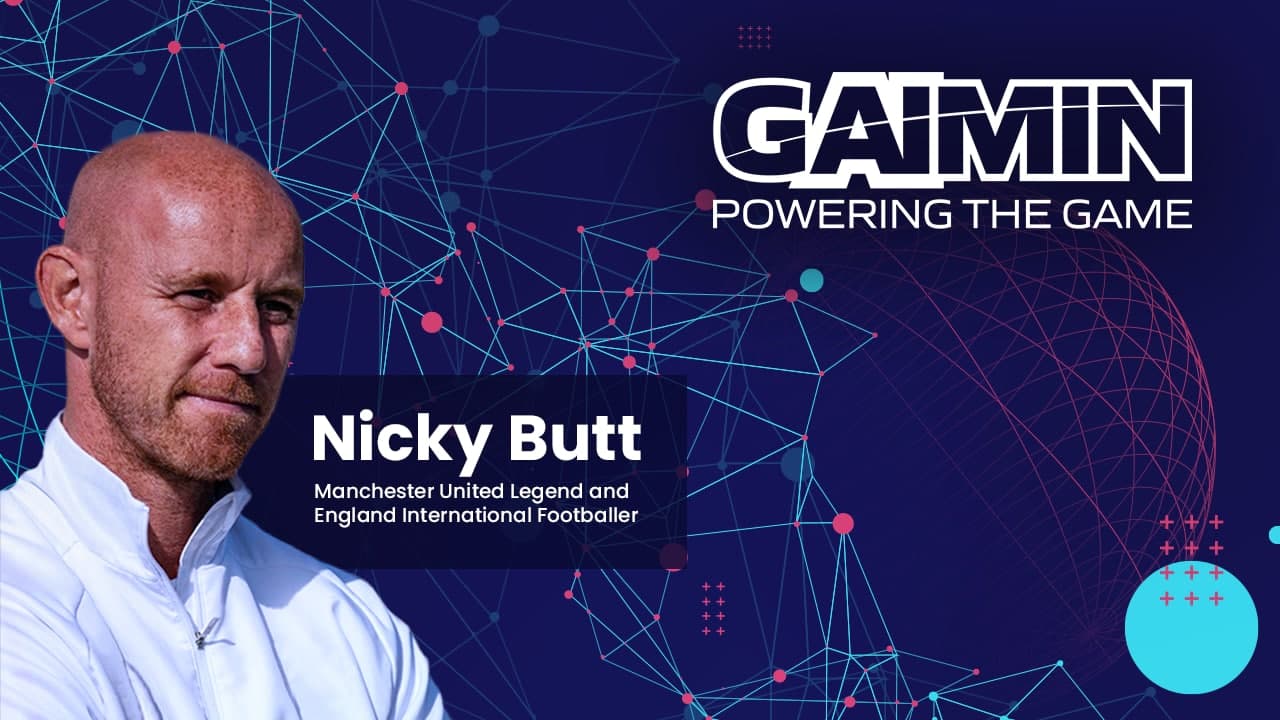
PRESS RELEASE. Manchester, UK, 25 November 2021: GAIMIN releases platform to create a global data processing network with “supercomputer” performance
UK and Swiss based gaming and blockchain company, GAIMIN․IO Ltd releases a PC-based platform to create a global, decentralised data processing network with “supercomputer” level performance and also announces Nicky Butt, ex-Manchester United, Newcastle and England Team Player as Company Ambassador.
A new UK-based technology platform designed to boost the world’s processing power using high-end gaming PCs has opened its platform to users. GAIMIN utilises the unused processing power available from the GPUs of high-end gaming PCs to boost global processing power virtually, effectively creating a huge global supercomputer.
GAIMIN’s platform harnesses the “spare” processing capacity from gaming PCs creating a virtual source of interconnected, networked, data processing power that businesses and institutions can tap into. GAIMIN currently uses this network of processing capacity to ‘power blockchain computations’, commonly known as mining. Blockchains form part of the underlying technology behind new advances such as cryptocurrencies, non-fungible tokens (NFTs) and the Metaverse. Using AI, the GAIMIN platform selects the most profitable blockchain to power and returns 90% of the rewards back to users.
In the future, the GAIMIN data processing network will be utilised for more complex tasks such as video rendering and future vaccine sequencing, enabling businesses to run high-demand data processing tasks without major infrastructure changes.
GAIMIN compensates the gamer in its own cryptocurrency token – GMRX. GMRX tokens can be withdrawn or more commonly spent in the GAIMIN Marketplace, on NFTs, gaming assets, accessories and merchandise.
GAIMIN’s ‘virtual’ processing power supply platform is a more efficient and effective alternative to the traditional approach to supplementing processing power, which relies on a business increasing its own hardware or using centralised data processing centres.
Backed by a board of industry experts and advisors including ex-professional Esports player and strategic coach Joseph Turner, and former Credit Suisse Vice President turned regulatory and compliance consultant to Blockchain and crypto companies, Simon Quirke, the business has a wealth of experience to lean on as it launches.
Martin Speight, CEO at GAIMIN, says: “The solution has been created to help address the fact that the world is running out of computing capacity, a belief echoed by Microsoft CEO Satya Nadella at the World Economic Forum.”
Martin explains, “The demand for data processing power continues to rise. Centralised data processing centres are one solution but not without their own significant limitations. Our solution decentralises the requirement, taking available power within a platform of interconnected devices and creating ‘supercomputer’ processing power without the associated risks.”
GAIMIN is also pleased to welcome Nicky Butt, ex-Manchester United, Newcastle and national England Team Player as Ambassador and Investor in the company.
Martin Speight, further commented, “I am delighted to welcome Nicky on board as part of the GAIMIN team. He brings a wealth of experience not only from his football and coaching career, but also from his entrepreneur and investor experience. Nicky will be a valuable member of the GAIMIN team, working as an Ambassador to represent GAIMIN, our technology and services and brand values to his wide-reaching community of business, football and gaming influencers.”
On his appointment as GAIMIN Ambassador, Nicky Butt commented “I am delighted to join the GAIMIN team. I have been looking for an exciting new business opportunity to get involved in; one that is outside of my typical area of expertise, but one that utilises the skills, experience and interests I have built up over the last few years. GAIMIN presents the ideal opportunity for me – not only as an investment opportunity but also providing me with an active role as an Ambassador for the company, helping grow the business through my contacts and experience”.
About Nicky Butt
Nicky Butt is an ex Manchester United, Newcastle United and national England team player who more recently moved into the coaching arena. Nicky spent 12 years in the Manchester United First Team, winning 7 Premier League titles. As one of the “Class of 92”, the hyper-successful Manchester United side of the 90’s, Nicky is a co-investor in Co92 initiatives, including Hotel Football, Salford City and the Co92 University – UA92.
Following an introduction to GAIMIN, and after a review of the technology and business potential of GAIMIN, Nicky has personally invested in GAIMIN and has taken the role of Ambassador for the company.
As GAIMIN Ambassador, Nicky will personally represent GAIMIN at a number of strategic business events and help promote the key marketing messages of the company to his influential network. Nicky will also contribute to the growth of the business utilising his extensive knowledge and experience in coaching, teamwork and management skills.
About GAIMIN
GAIMIN․IO Ltd (GAIMIN) is a UK and Swiss based gaming company focussed on helping the gaming community monetise the computational power of their gaming PC. GAIMIN has created a decentralised data processing network harnessing under utilised processing power typically found in gaming PC’s to create a world-wide decentralised data processing network, delivering “supercomputer” performance.
With a free to download PC-based application GAIMIN moentises the under utilised performance through innovative approaches to delivering “supercomputer” level data processing performance from a world-wide network of independent processing devices. Focusing initially on the powering of blockchain computations, the GAIMIN data processing network also supports a number of different large scale data processing applications, including video rendering.
GAIMIN pays users in its own crypto currency, GMRX which can then be used for purchases on the GAIMIN Marketplace for NFTs, in-game assets, accessories and merchandise, or it can be converted to fiat or a different crypto currency.
For further information, please contact:
The Americas, Middle East and Australian Pacific – Andrew Faridani, Chief Marketing Officer for GAIMIN (based in Toronto, Canada): [email protected]
UK and Europe – Marc Bray, Director of Communications for GAIMIN (based in Manchester, UK): [email protected]
This is a press release. Readers should do their own due diligence before taking any actions related to the promoted company or any of its affiliates or services. Bitcoin.com is not responsible, directly or indirectly, for any damage or loss caused or alleged to be caused by or in connection with the use of or reliance on any content, goods or services mentioned in the press release.
Why this matters
This research story adds another data point to the current market tape and is useful when read alongside nearby source coverage.
Original source
Read on Bitcoin NewsRelated market context
As traditional giants rush into digital dollars, USDD’s Yvonne Chia explains why 24/7 access, self-custody, and transparent yield give decentralized stablecoins an edge banks can’t replicate. 20 November – Road Town, Totorla, British Virgin Islands – Decentralized stablecoin protocol USDD is accelerating its multichain utility across TRON, Ethereum, and BNB Chain—combining automated sUSDD yield via its Smart Allocator with GasFree zero-TRX transfers—as traditional financial giants race to build competing stablecoin rails. In a recent industry interview with instant exchange partner ChangeNOW, USDD Head of Communications Yvonne Chia outlined why self-custody, 24/7 settlement, and transparent onchain reserves give decentralized digital dollars a structural advantage over bank-issued alternatives. 1. Permissionless Access vs. Gatekept Accounts For billions of people globally, opening and maintaining a traditional bank account still involves paperwork, minimum balance requirements, geographic restrictions, and approval delays. Even when banks integrate stablecoin rails behind the scenes, those services remain gated behind legacy compliance walls and intermediary control. Crypto-native stablecoins flip that model on its head. As Yvonne Chia highlighted during the interview: “Compare this to a stablecoin like USDD, where all you need is a phone, a working internet connection, you can immediately start a wallet and you have access to your funds right away.” With USDD, users can access and manage their digital dollars directly through their own wallets, without depending on traditional financial intermediaries. This represents a fundamental shift in financial access: users are no longer limited to the services, operating hours, or account structures of a single institution. Instead, they have the freedom to hold, manage, and transfer their assets on their own terms. Self-custody also gives users greater autonomy over their financial decisions. They can choose which wallets to use, where to transfer their assets, and which supported decentralized applications to interact with, without needing to route every transaction through a centralized financial institution. With USDD, users’ digital dollars can move with them across an open blockchain ecosystem, rather than remaining tied to a particular bank or service provider. 2. 24/7 Global Settlement vs. “Banking Hours” Legacy payment networks still operate on decades-old schedules: weekend cutoffs, bank holidays, and multi-day cross-border settlement delays accompanied by hefty wire fees. Blockchain networks never close. Whether it is a Sunday night or a public holiday, USDD moves globally without depending on traditional banking operating hours or settlement windows. “We are able to have transfers 24/7 and we’re not limited to any traditional banking hours. So I think that in some ways, stablecoins are not just becoming banks, but exceeding what traditional banks can offer to users.” To make everyday transfers even smoother than fintech apps, USDD introduced GasFree integration on TRON, allowing users on supported wallets to pay network fees directly in USDD without needing to hold TRX. This removes another practical barrier to stablecoin adoption: having to acquire and maintain a separate gas token just to transfer digital dollars. With GasFree, eligible users can pay approximately 0.5 USDD per transaction, compared with around 1.5 USDT for a standard USDT transfer under the referenced fee conditions. These improvements matter because the usefulness of a stablecoin is not determined by its peg alone. Low-cost transfers, straightforward wallet experiences, and around-the-clock availability are what make digital dollars practical for everyday payments and global value transfers. 3. Passing Yield Back to Users vs. Bank Spreads Perhaps the sharpest contrast between banks and decentralized stablecoins lies in how yield is distributed. In traditional banking, institutions take customer deposits, deploy them into yield-generating markets, and retain a significant portion of the returns. Everyday depositors may receive relatively low interest rates, while higher-yielding products often come with eligibility requirements, minimum deposits, or fixed maturity periods. Stablecoins introduce another way to participate in digital-dollar opportunities. Rather than keeping capital entirely within a traditional deposit account, users can access onchain yield opportunities through decentralized protocols and transparent investment mechanisms. USDD was built to return that value directly to holders. Through USDD Earn, users can deposit USDD to receive sUSDD, earning automated, competitive yield powered by our Smart Allocator system, with no fixed lock-up periods restricting access to their capital. For users, the distinction is important: USDD Earn provides access to a productive stablecoin while maintaining flexibility, rather than requiring users to commit their capital to a conventional fixed-term product. 4. Onchain Verification vs. Institutional Trust Traditional banks ask customers to trust closed-door balance sheets and periodic regulatory filings—until a crisis proves otherwise. USDD takes a different approach through its “Don’t trust, verify” ethos, emphasizing publicly accessible onchain information and independent verification. Onchain Transparency: Smart contract addresses, collateral reserves, and Smart Allocator deployments are publicly viewable, allowing users to examine relevant information directly on the blockchain. Structured Disclosures: Quarterly Treasury Reports provide additional information about reserve positions, financial performance, and operational developments. Independent Security Reviews: USDD undergoes third-party security audits to assess its smart contracts and identify potential vulnerabilities. Transparency does not eliminate financial or technical risks, but it changes how users can evaluate them. Instead of relying exclusively on an institution’s assurances, users have access to information that can be independently examined and verified. 5. Beyond a Single Network: An Open, Multichain Financial Ecosystem Financial freedom is not just about holding digital dollars. It is also about being able to use them wherever opportunities and applications exist. A stablecoin confined to a single network or limited use case cannot fully realize the potential of open blockchain finance. Following its January 2025 protocol upgrade, USDD expanded natively from TRON onto Ethereum and BNB Chain, extending its reach across multiple blockchain ecosystems. This multichain presence allows USDD to connect with different communities, liquidity environments, and decentralized applications. Its sUSDD product has also expanded into DeFi integrations, including Pendle and Morpho, giving users additional ways to access yield strategies across supported ecosystems. The bigger picture is an interconnected financial ecosystem in which users can move between holding, transferring, exchanging, and deploying their stablecoins according to their own needs. These are not isolated functions. Together, they make stablecoins more useful as everyday financial infrastructure. The Future: Interconnected, Open, and Multichain Banks will undoubtedly continue using stablecoin rails to modernize their back-end settlement. However, true financial freedom comes from open networks where assets flow freely across protocols without intermediaries. For USDD, the opportunity goes beyond offering a dollar-pegged asset. It is about making digital dollars accessible, transferable, and productive across an interconnected financial ecosystem. From self-custody and 24/7 transfers to flexible yield opportunities and multichain DeFi access, these capabilities give users more ways to put their money to work. Banks may be bringing stablecoins into traditional finance. Crypto-native protocols are showing what stablecoins can make possible beyond it.
As traditional giants rush into digital dollars, USDD’s Yvonne Chia explains why 24/7 access, self-custody, and transparent yield...

How to Deposit Bitcoin at an Online Entertainment Platform
Depositing Bitcoin at an online entertainment platform means selecting Bitcoin in the cashier, copying the address or Lightning in...

Tether Backs SCRYPT to Scale Institutional Stablecoin Payments Across Global Markets
Key Takeaways: Tether has staked money in the Swiss stablecoin platform called SCRYPT. This deal is meant for institutional paymen...

Luxor ties 9.13% Bitcoin difficulty drop to West Texas power prices
Fluctuating energy costs in key regions like Texas can significantly impact global Bitcoin mining operations, affecting network st...
Coinbase CEO Brian Armstrong says AI agents can give workers an unlimited team of L5-level staff
AI agents could revolutionize workforce dynamics, shifting focus from hiring to oversight, but human judgment remains crucial for...

CleanSpark’s Harry Sudock says power access is the real edge for Bitcoin miners
The focus on power access over traditional metrics could reshape Bitcoin mining, emphasizing energy infrastructure as a key compet...