Government Shutdown Threatens Crypto Markets as Political Deadlock Intensifies
Political negotiations have stalled between Republicans and Democrats over spending priorities. Republicans want a clean continuing resolution extending funding through mid-November, while Democrats demand broader change...
Archive context
Older archive item. Useful for background and entity history, but not a fresh market-moving signal.

Political negotiations have stalled between Republicans and Democrats over spending priorities. Republicans want a clean continuing resolution extending funding through mid-November, while Democrats demand broader changes including healthcare provisions. The House may not return to session until the Senate acts, creating additional time pressure.
Prediction markets show a 43% chance of shutdown occurring before year-end, with over $1.2 million wagered on the outcome. This political uncertainty has sent shockwaves through financial markets, particularly affecting volatile assets like cryptocurrencies.
Crypto Takes Heavy HitBitcoin dropped from around $104,000 to $96,522 over 24 hours, marking a 5.73% decline. Ethereum performed worse, falling 9.85% to $3,511. Solana crashed 13% to $196. These moves wiped over $1.1 billion from crypto markets as investors fled risky assets.
The selloff continued throughout the week. Ethereum broke below $4,000 for the first time since August, leading a broader crypto decline that erased more than $140 billion in market value. Trading volumes spiked as holders rushed to exit positions.
Current prices show some recovery, with Ethereum trading at $4,018 and Bitcoin around $109,568. However, both remain below recent peaks, with Bitcoin having reached an all-time high above $115,970 on September 14, 2025.
Regulatory Work Faces DelaysA government shutdown would severely limit operations at key financial regulators. The Securities and Exchange Commission would operate with just 10% of normal staff, focusing only on essential functions like preventing fraud.
This skeleton crew setup could delay important crypto decisions. ETF applications might face postponements, and new rule proposals could stall. The SEC and CFTC recently issued joint guidance allowing spot crypto trading on registered exchanges, but further progress could slow.
“A shutdown would stall critical progress on crypto policy,” said Jessica Martinez from the Blockchain Association. The group represents major crypto companies seeking regulatory clarity.
Source: @WhiteHouse
Previous shutdowns provide context for potential impacts. During the 2018-2019 closure lasting 35 days, crypto companies like Bakkt saw approvals delayed for weeks. One Bitcoin ETF application was withdrawn entirely, with executives citing the shutdown as the reason.
Legislative Progress at RiskCongress has been working on comprehensive crypto legislation to provide clear rules for digital assets. The CLARITY Act passed the House, defining when tokens should be treated as securities versus commodities. A Senate version addresses market structure issues.
However, a shutdown could derail this momentum. The Senate Banking Committee already pushed back a planned markup hearing from September 30 to late October. Further delays seem likely if government operations halt.
“I don’t want to put an artificial deadline on anything,” said Senator Kirsten Gillibrand, acknowledging that budget battles take priority over crypto bills. The longer political drama continues, the less time remains for complex legislation.
Industry leaders remain optimistic about long-term prospects despite potential setbacks. Didier Lavallee from Tetra Digital noted that crypto policy enjoys bipartisan support, making fundamental derailment unlikely even with temporary delays.
Market Psychology ShiftsGovernment shutdowns typically trigger “risk-off” behavior among investors. Money flows from volatile assets like crypto toward traditional safe havens including Treasury bonds and the dollar. This pattern helps explain the recent crypto selloff.
The Federal Reserve ended its special crypto monitoring program in August, moving oversight back to normal banking supervision. This change was seen as positive for the industry, but shutdown fears have overshadowed such developments.
Institutional investors, who have driven much recent crypto adoption, tend to be particularly sensitive to political uncertainty. Major firms may reduce crypto exposure until the situation stabilizes, potentially extending downward pressure on prices.
Historical data shows the U.S. has experienced 14 government shutdowns since 1980, with the longest lasting 35 days from December 2018 into January 2019. Each week of closure typically costs the economy about $7 billion according to economic analysis. The crypto market, now worth over $2 trillion globally, represents a significant portion of financial assets that could face disruption.
What Happens NextCongress has until Tuesday to avoid shutdown. House Republicans have indicated they may not reconvene until the Senate passes something first. This political gamesmanship raises shutdown odds as the deadline approaches.
If government does close, effects would begin immediately. Essential services continue, but many federal workers face unpaid leave. Financial regulators would operate with minimal staff, creating uncertainty for pending crypto matters.
The Justice Department recently disbanded its crypto enforcement team under the current administration’s more industry-friendly approach. However, shutdown could still impact ongoing legal cases and regulatory proceedings.
Market participants are watching for signs of compromise in Washington. Previous shutdowns have ended with short-term funding deals that often just push problems down the road. This pattern suggests more budget battles could emerge even after immediate crisis passes.
Crypto advocates hope regulatory momentum can resume quickly once normal operations restart. The SEC’s new Crypto Task Force and recent joint guidance with the CFTC represent positive steps that industry wants to build upon.
The Waiting Game ContinuesA government shutdown would create another bump in crypto’s path toward mainstream acceptance. While unlikely to cause permanent damage, delays in regulation and market uncertainty could slow progress for months.
The next few days will determine whether Washington can avoid crisis or if crypto markets must weather another storm. Either way, the political drama highlights how dependent digital assets remain on traditional government decisions despite their decentralized nature.
Why this matters
This research story adds another data point to the current market tape and is useful when read alongside nearby source coverage.
Original source
Read on Brave New CoinRelated market context

Tokenized real-world assets hit $46.2 billion across 36 chains
The rise of tokenized assets could revolutionize finance, but regulatory uncertainty and market discrepancies pose significant cha...

Base Cobalt Goes Live With Conditional Trades and New B20 Controls for Tokenized Assets
Key Takeaways: The newest Cobalt upgrade by Base has been activated on the mainnet. Traders can send orders which will only be fil...

Tokenized Stocks, Investor Rights, and Their Crypto Role
Tokenized stocks could give crypto-native investors access to equity exposure through crypto platforms, but a token that tracks a...
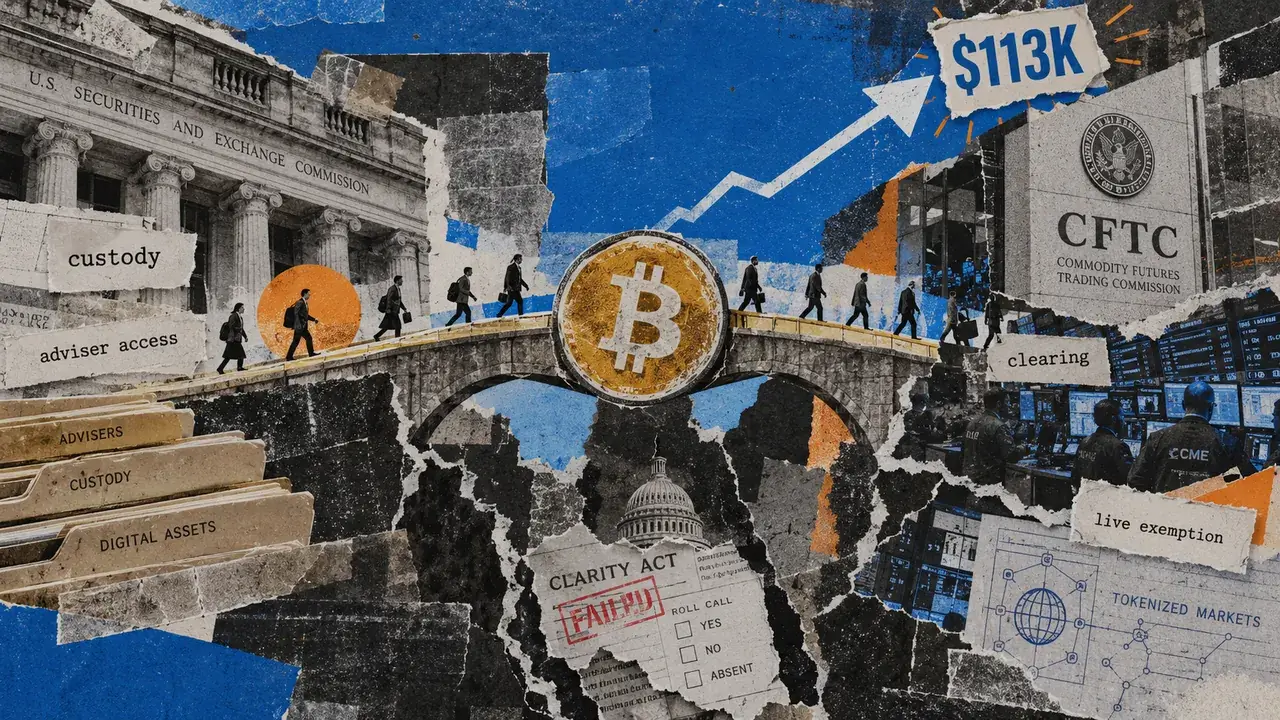
Bitcoin’s $113,000 case strengthens as US regulators push 9 crypto actions
The US Securities and Exchange Commission (SEC) proposed a custody framework on Oct. 1 that would let investment advisers and regu...

RWA Foundation report tracks 10,322 tokenized real-world assets
The growing tokenization of real-world assets signifies a shift towards more integrated and accessible financial markets, enhancin...

Bitcoin Price Surges Above $87,000 on Softer-Than-Expected Jobs Data
Bitcoin Magazine Bitcoin Price Surges Above $87,000 on Softer-Than-Expected Jobs Data The price of bitcoin surged above $87,000 on...