‘Help Ukraine’ Scams Appear as Country Seeks Crypto Donations, Report Reveals
Scams have started exploiting the desire of many in the crypto community to support Ukraine’s efforts to withstand Russia’s military assault and help its citizens endure the conflict. As the country is raising millions i...
Archive context
Older archive item. Useful for background and entity history, but not a fresh market-moving signal.

Scams have started exploiting the desire of many in the crypto community to support Ukraine’s efforts to withstand Russia’s military assault and help its citizens endure the conflict. As the country is raising millions in bitcoin, a report has indicated that fraudulent schemes luring donors to “help Ukraine” with cryptocurrency are on the rise.
Crypto Scams Entice Prospective Donors to Support Invaded Nation
People who wish to send cryptocurrency to the Ukrainians defending their country against a military operation launched by Russia, may fall into a trap set by phishing websites, forum posts, and emails, Bleeping Computer has warned in an article.
The tech news outlet has identified a number of new scams enticing crypto users to “help Ukraine” by donating bitcoin and other digital currencies to addresses different from those provided by the government in Kyiv and Ukrainian NGOs.
The fraudsters behind the scams employ various methods. These range from phishing emails appearing to come from the U.N. Office for the Coordination of Humanitarian Affairs or NPR domains, for example, to forum posts seemingly associated with the “Help Ukraine” movement.
The report reveals that other cybersecurity and ransomware researchers such as Malware Hunter Team and Jake Jcybersec_ have found more .org and .com domains established by scammers such as “Ukraine-donate,” “Ukraineglobalaid” and “Ukrainewar.support.”
What could potentially increase the effectiveness of these scams is that they often issue emotional appeals that targeted audiences might find hard to resist, the publication notes. Add to that the fact that the Ukrainian government itself and local volunteer groups have been actively seeking donations in various coins to fund their defense effort:
Stand with the people of Ukraine. Now accepting cryptocurrency donations. Bitcoin, Ethereum and USDT.
BTC – 357a3So9CbsNfBBgFYACGvxxS6tMaDoa1P
ETH and USDT (ERC-20) – 0x165CD37b4C644C2921454429E7F9358d18A45e14
— Ukraine / Україна (@Ukraine) February 26, 2022
At the same time, the crypto community has also responded to the conflict by supporting humanitarian efforts. The world’s leading digital asset exchange, Binance, announced this week it’s donating $10 million to help the Ukrainian people. The assistance of third parties is coordinated through the recently launched crowdfunding initiative, “Humanity First – Ukraine Emergency Relief Fund.”
You can support Ukrainian families, children, refugees, and displaced people by donating BTC, ETH, and BNB to Binance Charity’s Ukraine Emergency Relief Fund.
What do you think the crypto community can do to avoid scams and support genuine humanitarian efforts in Ukraine? Share your thoughts on the subject in the comments section below.
Why this matters
This research story adds another data point to the current market tape and is useful when read alongside nearby source coverage.
Original source
Read on Bitcoin NewsRelated market context
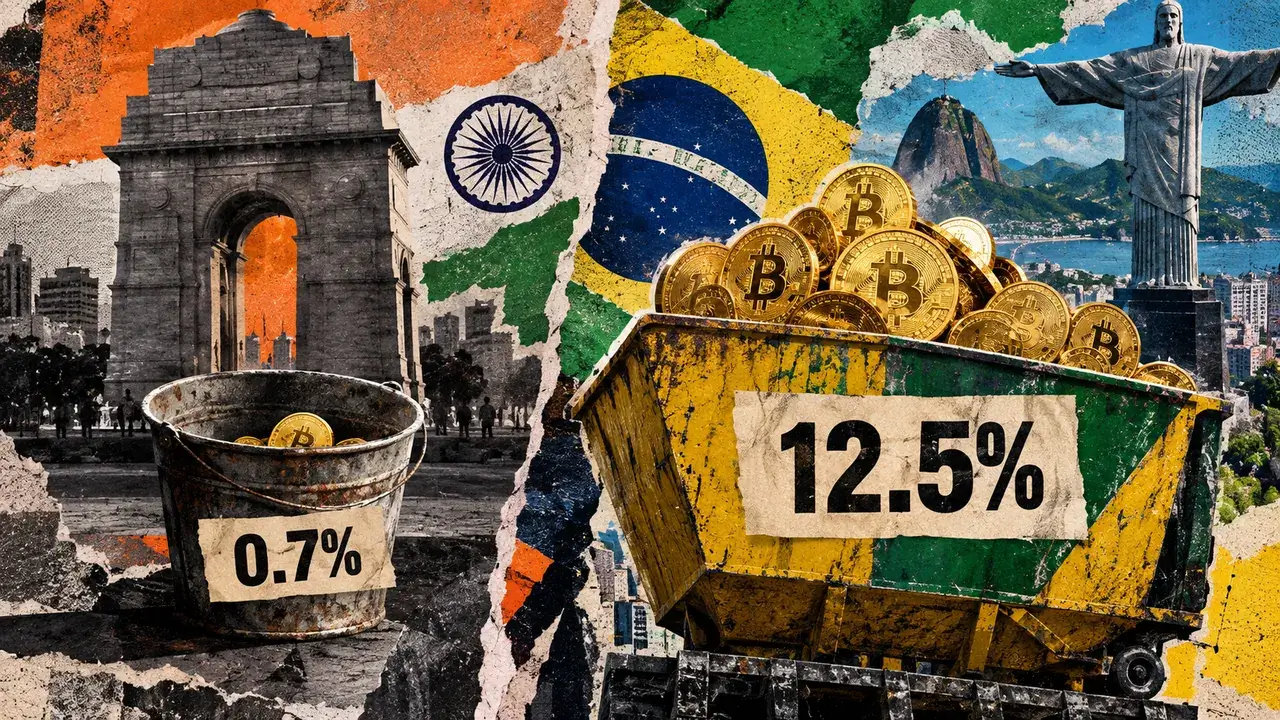
India’s local crypto exchanges get just 0.7% of inflows, Chainalysis reports
India’s crypto users send substantial value to centralized exchanges, but domestic platforms receive just 0.7% of exchange value i...

FinCEN Withdraws Proposed Crypto Mixer and Unhosted Wallet Reporting Rules
The Financial Crimes Enforcement Network (FinCEN) is withdrawing two proposed crypto rules that would have required banks and othe...

VanEck BNB ETF reports $97M inflow on Friday as trackers show a quieter picture
The significant inflow could signal growing investor interest in altcoin ETFs, potentially influencing future fund strategies and...

Kaiko report finds EUR fiat pairs dominate euro crypto trading volumes
The dominance of EUR fiat pairs in euro crypto trading highlights a preference for direct transactions, impacting stablecoin adopt...

East Asia Crypto Adoption Report: South Korea’s AI Trade Comes to Crypto
Summary South Korea leads the region with a $449.1 billion crypto economy, followed by Japan ($228.3 billion), Hong Kong ($192.2…...

US Treasury drops proposed reporting rules for unhosted wallets and crypto mixers
The withdrawal may boost decentralized finance, reduce compliance burdens, and signal a more favorable regulatory climate for cryp...