Hyperlane – Interoperability For Everyone
Why you should listen Hyperlane is the “open interoperability framework” that lets any blockchain—whether an L1, rollup, app‑chain, or VM—talk to any other, permissionlessly. Think of it as the universal plumbing for cro...
Archive context
Older archive item. Useful for background and entity history, but not a fresh market-moving signal.

Hyperlane is the “open interoperability framework” that lets any blockchain—whether an L1, rollup, app‑chain, or VM—talk to any other, permissionlessly. Think of it as the universal plumbing for cross‑chain apps, assets, and arbitrary messages, already live on 140+ chains and five VMs.
At its core, Hyperlane uses Mailbox contracts on each chain as send/receive endpoints. When you dispatch a message, it’s slotted into a Merkle tree; off‑chain relayers pick it up, bundle the proof, and submit it to the destination’s Mailbox, where it’s verified and delivered to your target contract
Security is modular thanks to Interchain Security Modules (ISMs). You can choose default multisig sets, compose prebuilt ISMs, or even craft custom ones to suit your risk appetite. That means you decide how many validator signatures you need or even plug in your own validator network—no one‑size‑fits‑all guardrails here
Beyond pure messaging, Hyperlane offers Warp Routes—its native, no‑slippage token bridges. Lock your token on Chain A, mint a wrapped version on Chain B, and reverse when you bridge back. All managed by the same mailbox/ISM infrastructure for consistency and security
Developers get robust tooling: TypeScript, Python, Rust, Go SDKs, CLI commands, Terraform modules—and an Explorer to track message status. Want interchain accounts? Execute contracts on remote chains from a single signer. Need cross‑VM swaps? Hyperlane’s got EVMSVM covered.
HYPER (the native token) powers staking, validator incentives, governance, and expansion rewards. With a 1 B supply over 25 years and liquid staking via stHYPER, it aligns long‑term builders with protocol security and growth. If you’re building the next multi‑chain DeFi, game, or governance tool, quitting the single‑chain mindset starts here.
Supporting linksIf you enjoyed the show please subscribe to the Crypto Conversation and give us a 5-star rating and a positive review in whatever podcast app you are using.
Why this matters
This research story adds another data point to the current market tape and is useful when read alongside nearby source coverage.
Original source
Read on Brave New CoinRelated market context

Citrini Research Says Tokenized Assets and AI Agents Make Crypto a Fundamentals Trade
Citrini Research published a report on Thursday arguing that AI agents and tokenized assets have opened a new paradigm of “fundame...
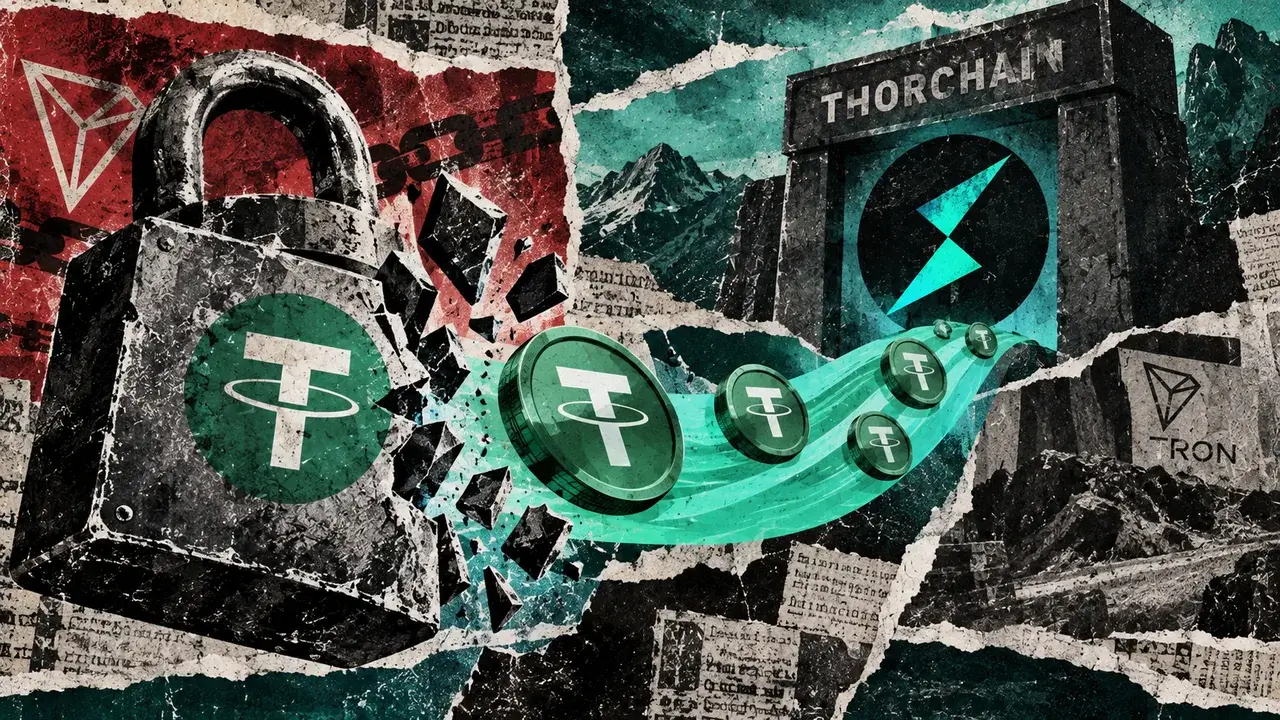
Tether freezes $1.4M in TRON vaults and THORChain stalls
THORChain's TRON operations were interrupted on Oct. 9 after a USDT vault blocklist, according to reports by its co-founder Chad B...

Vitalik Warns AI Math Could Threaten Crypto Keys Before Quantum Computing Arrives
Key Takeaways: Vitalik Buterin states that the rise of today’s cryptography is outpaced by AI-accelerated mathematics. In addition...

Robinhood Explores Stock Token Tied to T. Rowe Price Actively Managed ETF
Robinhood Crypto said in a post on Thursday that it is exploring a Stock Token tied to an actively managed ETF, with T. Rowe Price...
Tether Freezes $1.45M in THORChain USDT Vaults, Then Reverses Blacklist Hours Later
Key Takeaways: The amount of about $1.45 million in USDT was temporarily frozen in THORChain vault addresses. According to THORCha...
Here’s How Not To Screw up Your Bitcoin Privacy
Bitcoin Magazine Here’s How Not To Screw up Your Bitcoin Privacy Just one transaction can compromise years of discreet Bitcoin act...