Latvia Fast-Tracks MiCA Implementation, Positioning as Crypto Hub
The move is aimed at streamlining the application process ahead of MiCA’s official implementation in January 2025 and is part of the country’s broader effort to foster fintech innovation, reduce time-to-market for emergi...
Archive context
Older archive item. Useful for background and entity history, but not a fresh market-moving signal.

The move is aimed at streamlining the application process ahead of MiCA’s official implementation in January 2025 and is part of the country’s broader effort to foster fintech innovation, reduce time-to-market for emerging services, and strengthen Latvia’s position as a regional hub for digital financial services.
MiCA, which partially came into force in June 2024 and is set to become fully effective by December 2024, establishes a harmonized legal framework for issuing crypto-assets and providing related services across the EU. It seeks to fill regulatory gaps left by existing financial services legislation, introducing strict regimes for the issuance and offering of various categories of crypto-assets. By granting pan-European passports to licensed entities, MiCA offers enhanced legal certainty and uniform standards, ensuring that crypto-asset service providers operating in one EU Member State can scale their business across the entire union.
Latvia’s decision to provide free pre-licensing consultations comes at a critical juncture. From January 2025, when MiCA’s comprehensive framework is set to be fully operational, crypto-asset service providers will need authorizations from competent authorities to offer or trade their products legally within the EU. Under the initiative, Latvijas Banka experts will offer one-on-one guidance on the viability of applications, regulatory compliance issues, and documentation requirements. By clarifying expectations before official applications are submitted, the central bank aims to help applicants avoid lengthy delays and potential setbacks.
Similar pre-licensing consultations in other financial verticals have previously enabled companies to secure their licenses within as little as three months. In the crypto-asset sphere, this expedited approach is expected to significantly reduce downtime following the new regulation’s enactment, accelerating providers’ time-to-market.
Start-ups and established firms alike can thus benefit from Latvia’s supportive infrastructure, which includes a regulatory sandbox for testing solutions, an innovation hub offering advice on licensing and IT security, and a business-friendly “startup law” that provides incentives such as reduced social tax rates, waived income tax, and co-financing opportunities for highly qualified employees.
Representatives from Latvijas Banka have highlighted that the country’s regulatory environment is both aligned with EU standards and open to advancement. By balancing flexibility with responsibility, Latvia is striving to position itself as an attractive destination for fintech operators seeking clarity, efficiency, and competitive supervision costs. Approved crypto-asset service providers will pay a supervision fee of 0.6%, with a minimum annual fee of €3,000.
A MiCA license obtained in Latvia will grant firms the option to operate seamlessly throughout the EU, leveraging the “passporting” mechanism embedded in the regulation. This EU-wide recognition can be a key strategic advantage for companies looking to scale rapidly and tap into the broader European market.
Why this matters
This research story adds another data point to the current market tape and is useful when read alongside nearby source coverage.
Original source
Read on Brave New CoinRelated market context
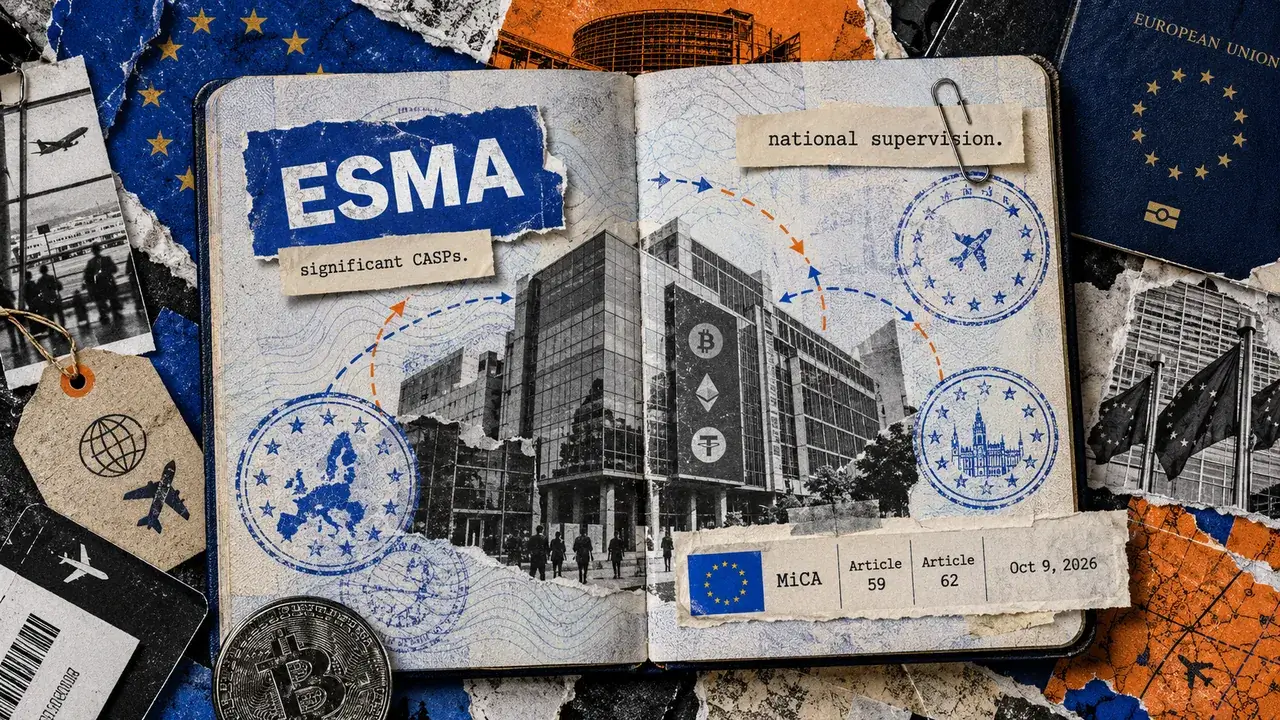
EU targets MiCA loophole that lets crypto exchanges serve 27 countries with one license
EU finance ministers agreed to shift oversight of major crypto companies to a central watchdog, reshaping supervision under MiCA....

Stealing $1.5B in crypto is easy, cashing out is the trap
North Korean hackers stole around $1.5 billion from Bybit in February 2025. While the hack itself has been widely covered and anal...

Willem Middelkoop: Bitcoin is the Fastest Horse – Why the Debasement Trade Takes it to $1M
Bitcoin Magazine Willem Middelkoop: Bitcoin is the Fastest Horse – Why the Debasement Trade Takes it to $1M Central banks are buyi...

Bank of England says it will be ‘the banker to the stablecoin’
The Bank of England's support for stablecoins could enhance financial stability and innovation, influencing global regulatory appr...

Ethereum Name Service Team Asks DAO to Switch On ENSv2 and Freeze New .eth Sign-Ups on v1
ENS Labs has asked the ENS DAO to activate ENSv2 on Ethereum mainnet, a step that would freeze new .eth registrations on the origi...

France’s tax proposal would tax Bitcoin-to-USDC swaps before investors cash out
France’s proposed crypto tax changes would make a move from Bitcoin or Ether into certain stablecoins a taxable disposal, even if...