Legacy Code: Alan Turing Reimagined by AI
When a humanoid robot paints the portrait of a computer science titan, it feels like the ouroboros of technology—AI paying homage to its spiritual ancestor. Ai-Da, the humanoid artist, recently unveiled her portrait of A...
Archive context
Older archive item. Useful for background and entity history, but not a fresh market-moving signal.
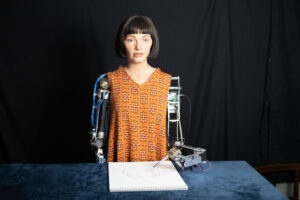
When a humanoid robot paints the portrait of a computer science titan, it feels like the ouroboros of technology—AI paying homage to its spiritual ancestor. Ai-Da, the humanoid artist, recently unveiled her portrait of Alan Turing, the man who cracked the Enigma code, laid the groundwork for artificial intelligence, and was vilified for his identity in a less tolerant era. The painting, a fusion of algorithmic precision and human-esque creativity, raises a question: what would Turing think of this moment? Would he see it as validation of his ideas, or as a dystopian twist he never anticipated?
Ai-Da, named after Ada Lovelace (another OG of computer science), uses cameras for eyes, a robotic arm, and algorithms that mimic artistic decisions. She operates at the intersection of code and canvas, pulling data and patterns into abstract yet strangely emotional works. Her portrait of Turing, however, is more than an exercise in computational aesthetics; it’s a dialogue across generations, between a man who asked, “Can machines think?” and a machine that answers, “I can create.”
Source: Ai-Da, Sotherbys
Art, Algorithms, and AlanLet’s not romanticize this too much. Ai-Da isn’t a modern-day Da Vinci. Her “creativity” is guided by neural networks and human programmers. But here’s where things get juicy: Turing once hypothesized that if a machine could convince a human it was thinking, it was thinking, period. Ai-Da doesn’t just passively exist; she challenges us to redefine creativity, consciousness, and, let’s face it, humanity.
Her portrait of Turing is haunting. The lines are deliberate but fractured, much like Turing’s life—brilliant yet marred by tragedy. The color palette leans toward subdued blues and grays, evoking both the cold logic of machines and the melancholy of a genius ostracized by society. It’s as if Ai-Da is reflecting Turing’s internal world, using her synthetic perspective to honor a man whose legacy she embodies.
Turing’s Vision vs. Our RealityTuring dreamed of machines that could reason, not just calculate. Fast-forward to 2024, and we have machines that can beat grandmasters at chess, generate human-like conversation, and even rival artists in creative expression. Ai-Da is the culmination of that dream, but she also serves as a reminder of its darker sides.
Would Turing be thrilled to see his theories validated, or horrified by how those same theories have fueled surveillance states and data-mining empires? Ai-Da’s existence is a double-edged sword. On one hand, she’s a marvel—a testament to how far we’ve come. On the other, she’s a harbinger of the ethical quagmires we’re diving into headfirst. Who owns the art she creates? Can a robot have intellectual property? And if we praise Ai-Da as an artist, are we diminishing the value of human creativity?
Source: Ai-Da, Sotherbys
The Turing Test of ArtThe original Turing Test was designed to evaluate a machine’s ability to exhibit intelligent behavior indistinguishable from a human. But what about creativity? Ai-Da might just be setting the stage for a new kind of test: can machines make art that moves us, that challenges our perception of reality, or that communicates an emotional truth?
The answer might already be here. Turing’s portrait by Ai-Da doesn’t just mimic artistic conventions; it provokes. It forces us to confront the legacy of a man who made machines think and the machines that now ponder his existence. The result is a portrait not just of Turing, but of humanity’s uneasy partnership with the technology we’ve birthed.
A Post-Human Renaissance?If Turing laid the intellectual foundation for artificial intelligence, Ai-Da is one of its cultural monuments. Her work might not have the depth of a Van Gogh or the precision of a Vermeer, but it doesn’t need to. It exists as a statement: that machines are no longer just tools, but participants in our cultural evolution. Whether that excites you or makes your skin crawl depends on how comfortable you are with the idea that creativity might not be uniquely human after all.
Turing’s portrait is a mirror held up to the digital age, reflecting both our potential and our anxieties. In Ai-Da, we see a piece of Turing’s legacy brought to life, pixel by pixel, brushstroke by robotic brushstroke. The question isn’t whether this is art. It’s whether we’re ready to share the gallery with our synthetic siblings.
Troy Miller is a tech columnist who enjoys unraveling the messy intersections of humanity and technology. His sarcasm is 100% organic.
Why this matters
This research story adds another data point to the current market tape and is useful when read alongside nearby source coverage.
Original source
Read on Brave New CoinRelated market context
Justin Sun’s $2.25B Crypto Portfolio Includes $1.09B in SUSDS Across 10 Blockchains
Key Takeaways: Earlier, Arkham reported that it tracks around $2.25 billion worth of on-chain assets for Justin Sun, spanning 10 d...

Robinhood Adds BTC To Balance Sheet, ‘Bunker Mode’ Kicks Off, And More – Weekly Recap
This week’s stories spanned corporate adoption, government crypto flows, security risks and macro concerns. Robinhood added $25 mi...
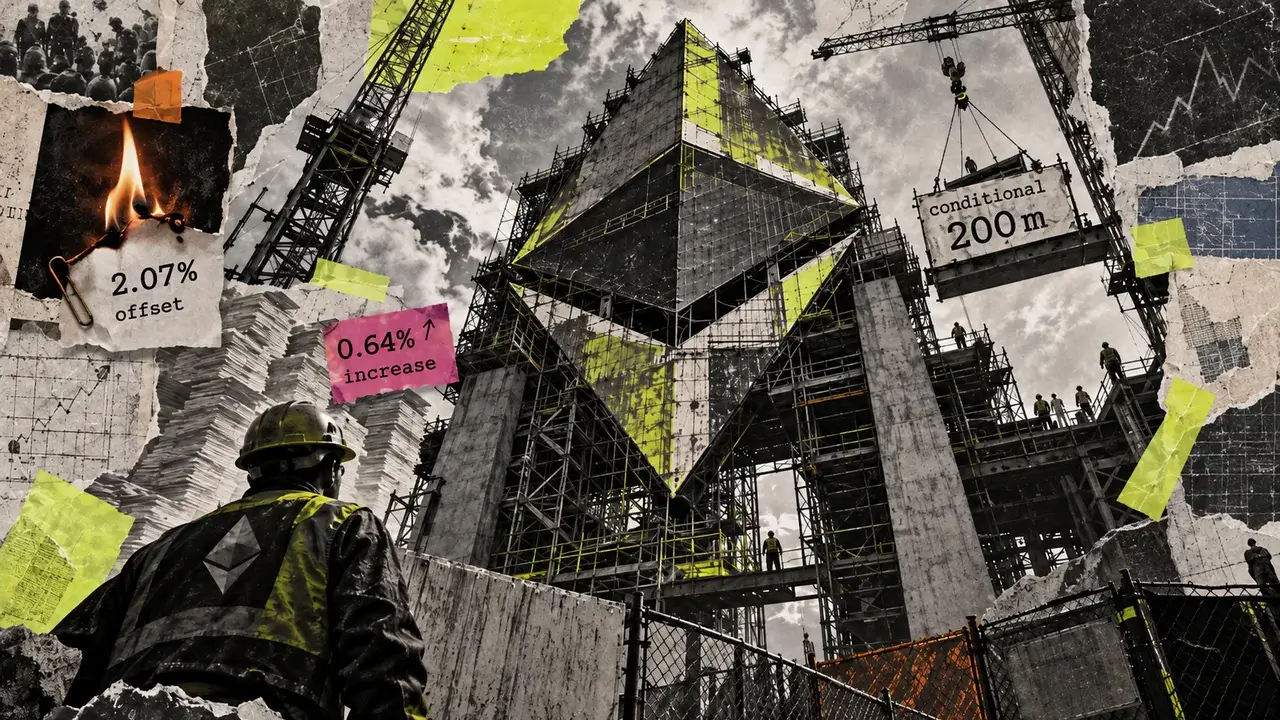
ETH fee burns cover just 2% of new coins printed in 2026
Ethereum's transaction fees have burned enough ETH to offset just 2.07% of the new coins issued in 2026, according to an Oct. 9 su...

XRPL branded ‘cheap’ for paying infinite XRP exploiter just $250K
Crypto sleuth ZachXBT says the XRP Ledger Foundation (XRPL) can potentially look forward to losing upwards of $100 million next ti...

Bitcoin balances on centralized exchanges climb by 11,593 BTC in three days
Centralized exchanges added 11,593 BTC in three days, lifting reserves to about 3.67 million BTC, though 30-day data still shows n...

Strategy buys 250 BTC, repurchases $192M in stock amid capital restructuring
Strategy Inc.'s actions may boost market confidence in STRC, potentially impacting its price trajectory and influencing broader in...