MiCA Is Raising a Lot of Questions About Safeguarding. Stablecoins Might Just Be the Answer.
Safeguarding is a simple concept. It’s simply not spending and protecting money that isn’t yours. It’s best practice (albeit with regulatory requirements attached) – not something very technical or specific to crypto. In...
Archive context
Older archive item. Useful for background and entity history, but not a fresh market-moving signal.

Safeguarding is a simple concept. It’s simply not spending and protecting money that isn’t yours. It’s best practice (albeit with regulatory requirements attached) – not something very technical or specific to crypto. In fact, the wider financial market has been getting this right for years. Payments even more so. However, my concern is that Article 70 is about to hit many crypto providers very hard.
The regulation’s core purpose is straightforward – ensuring end-user assets are properly protected. While this has been standard practice in traditional finance for years, some crypto platforms will struggle to evolve their processes to meet these established safekeeping standards, primarily because safeguarding requires maintaining dedicated accounts with traditional banks – and we’ve seen how challenging it has been for crypto companies to secure and maintain reliable banking relationships. The hesitancy of traditional financial institutions to work with crypto businesses creates a significant barrier to implementing proper safeguarding measures.
The role of stablecoins
Enter stablecoins. The antidote to the volatility of the wider crypto ecosystem. They are, as the name might suggest, very stable. And they might just save the day. How can stablecoins help with safeguarding, you ask? Well, the practicalities are as straightforward as they come – convert customer funds to stablecoins the moment the end user deposits fiat funds in their crypto exchange. Because stablecoins are held in a one-to-one ratio with fiat currency, they act as a perfect safeguarding mechanism – your €100 becomes 100 USDC, locked and untouchable. It’s the blockchain version of freezing your assets in a bank vault, all without the need to use traditional banks.
The impact on the wider crypto ecosystem
The FTX collapse still hurts the industry. I hate to say it, but the effect might still be felt for years to come, and that trust might take years to build. If we were to increase the use of stablecoins – and particularly in the role of safeguarding customer funds – then I fully believe that this will only serve to increase trust within the industry. Bad actors will no longer be able to act badly if customer funds are properly locked up. And stablecoins might solve one of our industry’s biggest challenges: banking access. Soon we’ll have hundreds of CASPs (Crypto Asset Service Providers) all needing safeguarded accounts under MiCA, but major banks – the few that are actually crypto-friendly – won’t suddenly open their doors to service that many companies. They’re only targeting certain financial institutions. The industry needs a solution that comes from within – and that’s where stablecoins come in.
Think about what happens when everyone starts using stablecoins for safeguarding – it creates a network effect. Since all these players are already using stablecoins to safeguard funds, everything moves onto the blockchain by default. This means instant transfers, no amount limits, and complete transparency. And here’s the interesting part: when companies start doing this in Europe to comply with MiCA, they’re likely to apply the same process across their entire operation – all currencies, all jurisdictions. Why run two different systems when one works better? It’s a natural progression. Europe is leading the way with mandatory requirements, but these safeguarding practices should become the global standard, benefiting users worldwide through enhanced protection and operational efficiency.
For once, we’ve found a way for crypto to solve crypto’s problems. Instead of fighting against regulatory requirements, we can use digital assets – the very thing we’re building – to meet them. Yes, sometimes regulators misunderstand what needs protecting or how to protect it. That’s exactly why we have industry groups advocating for sensible solutions. But I believe that regulations aren’t here to punish us – they’re here to protect everyone. The key is finding ways to embrace that protection while staying true to what crypto is all about. This stablecoin solution does exactly that. It gives us the security traditional finance demands while preserving the spirit of crypto innovation. That’s a win for everyone.
About The Author
Paula Steiner is Group Head of Compliance at Fiat Republic. She has more than 8 years of Regulatory Compliance and FinCrime experience in financial institutions and Fintechs. Her previous roles include Senior Consultant at Deloitte and Compliance Officer at Mollie Payments.Editorial Note: This sponsored article is made possible by MVPR. Opinions expressed are solely those of the sponsor and readers should conduct their own due diligence before taking any action based on information presented in this article.
Why this matters
This research story adds another data point to the current market tape and is useful when read alongside nearby source coverage.
Original source
Read on Brave New CoinRelated market context

From TOKEN2049 to Ecosystem Co-Building: HTX Advances Its Multifaceted Engagement Across the Global Crypto Industry
Singapore, October 12, 2026 – From October 6 to 8, the global crypto industry turned its attention to Singapore for TOKEN2049, a m...

EU targets MiCA loophole that lets crypto exchanges serve 27 countries with one license
EU finance ministers agreed to shift oversight of major crypto companies to a central watchdog, reshaping supervision under MiCA....

Crypto Exchange Bybit Moves From Stock CFDs to Real US Shares
Bybit opened trading in more than 1,000 US-listed stocks and exchange-traded funds today (Monday), with purchases paid in the USDC...

Standard Chartered brings Ripple’s RLUSD into banking custody after $765 million quarterly surge
Standard Chartered has launched custody for Ripple's RLUSD stablecoin as it prepares to expand its use as collateral for instituti...

Financial Stability Board warns of untested stablecoin risks in crises
The FSB's warning highlights the urgent need for robust global regulatory frameworks to manage stablecoin risks and ensure financi...
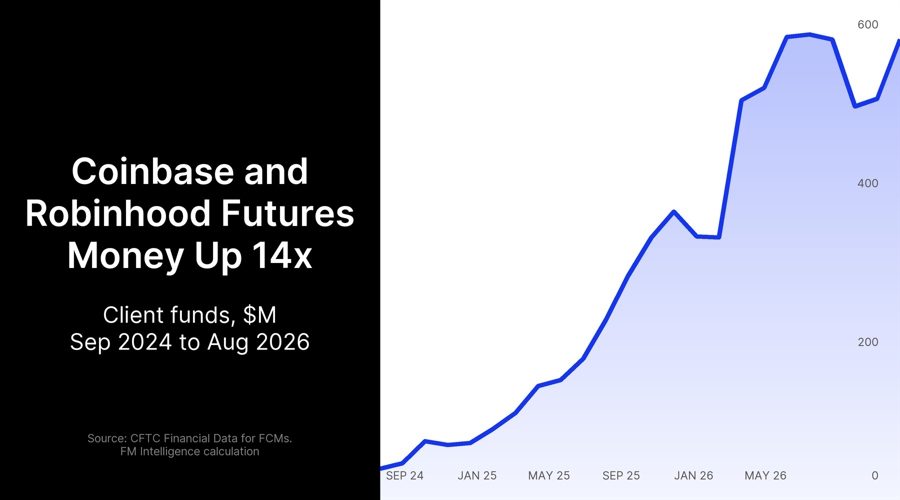
Coinbase and Robinhood Futures Arms Now Hold More Client Money Than the US Retail Forex Pool
The futures brokers of Coinbase and Robinhood held $581.4 million of segregated client money at the end of August. That is more th...