OpenAI Unveils o3 Reasoning Model: A Leap Toward Advanced AI Problem-Solving
The o3 models build upon the foundation laid by their predecessor, o1, which was released in September 2024. OpenAI strategically skipped the o2 designation to avoid potential trademark conflicts with the British telecom...
Archive context
Older archive item. Useful for background and entity history, but not a fresh market-moving signal.

The o3 models build upon the foundation laid by their predecessor, o1, which was released in September 2024. OpenAI strategically skipped the o2 designation to avoid potential trademark conflicts with the British telecom company O2. Sam Altman announced the new model on YouTube earlier today.
Advancements in Reasoning CapabilitiesReasoning in AI involves decomposing complex instructions into manageable sub-tasks, enabling the system to provide more accurate and explainable outcomes. The o3 models employ a “private chain of thought” methodology, allowing the AI to internally deliberate and plan before delivering a response. This approach enhances the model’s problem-solving abilities, making it more adept at handling intricate queries.
Benchmark PerformanceOpenAI reports that the o3 model has achieved unprecedented results across several benchmarks:
- Coding Proficiency: The o3 model surpasses previous performance records, achieving a 22.8% improvement over its predecessor in coding tests, and even outperforms OpenAI’s Chief Scientist in competitive programming scenarios.
- Mathematical Reasoning: In the 2024 American Invitational Mathematics Exam (AIME), o3 nearly achieved a perfect score, missing only one question. Additionally, it solved 25.2% of problems on the Frontier Math benchmark by EpochAI, a significant leap from previous models that did not exceed 2%.
- Scientific Understanding: The model attained an 87.7% score on the GPQA Diamond benchmark, which comprises graduate-level questions in biology, physics, and chemistry.
AI researcher and red team tester François Chollet wrote on X, that “Today OpenAI announced o3, its next-gen reasoning model. We’ve worked with OpenAI to test it on ARC-AGI, and we believe it represents a significant breakthrough in getting AI to adapt to novel tasks.
It scores 75.7% on the semi-private eval in low-compute mode (for $20 per task in compute ) and 87.5% in high-compute mode (thousands of $ per task). It’s very expensive, but it’s not just brute — these capabilities are new territory and they demand serious scientific attention.”
Source: X
Deliberative Alignment ResearchAlongside the o3 models, OpenAI introduced deliberative alignment research aimed at enhancing AI safety. This approach requires the AI to process safety decisions step-by-step, ensuring that user requests align with established safety policies. Initial tests indicate that this method improves adherence to guidelines compared to previous models, including GPT-4.
Currently, the o3 models are undergoing internal safety testing. OpenAI has opened applications for external researchers to participate in testing, with the application process closing on January 10, 2025. The o3-mini model is expected to launch by the end of January, followed by the full o3 model.
The introduction of the o3 models signifies a pivotal moment in AI development, showcasing enhanced reasoning capabilities that bring AI closer to human-level problem-solving. As these models undergo further testing and refinement, they are poised to set new standards in the field, potentially transforming how complex tasks are approached across various industries.
Why this matters
This research story adds another data point to the current market tape and is useful when read alongside nearby source coverage.
Original source
Read on Brave New CoinRelated market context

Coinbase fine-tunes Qwen3.5-9B model for fraud prevention, beating frontier models
Coinbase's success with a tailored AI model highlights the potential for specialized, cost-effective solutions in fraud prevention...
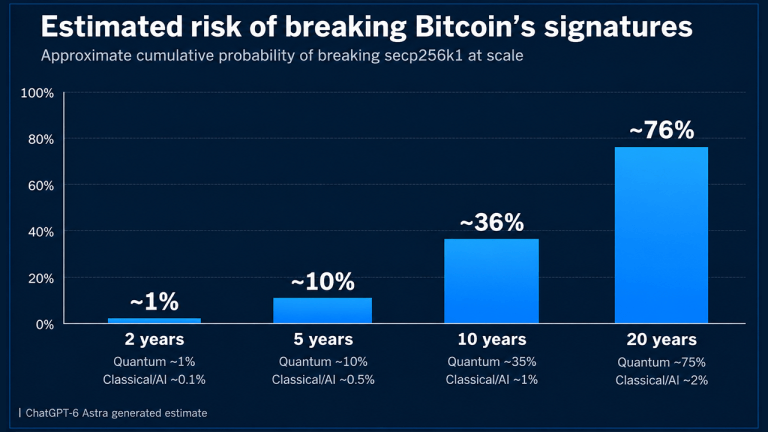
Bitcoin’s Security Faces a 76% Risk by 2046, AI Model Predicts
Onchain analyst Willy Woo stirred fresh debate over Bitcoin’s long-term security on Sunday, Oct. 11, 2026, after sharing artificia...
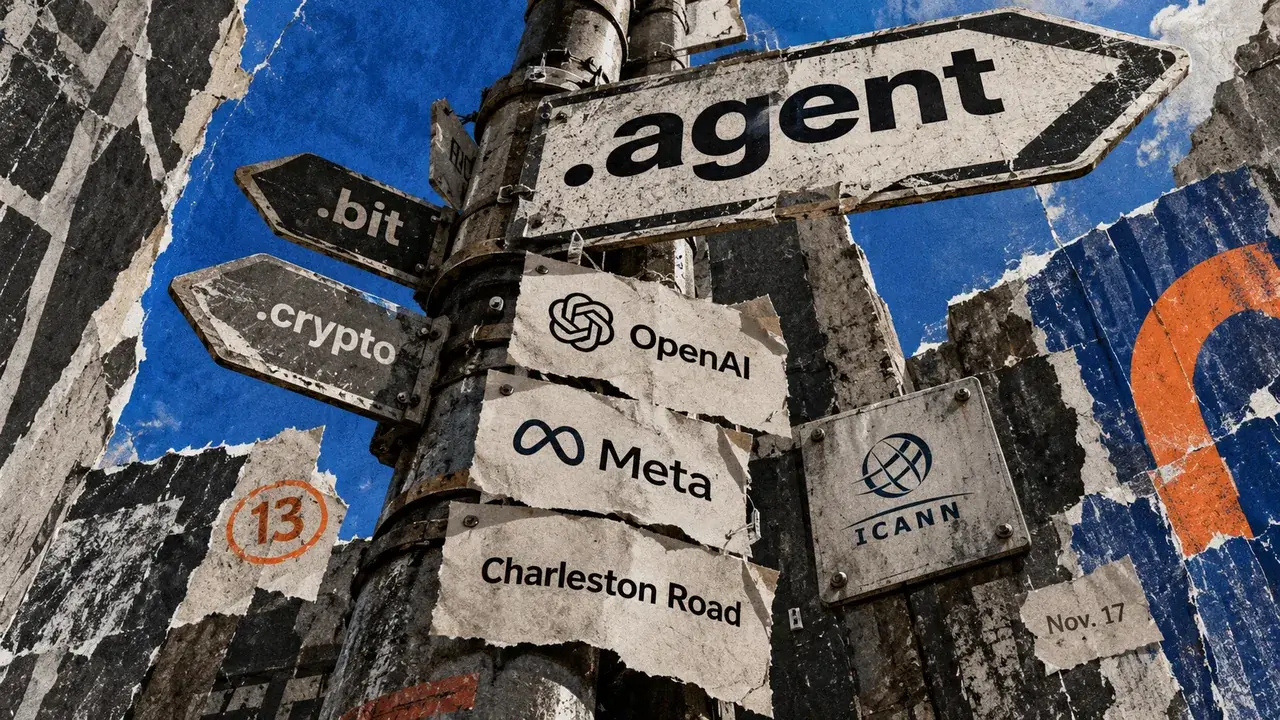
OpenAI, Google and Meta battle for AI internet domains as crypto firms target .bitcoin and .wallet
OpenAI, Google, and Meta are competing for AI-related internet domains as cryptocurrency firms pursue their own digital naming rig...

Europol Urges Crypto Wallet Providers to Start Testing Post-Quantum Upgrades Now
Europol published two reports on Wednesday about the security risks of quantum computing, and the one on cryptocurrencies names wa...

Brazil’s BRL 22T CSD BR Moves Fund Records to XRP Ledger in Live Tokenization Push
Key Takeaways: CSD BR is leveraging the XRP Ledger to reflect real-time fund holdings. Over BRL 22 trillion in registered assets i...

Money20/20 USA 2026: How Bitcoin, Stablecoins and AI Are Reshaping the Future of Finance
Bitcoin Magazine Money20/20 USA 2026: How Bitcoin, Stablecoins and AI Are Reshaping the Future of Finance Fintech has moved beyond...