Pacwest Stock Plummets Over 35% Following Release of Q1 Earnings Report Amidst Turmoil in Banking Industry
Following the acquisition of First Republic Bank by JPMorgan Chase, several regional banks such as Pacwest and Western Alliance experienced a significant drop in their stock prices. On Tuesday afternoon, all four major U...
Archive context
Older archive item. Useful for background and entity history, but not a fresh market-moving signal.

Following the acquisition of First Republic Bank by JPMorgan Chase, several regional banks such as Pacwest and Western Alliance experienced a significant drop in their stock prices. On Tuesday afternoon, all four major U.S. benchmark stock indexes are in decline as regional bank stocks hit new lows.
Banking Industry on Edge as Pacwest Shares Sink Causing Trading Halt
Pacwest, a regional bank based in Beverly Hills, California, is facing challenges after the release of its 2023 first quarter earnings report. Following the publication of the earnings, the bank’s stock price plummeted by 35% on Tuesday at 11:00 a.m. Eastern Time. The earnings report revealed a “net loss available to common stockholders of $1.21 billion, or a loss of $10.22 per diluted share.”
The upheaval at Pacwest comes on the heels of First Republic Bank’s recent collapse and three major bank failures that occurred in March. Despite three out of these four banks representing the largest bank failures in the United States, President Joe Biden reassured the public on Monday that the banking industry is on track toward “stabilization.”
Besides Pacwest shares dropping over 35%, trading was halted due to volatility concerns. Other banks experiencing losses on Tuesday include Western Alliance and Metropolitan Bank, whose stocks have also seen sharp declines during today’s trading sessions. Amidst this turmoil within bank equities, CFRA analyst Alexander Yokum told Marketwatch that while taxpayers will not be responsible for these failures, financial institutions are likely to increase fees.
“All the costs of bank failures will be borne by banks and not taxpayers, although we expect banks to indirectly pass along many of these costs to customers through higher fees and higher interest rates on loans,” Yokum stated.
The collapse of First Republic Bank has left Wall Street investors uneasy, even though JPMorgan Chase CEO Jamie Dimon declared on Monday that “this part of the crisis is over” after taking over the struggling bank. While conventional equity markets are down, cryptocurrencies and precious metals have experienced growth amidst the banking industry’s tribulations.
Notably, the top two leading cryptocurrencies, bitcoin (BTC) and ethereum (ETH) increased by 1.1% to 1.5% in the wake of Wall Street’s turmoil. Concurrently, the precious metals gold and silver have also surged in value against the U.S. dollar, with gains ranging between 1.4% and 1.54%.
After sinking more than 35% on Tuesday, Pacwest shares rebounded and are currently down between 22% to 27% against the greenback.
What do you think the future holds for the U.S. banking industry? Share your thoughts in the comments section below.
Why this matters
This research story adds another data point to the current market tape and is useful when read alongside nearby source coverage.
Original source
Read on Bitcoin NewsRelated market context

Kraken Parent Company Payward to Buy Saldo Bank in European Banking Push
Bitcoin Magazine Kraken Parent Company Payward to Buy Saldo Bank in European Banking Push Payward, the parent company of crypto ex...

Payward Signs Deal for Saldo Bank, Giving Kraken’s Owner a Foothold in EU Banking
Payward, the parent company of crypto exchange Kraken, has signed a definitive agreement to buy Saldo Bank, a digital lender licen...

EU Banking Regulator Takes Over Key Oversight of Circle’s USDC Stablecoin
The European Banking Authority (EBA) classified Circle's USDC as a significant e-money token under the Markets in Crypto-Assets Re...

Orbs – DeFi’s Next Big Users Are Banks and Bots
Why you should listen Ran came to crypto the way many lawyers of his generation did. In 2015 a university friend and future Orbs c...
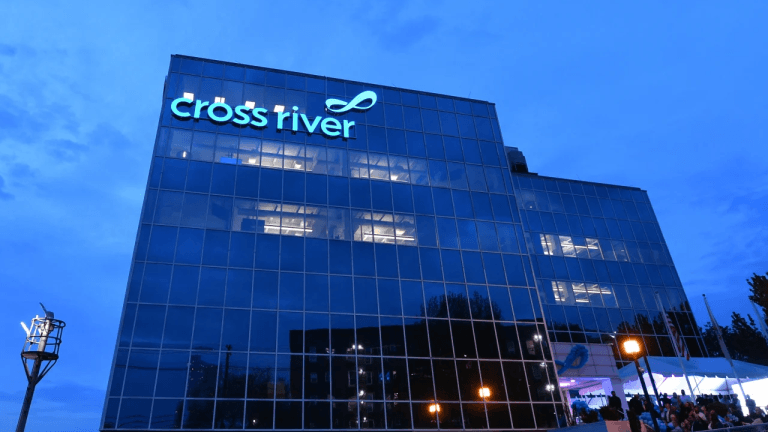
Cross River Bank Brings Ripple’s RLUSD Into Traditional Banking
On Thursday, a spokesperson for Cross River Bank told Bitcoin.com News that it is teaming up with Ripple to make it easier for bus...

Cross River Bank brings Ripple’s RLUSD stablecoin into its core banking system
The integration of RLUSD into Cross River Bank's system signifies a shift towards mainstream adoption of stablecoins, enhancing pa...