Paxos Renews Push for US Bank License as Stablecoin Rules Take Shape
The timing appears strategic. Just weeks before Paxos submitted its new application, President Trump signed the GENIUS Act into law. This landmark legislation creates the first federal rules for stablecoins in the United...
Archive context
Older archive item. Useful for background and entity history, but not a fresh market-moving signal.

The timing appears strategic. Just weeks before Paxos submitted its new application, President Trump signed the GENIUS Act into law. This landmark legislation creates the first federal rules for stablecoins in the United States.
What Paxos Wants to AchievePaxos currently operates under a New York state license. The company wants to convert this to a national trust bank charter from the Office of the Comptroller of the Currency (OCC). This federal license would let Paxos hold customer money and process payments across all 50 states.
Unlike regular banks, a national trust bank cannot take deposits from everyday customers or make loans. Instead, it focuses on managing assets and providing custody services for institutions.
Charles Cascarilla, Paxos CEO and co-founder, said OCC oversight would “help build on our historic commitment to maintaining the highest standards of safety and transparency.”
Source:@Paxos
The charter would give Paxos more credibility with large institutional clients. Many big financial companies prefer working with federally regulated entities because they face stricter oversight.
Previous Application FailedThis is not Paxos’s first try at getting a national charter. The company first applied in December 2020 and received preliminary approval in April 2021. However, the application expired in March 2023 when Paxos failed to meet all requirements within the 18-month deadline.
During that period, Paxos faced mounting regulatory pressure. New York authorities ordered the company to stop issuing Binance’s stablecoin in early 2023. This forced Paxos to end its partnership with the world’s largest cryptocurrency exchange.
The company also dealt with a major enforcement action. Last week, Paxos agreed to pay $48.5 million to settle charges that it failed to properly monitor Binance for illegal activity. The settlement includes a $26.5 million fine and $22 million to improve compliance systems.
New Federal Rules Change the GameThe GENIUS Act creates clear rules for stablecoin companies. These digital currencies are designed to maintain a stable value, usually equal to one US dollar. Companies that issue stablecoins must now back each token with real dollars or Treasury bonds held in reserve.
The law requires monthly public reports showing exactly what assets back each stablecoin. It also gives stablecoin holders priority if a company goes bankrupt, meaning they get paid before other creditors.
Banks, credit unions, and approved non-bank companies can now legally issue stablecoins under federal oversight. This provides the regulatory clarity that companies like Paxos have sought for years.
Industry Race for Banking LicensesPaxos joins several major cryptocurrency companies applying for national trust charters. Circle, which issues the USDC stablecoin, submitted its application in June. The company wants to establish “First National Digital Currency Bank.”
Ripple, known for its XRP cryptocurrency, also applied recently for a national charter. The company plans to call its bank “Ripple National Trust Bank.”
Currently, Anchorage Digital is the only cryptocurrency company with an active national trust bank charter in the United States.
The rush reflects the industry’s push for legitimacy. Federal charters provide credibility that state licenses cannot match. They also make it easier to work with traditional banks and large institutions.
However, the applications face opposition. The Independent Community Bankers of America has filed formal complaints against several crypto companies seeking charters. The group worries about extending bank-like privileges to cryptocurrency firms without proper safeguards.
Stablecoin Market Continues GrowingStablecoins have become essential tools in cryptocurrency trading. Traders use them to move money between different digital currencies without converting back to regular dollars. This makes trading faster and cheaper.
PayPal’s PYUSD, issued by Paxos, has grown to over $1 billion in total value. The company also launched the Global Dollar stablecoin in Singapore earlier this year.
The total stablecoin market has reached approximately $170 billion. Experts predict it could grow to $3 trillion by 2030 as more businesses adopt digital payments.
Major payment companies are taking notice. Visa recently added support for multiple stablecoins on its payment network. Stripe bought stablecoin platform Bridge for $1.1 billion, showing how seriously traditional finance views this technology.
The Path ForwardPaxos faces a thorough review process that could take many months. The OCC will examine the company’s financial health, management team, and compliance systems. Given Paxos’s recent settlement with New York regulators, officials will likely scrutinize the application carefully.
With clear federal rules now in place and growing institutional interest, the next few months will determine whether cryptocurrency companies can successfully bridge the gap between digital innovation and traditional banking regulation.
Why this matters
This research story adds another data point to the current market tape and is useful when read alongside nearby source coverage.
Original source
Read on Brave New CoinRelated market context
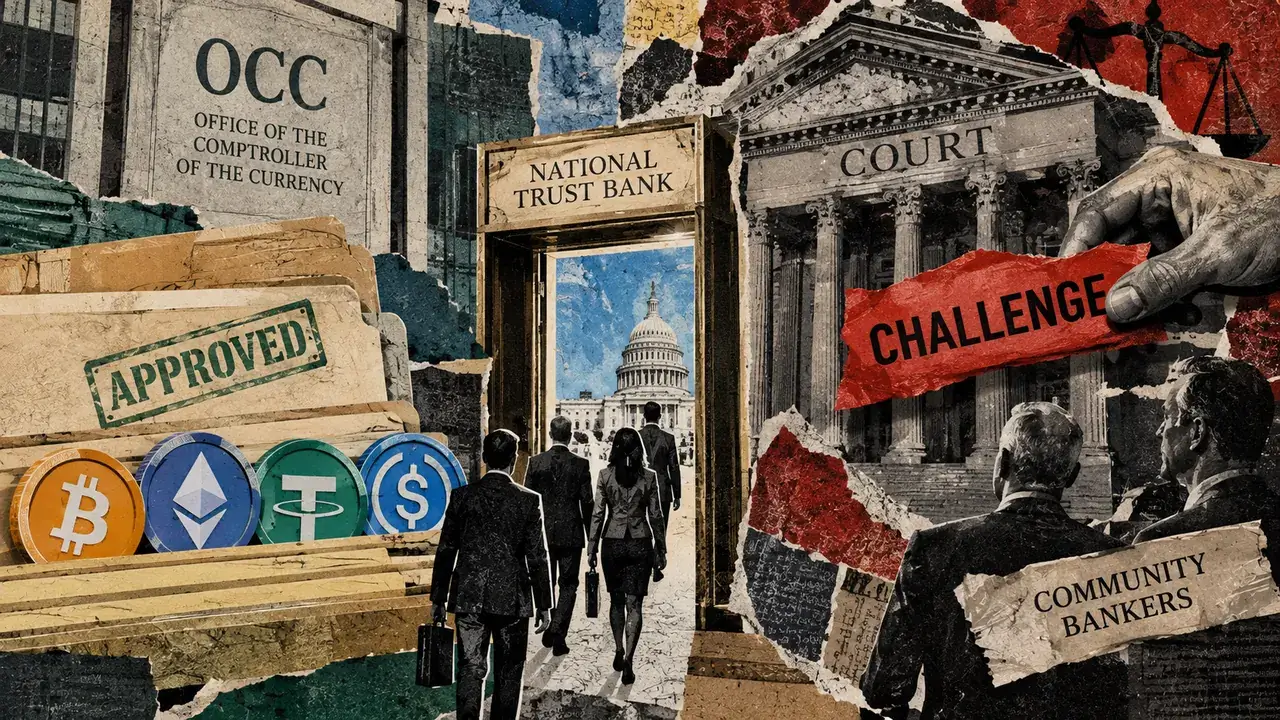
Bankers sue to overturn OCC trust-bank rule used by crypto firms
The Independent Community Bankers of America sued the OCC in federal court in Washington on Oct. 2, two weeks after the agency app...

Congress weighs letting banks hold crypto, issue stablecoins
The proposal could accelerate institutional crypto adoption, potentially stabilizing digital asset markets and influencing Bitcoin...
Circle Pushes Back on MiCA's Bank-Deposit Mandate for Stablecoins
The USDC issuer told the European Commission that MiCA's reserve mandates and concentration caps keep the largest global stablecoi...

Stablecoin issuers have replaced 40% of China’s lost US Treasury demand
Stablecoin issuers are emerging as a new source of demand for US government debt as foreign official holdings lose ground. Tether...

Fiserv Puts Stablecoin Banking Platform Live With North Dakota Roughrider Coin
TL;DR Fiserv says its digital-asset platform is now live with financial-institution clients. Bank of North Dakota’s dollar-backed...

Community bankers sue OCC over crypto trust charters
The lawsuit could reshape regulatory landscapes, impacting how digital asset firms integrate into traditional banking systems and...