PayPal Launches Crypto Payments for US Merchants, Slashing Cross-Border Fees by up to 90%
The payment giant’s “Pay with Crypto” feature promises to cut transaction costs by up to 90% compared to traditional credit card processing for international sales. The new system allows customers to pay with popular cry...
Archive context
Older archive item. Useful for background and entity history, but not a fresh market-moving signal.

The payment giant’s “Pay with Crypto” feature promises to cut transaction costs by up to 90% compared to traditional credit card processing for international sales.
The new system allows customers to pay with popular cryptocurrencies like Bitcoin, Ethereum, and various stablecoins using wallets such as MetaMask, Coinbase, and Binance. When someone pays with crypto, PayPal automatically converts the digital money into US dollars for the merchant, removing the risk of price swings that make many businesses nervous about accepting cryptocurrency.
How the System WorksThe process happens in seconds behind the scenes. When a customer pays with cryptocurrency, PayPal’s system sells the digital currency on an exchange, converts it to PayPal’s own stablecoin called PYUSD, and then deposits US dollars into the merchant’s account.
This approach means businesses don’t need to understand cryptocurrency or worry about volatile prices. They simply receive regular dollar payments, just like they would from a credit card transaction.
PayPal supports cryptocurrencies that represent about 90% of the total crypto market value. This includes major coins like Bitcoin and Ethereum, stablecoins like USDT and USDC, and even some novelty tokens. The wide selection gives customers many payment options while keeping things simple for merchants.
Significant Cost SavingsThe fee structure offers real savings for businesses that serve international customers. PayPal charges 0.99% for transactions during the first year, then 1.5% after that promotional period ends on July 31, 2026. This compares favorably to typical credit card processing fees of 1.57% for domestic transactions, and international fees can be much higher.
“Reduce international transaction fees by up to 90%“Source: @Paypal
“Businesses of all sizes face incredible pressure when growing globally, from increased costs for accepting international payments to complex integrations,” said PayPal CEO Alex Chriss in the company’s announcement. “Today, we’re removing these barriers and helping every business of every size achieve their goals.”
The savings become more significant for cross-border transactions. Traditional international credit card processing often includes currency conversion fees and other charges that can push total costs well above 3%. PayPal’s crypto solution bypasses much of this traditional banking infrastructure.
Growing Competition in Crypto PaymentsPayPal isn’t alone in pushing cryptocurrency into mainstream commerce. Shopify recently partnered with Coinbase and Stripe to accept stablecoin payments, while Stripe spent $1.1 billion buying a stablecoin company called Bridge to expand its crypto capabilities.
This competition benefits merchants by driving innovation and lower costs. The race to capture the growing crypto payments market is pushing these companies to offer better features and pricing.
PayPal’s advantage comes from its existing relationships with millions of merchants and its regulated stablecoin, PYUSD. Businesses that keep funds in PYUSD earn 4% annual rewards, giving them an incentive to use PayPal’s cryptocurrency rather than immediately converting everything to cash.
Regulatory Clarity Helps GrowthPayPal received a boost earlier this year when the Securities and Exchange Commission closed its investigation into PYUSD without taking any action. This regulatory clarity removes uncertainty that had hung over the stablecoin since its launch.
PYUSD is issued by Paxos Trust Company and regulated by the New York State Department of Financial Services. The stablecoin is backed by US dollar deposits and Treasury bonds, maintaining a steady $1 value. This stability makes it useful for payments, unlike volatile cryptocurrencies that can change value quickly.
However, PYUSD hasn’t received approval for New York residents yet, which limits its availability in that important market. PayPal also warns that digital assets aren’t protected by FDIC insurance like traditional bank deposits.
Part of Broader StrategyThe crypto payments launch connects to PayPal’s larger “PayPal World” initiative, which aims to link different payment systems globally. This broader platform will eventually connect PayPal and Venmo with international services like India’s UPI payment system and Latin America’s Mercado Pago.
PayPal sees cryptocurrency as a way to make international commerce faster and cheaper. The company points to scenarios like a customer in Guatemala buying from a business in Oklahoma, where crypto payments could eliminate the delays and high costs of traditional international transfers.
The service targets PayPal’s existing merchant base of over 20 million small businesses. By making it easy to accept crypto without technical knowledge, PayPal hopes to bring digital currency payments into everyday commerce.
What This Means for Digital PaymentsPayPal’s entry into crypto payments represents a significant step toward mainstream adoption of digital currencies. By handling the technical complexity and regulatory compliance, PayPal makes it possible for ordinary businesses to benefit from cryptocurrency without becoming crypto experts.
The real test will be whether merchants and customers actually use these new payment options. While the cost savings are attractive, most people still prefer familiar payment methods like credit cards. Success will depend on whether the benefits outweigh the learning curve for new technology.
Why this matters
This research story adds another data point to the current market tape and is useful when read alongside nearby source coverage.
Original source
Read on Brave New CoinRelated market context

Visa Says Business Payments Now Drive 17% Of Stablecoin-Linked Card Volume
TL;DR Visa says roughly 17% of its stablecoin-linked card volume in fiscal 2026 year-to-date came from business and commercial car...

Stablecoin issuers have replaced 40% of China’s lost US Treasury demand
Stablecoin issuers are emerging as a new source of demand for US government debt as foreign official holdings lose ground. Tether...

Fiserv Puts Stablecoin Banking Platform Live With North Dakota Roughrider Coin
TL;DR Fiserv says its digital-asset platform is now live with financial-institution clients. Bank of North Dakota’s dollar-backed...

US targets $17 billion Russia-linked crypto payment network using USDT as an escape route
The US sanctioned the Russia-linked A7 Network and proposed new restrictions to cut its crypto intermediaries off from global mark...

American Bankers Sue OCC Over Crypto Bank Charters, Challenging Coinbase and Circle
The lawsuit, filed October 2 in the U.S. District Court for the District of Columbia, puts the growing role of crypto firms within...
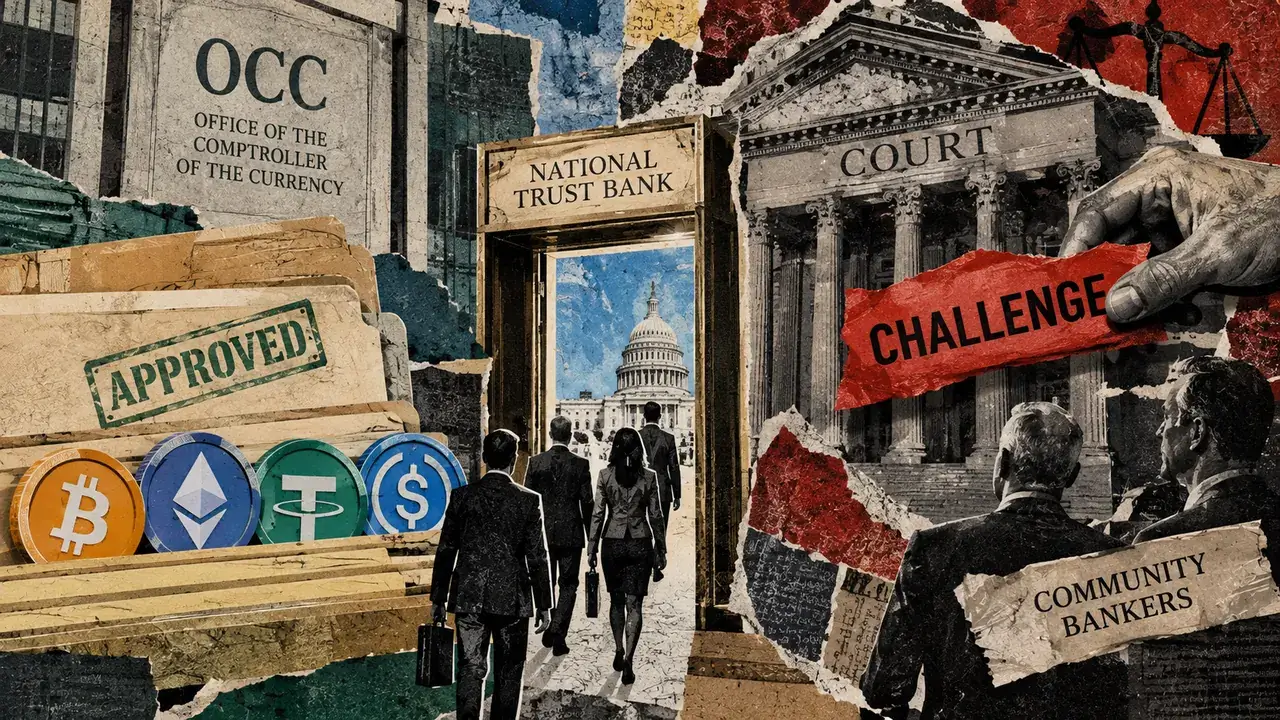
Bankers sue to overturn OCC trust-bank rule used by crypto firms
The Independent Community Bankers of America sued the OCC in federal court in Washington on Oct. 2, two weeks after the agency app...