Polymarket Returns to US Market with $112 Million Exchange Acquisition
Polymarket has purchased a regulated exchange for $112 million to bring prediction markets back to American users. The crypto betting platform bought QCEX, which holds licenses from the Commodity Futures Trading Commissi...
Archive context
Older archive item. Useful for background and entity history, but not a fresh market-moving signal.

Polymarket has purchased a regulated exchange for $112 million to bring prediction markets back to American users. The crypto betting platform bought QCEX, which holds licenses from the Commodity Futures Trading Commission (CFTC), marking its return after three years away from the US market.
Both companies have official CFTC approval to operate in the United States. QCX received its designation as a contract market on July 9, just 12 days before Polymarket announced the purchase.
Why This Deal MattersPolymarket left the US market in 2022 after the CFTC fined the company $1.4 million. The regulator said Polymarket failed to register properly for offering event-based betting contracts to Americans. Since then, US users could not legally access the platform.
“Now, with the acquisition of QCEX, we are laying the foundation to bring Polymarket home,” said Shayne Coplan, Polymarket’s founder and CEO. The deal allows the company to offer prediction markets to US users with full regulatory approval.
The platform lets people bet on real-world events using cryptocurrency. Users can wager on election outcomes, sports results, economic data, and other future events. Market prices show how likely people think these events are to happen.
Polymarket claims to be the world’s largest prediction market. The company says users made about $6 billion in predictions during the first half of 2025. The platform gained attention during the 2024 presidential election when users bet heavily on political outcomes.
We’re coming homeSource: Polymarket X
Federal Investigations EndThe acquisition comes after federal authorities dropped their investigations into Polymarket. The Department of Justice and CFTC officially closed their probes in July 2025 without filing charges.
Investigators looked into whether Polymarket allowed US users to place bets despite the 2022 settlement. The probes intensified after the 2024 election when the platform saw massive betting volume on political races.
FBI agents raided CEO Shayne Coplan’s New York apartment in November 2024, taking his phone and electronic devices. Coplan called the raid “political retribution” from the Biden administration. No criminal charges were filed against him.
The end of these investigations clears the path for Polymarket’s return to the US market. Federal regulators under the Trump administration have taken a friendlier approach to cryptocurrency companies compared to the previous administration.
Strategic Business MoveQCEX founder Sergei Dobrovolskii started pursuing CFTC licenses four years ago when prediction markets were less popular. “When we began the process to obtain our DCM & DCO licenses over 4 years ago, the prediction market was in its infancy,” Dobrovolskii said.
The timing worked well for both companies. Polymarket needed regulatory approval to serve American customers, while QCEX had the licenses but limited business operations. Combining the companies gives Polymarket immediate access to US markets through established regulatory channels.
Polymarket also announced a partnership with X (formerly Twitter) to provide prediction data directly on the social media platform. This deal with Elon Musk’s company expands Polymarket’s reach to mainstream audiences beyond crypto users.
Bloomberg previously reported that Polymarket was seeking $200 million in funding at a $1 billion valuation. The regulatory approval through this acquisition likely makes the company more attractive to investors.
What Happens NextPolymarket can now offer prediction markets to US users through a fully regulated framework, differentiating itself from traditional gambling sites by focusing on real-world events rather than games of chance.
Its $112 million acquisition of QCEX provides the regulatory foundation needed to serve American traders again, putting Polymarket in direct competition with Kalshi, another CFTC-regulated prediction market. Kalshi recently won court approval to offer election betting in 2024, giving it a head start in the American market. With federal investigations closed and licenses secured, Polymarket’s deal highlights how crypto companies are finding compliant paths rather than operating in legal gray areas.
Why this matters
This research story adds another data point to the current market tape and is useful when read alongside nearby source coverage.
Original source
Read on Brave New CoinRelated market context
Blockchain.com Seeks CFTC Approval for Prediction Markets, Crypto Derivatives
Blockchain.com is seeking regulatory approval to launch prediction markets and cryptocurrency derivatives trading in the United St...
Blockchain.com pursues CFTC approval for prediction markets: CNBC
The crypto company has reportedly applied for two licenses with the US commodities regulatory as the courts weigh prediction marke...

Blockchain.com seeks CFTC approval for prediction markets, crypto derivatives
Blockchain.com's CFTC approval pursuit could reshape US crypto markets, impacting regulatory dynamics and investor confidence amid...

Blockchain.com Seeks Approval for US Prediction Markets and Crypto Derivatives
The crypto platform filed for designated contract market and futures commission merchant licenses, which would let it run its own...

Blockchain.com seeks CFTC greenlight for US prediction markets, crypto derivatives trading: CNBC
Blockchain.com has applied for DCM and FCM licenses to offer ahead of a planned $500 million IPO.
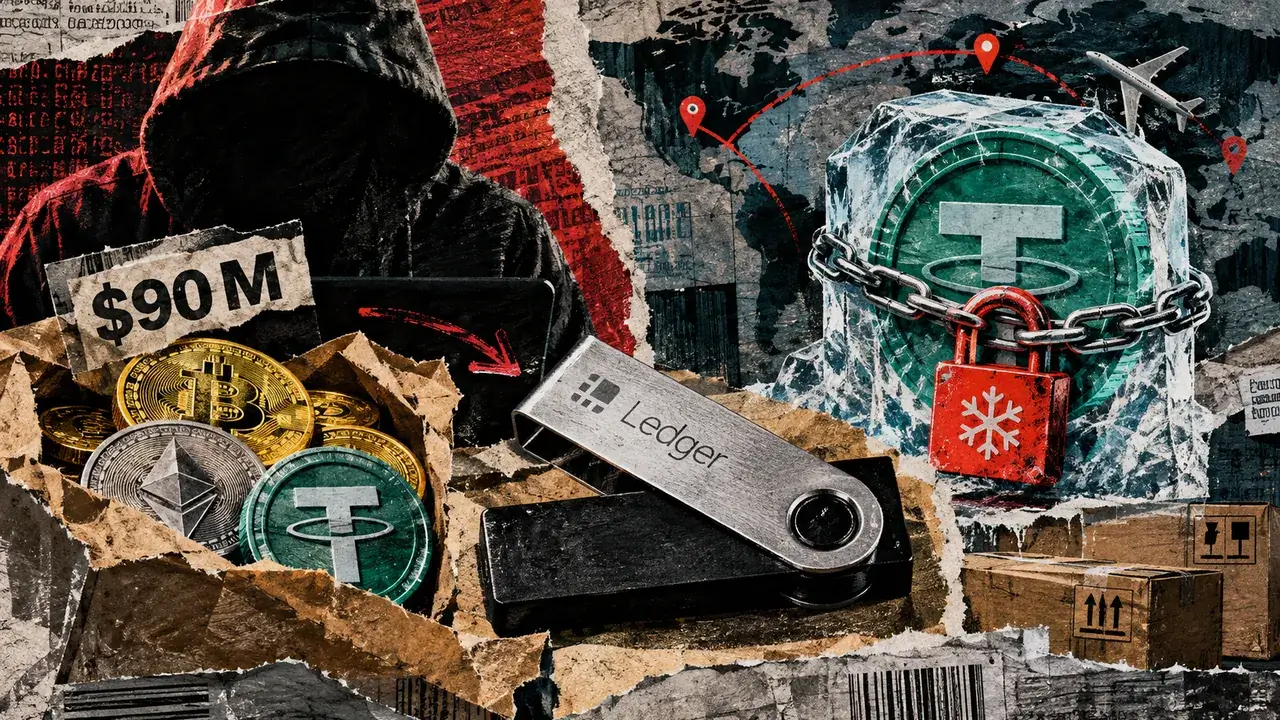
Ledger hack scare nears $90 million as Tether moves to freeze stolen USDT
Suspected Ledger wallet thefts are approaching $90 million as Tether freezes USDT stablecoin linked to the incident, according to...