SEC proposes a path for crypto projects to raise $75 million and later end the token’s securities contract
US regulators have already found a home for true Bitcoin perpetuals inside the CFTC’s exchange framework. The SEC is now turning to another part of the same market: how a team can pay to build a network before its token...
Archive context
Older archive item. Useful for background and entity history, but not a fresh market-moving signal.
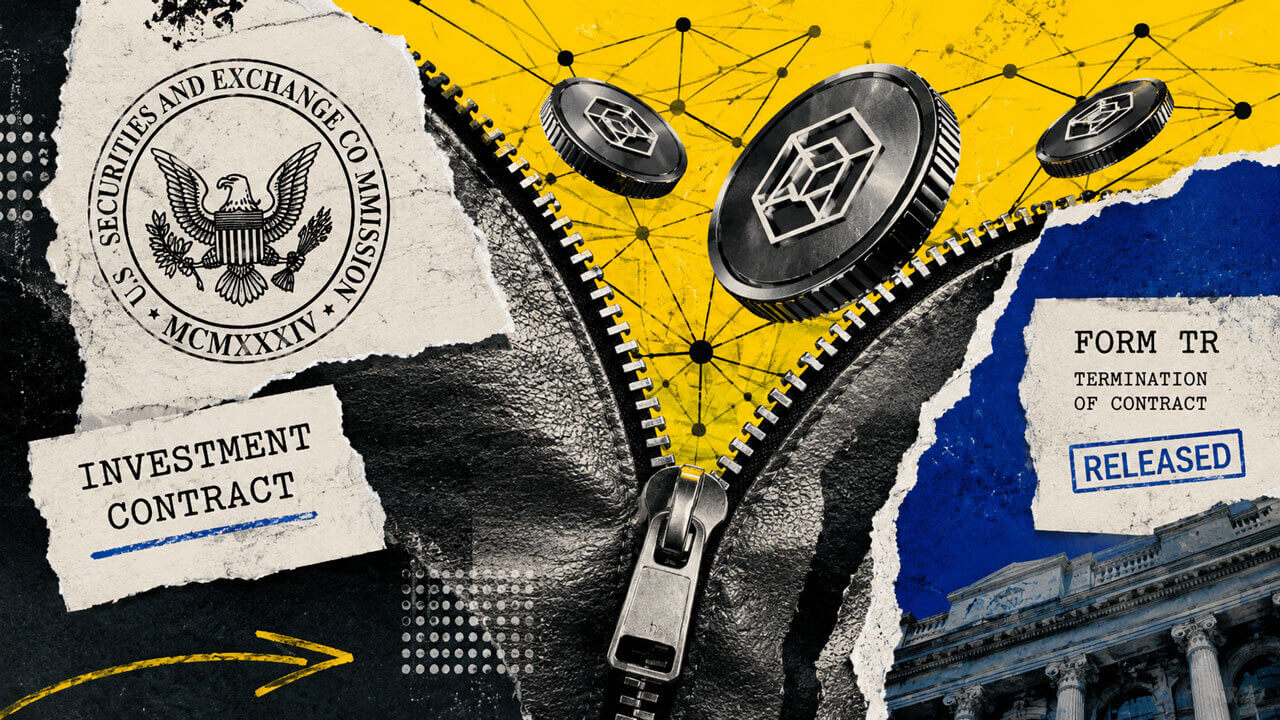
US regulators have already found a home for true Bitcoin perpetuals inside the CFTC’s exchange framework. The SEC is now turning to another part of the same market: how a team can pay to build a network before its token has much use.
A derivatives exchange starts with an established asset and places a new contract around it. A token project usually starts with a promise. Buyers provide the capital needed to write the code, launch the network, and make the token useful, while the founding team promises to do the work that could make their purchase more valuable. That bargain can be an investment contract under federal securities law.
The SEC’s proposed Regulation Crypto Assets tries to cover that bargain from start to finish. It would create routes for projects to raise up to $75 million under crypto-specific rules. It would also establish a filing process for ending the investment contract once the issuer has completed or permanently stopped the work it promised.
The proposal entered the Federal Register on Aug. 21, and comments are due Oct. 20. The commission must review those submissions and vote on a final rule before any project can use the new exemptions.
The SEC is regulating the bargain around the tokenThe proposal builds on the SEC’s March interpretation of federal securities law. Under that approach, a “crypto asset” can take part in a securities transaction without retaining the same legal status forever. The security is the “covered investment contract,” meaning the transaction and promises that connect a buyer’s money to the issuer’s essential managerial work.
Separating the token from the bargainThe distinction becomes much more important when the token and the bargain are separated. The token is the digital object recorded on-chain. The bargain is the buyer’s decision to fund a team that has promised to build the software, secure the network, and create the conditions for the token’s use. Securities law governs that financing relationship while buyers still depend on the team’s promised work.
Once those promises have been fulfilled, or the issuer has permanently stopped trying to fulfill them, the investment contract can cease to exist. Regulators could then treat later token transfers separately from the fundraising transaction. Rule 400 would turn that principle into a safe harbor with a public filing and a written explanation from the issuer.
That safe harbor would be available to any qualifying issuer. A project could use it even if it raised money through Regulation D, another exemption, or a structure outside the two new fundraising paths. Regulation Crypto Assets therefore reaches beyond the offerings conducted under its own $5 million, $20 million, and $75 million limits.
Three lanes for three stagesThe proposal divides token financing into a small startup exemption and a larger fundraising exemption with two tiers. The dollar limits borrow from Regulation Crowdfunding and Regulation A, while the eligibility rules and disclosures are rewritten for crypto projects.
Proposed path Maximum raise Who can use it Disclosure and reporting Retail access and resale Startup exemption $5 million across one period lasting up to four years An individual, a group, or an entity; one use for the same token or another token with closely matching features Form NOR, free public disclosures on the project’s website, and yearly material updates; no financial statements No special retail purchase cap; general solicitation permitted; contracts carry no rule-based resale lockup Fundraising Tier 1 $20 million in 12 months A US entity that meets the proposal’s domestic control and operations tests SEC-qualified Form 1-CRYPTO, financial statements that may be unaudited, plus annual, semiannual, and current reports A non-accredited buyer is capped at 10% of annual income or net worth, whichever is greater; contracts carry no rule-based resale lockup Fundraising Tier 2 $75 million in 12 months A US entity that meets the proposal’s domestic control and operations tests SEC-qualified Form 1-CRYPTO, audited financial statements, plus annual, semiannual, and current reports The same 10% cap applies to non-accredited buyers; contracts carry no rule-based resale lockup The startup exemptionThe startup lane is closest to a regulated version of an early white-paper sale. A project could be run by a person or an informal group that hasn’t formed a company. It would file a notice of reliance on Form NOR and publish the required information free of charge on its website by the time of that filing. Any material updates would have to appear within 30 calendar days of each year-end.
The issuer could raise up to $5 million across a single period lasting as long as four years. It couldn’t restart the clock through an affiliate or another token with closely matching features, and federal antifraud rules would apply throughout. By the end of the period, the issuer would file Form TR and state whether the investment contract has ended. An unfinished project would have to describe its status and its plans from that point.
Tier 1 and Tier 2The two larger tiers are built more like public securities offerings. An issuer would need to be organized under US law, conduct its business principally in the country, and keep more than half of its assets there. A majority of its executives or directors would also need to be US citizens or residents.
The issuer could gauge investor interest before filing, then make offers once Form 1-CRYPTO is on EDGAR. Sales could begin only when the SEC qualifies the offering statement. Tier 1 permits up to $20 million with unaudited financial statements, while Tier 2 reaches $75 million and requires an independent audit.
Both tiers would admit an unlimited number of retail buyers. Each non-accredited buyer could invest up to 10% of annual income or net worth, using the higher figure, while accredited investors would face no rule-specific cap. Federal law would let buyers resell the covered investment contracts without a rule-based lockup, unlike many private placements.
The proposal would also preempt state registration and qualification requirements for eligible sales and certain secondary trades. That protection would last while the issuer keeps its federal filings current. States would retain their power to pursue fraud and misconduct. For a token meant to circulate nationally from launch, that division could replace dozens of separate registration exercises with one federal route.
Form TR closes the fundraising contract Ongoing reportingForm 1-CRYPTO would give the larger offerings a standardized public record. The filing would explain the issuer’s promises, the token’s supply and allocation, and the network’s governance. It would also cover source-code security, conflicts of interest, the build plan, and the risks attached to the offering. The financial section would show how much capital the issuer has, how it has spent its money, and how long it can continue operating.
These disclosures create a baseline for judging whether the issuer later completed the work that investors financed. A vague white paper can move its goals whenever a project falls behind. A filed offering statement gives buyers and regulators a fixed account of what the team promised to deliver.
Three reporting formsTier 1 and Tier 2 issuers would keep that record current through three new forms. Form 1-KC would provide an annual report within 120 days of the fiscal year-end, Form 1-SC would cover the first six months of the year within 90 days, and Form 1-UC would report specified events within four business days. Reporting would continue while the investment contract exists, subject to the proposal’s suspension and termination rules.
Rule 400 supplies the endpoint. An issuer would need to complete or permanently cease every essential managerial effort it represented or promised to undertake. It would also certify that it is making no new promise and has no intention to continue such work for the token.
The issuer would then file Form TR on EDGAR with a description of the contract and token. The filing would include its certification and a supporting analysis detailed enough for a reasonable investor to understand. Reliance begins when the conditions are satisfied, and the form is filed. The SEC could still dispute a filing that misstates what the team has done or continues to promise.
Reaching the fourth year merely ends the startup exemption. Rule 400 still requires the issuer to finish or permanently cease its essential work before the safe harbor can apply. A team that keeps advertising major upgrades under its control would have difficulty reconciling those promises with a certification that its managerial role has ended.
Where the safe harbor endsThe safe harbor also has a defined legal boundary. It covers the term “investment contract” under the Securities Act and Exchange Act as administered by the SEC. A token that separately functions as stock, a note, or another listed type of security would require its own analysis. Private parties could also press a different view in court, and issuers would retain the option to rely directly on the Howey test without using Rule 400.
Congress may eventually set the wider division of authority between the SEC and the CFTC in statute. Regulation Crypto Assets works one level below that boundary. It provides the forms, offering limits, retail rules, public reports, and legal endpoint that a token issuer would use in practice.
The $75 million ceiling will draw attention, but the full lifecycle gives the proposal its value. A project could enter the US market under disclosures written for a token network. It could keep buyers informed while the founding team performs the promised work, then close that securities relationship through a public filing after the team completes that work. That would give token fundraising a repeatable legal route from its first sale to independent circulation.
The post SEC proposes a path for crypto projects to raise $75 million and later end the token’s securities contract appeared first on CryptoSlate.
Why this matters
SEC is showing up inside the Regulation theme, so this story is worth tracking for follow-through rather than treating it as a one-off headline.
Original source
Read on CryptoSlateRelated market context
As traditional giants rush into digital dollars, USDD’s Yvonne Chia explains why 24/7 access, self-custody, and transparent yield give decentralized stablecoins an edge banks can’t replicate. 20 November – Road Town, Totorla, British Virgin Islands – Decentralized stablecoin protocol USDD is accelerating its multichain utility across TRON, Ethereum, and BNB Chain—combining automated sUSDD yield via its Smart Allocator with GasFree zero-TRX transfers—as traditional financial giants race to build competing stablecoin rails. In a recent industry interview with instant exchange partner ChangeNOW, USDD Head of Communications Yvonne Chia outlined why self-custody, 24/7 settlement, and transparent onchain reserves give decentralized digital dollars a structural advantage over bank-issued alternatives. 1. Permissionless Access vs. Gatekept Accounts For billions of people globally, opening and maintaining a traditional bank account still involves paperwork, minimum balance requirements, geographic restrictions, and approval delays. Even when banks integrate stablecoin rails behind the scenes, those services remain gated behind legacy compliance walls and intermediary control. Crypto-native stablecoins flip that model on its head. As Yvonne Chia highlighted during the interview: “Compare this to a stablecoin like USDD, where all you need is a phone, a working internet connection, you can immediately start a wallet and you have access to your funds right away.” With USDD, users can access and manage their digital dollars directly through their own wallets, without depending on traditional financial intermediaries. This represents a fundamental shift in financial access: users are no longer limited to the services, operating hours, or account structures of a single institution. Instead, they have the freedom to hold, manage, and transfer their assets on their own terms. Self-custody also gives users greater autonomy over their financial decisions. They can choose which wallets to use, where to transfer their assets, and which supported decentralized applications to interact with, without needing to route every transaction through a centralized financial institution. With USDD, users’ digital dollars can move with them across an open blockchain ecosystem, rather than remaining tied to a particular bank or service provider. 2. 24/7 Global Settlement vs. “Banking Hours” Legacy payment networks still operate on decades-old schedules: weekend cutoffs, bank holidays, and multi-day cross-border settlement delays accompanied by hefty wire fees. Blockchain networks never close. Whether it is a Sunday night or a public holiday, USDD moves globally without depending on traditional banking operating hours or settlement windows. “We are able to have transfers 24/7 and we’re not limited to any traditional banking hours. So I think that in some ways, stablecoins are not just becoming banks, but exceeding what traditional banks can offer to users.” To make everyday transfers even smoother than fintech apps, USDD introduced GasFree integration on TRON, allowing users on supported wallets to pay network fees directly in USDD without needing to hold TRX. This removes another practical barrier to stablecoin adoption: having to acquire and maintain a separate gas token just to transfer digital dollars. With GasFree, eligible users can pay approximately 0.5 USDD per transaction, compared with around 1.5 USDT for a standard USDT transfer under the referenced fee conditions. These improvements matter because the usefulness of a stablecoin is not determined by its peg alone. Low-cost transfers, straightforward wallet experiences, and around-the-clock availability are what make digital dollars practical for everyday payments and global value transfers. 3. Passing Yield Back to Users vs. Bank Spreads Perhaps the sharpest contrast between banks and decentralized stablecoins lies in how yield is distributed. In traditional banking, institutions take customer deposits, deploy them into yield-generating markets, and retain a significant portion of the returns. Everyday depositors may receive relatively low interest rates, while higher-yielding products often come with eligibility requirements, minimum deposits, or fixed maturity periods. Stablecoins introduce another way to participate in digital-dollar opportunities. Rather than keeping capital entirely within a traditional deposit account, users can access onchain yield opportunities through decentralized protocols and transparent investment mechanisms. USDD was built to return that value directly to holders. Through USDD Earn, users can deposit USDD to receive sUSDD, earning automated, competitive yield powered by our Smart Allocator system, with no fixed lock-up periods restricting access to their capital. For users, the distinction is important: USDD Earn provides access to a productive stablecoin while maintaining flexibility, rather than requiring users to commit their capital to a conventional fixed-term product. 4. Onchain Verification vs. Institutional Trust Traditional banks ask customers to trust closed-door balance sheets and periodic regulatory filings—until a crisis proves otherwise. USDD takes a different approach through its “Don’t trust, verify” ethos, emphasizing publicly accessible onchain information and independent verification. Onchain Transparency: Smart contract addresses, collateral reserves, and Smart Allocator deployments are publicly viewable, allowing users to examine relevant information directly on the blockchain. Structured Disclosures: Quarterly Treasury Reports provide additional information about reserve positions, financial performance, and operational developments. Independent Security Reviews: USDD undergoes third-party security audits to assess its smart contracts and identify potential vulnerabilities. Transparency does not eliminate financial or technical risks, but it changes how users can evaluate them. Instead of relying exclusively on an institution’s assurances, users have access to information that can be independently examined and verified. 5. Beyond a Single Network: An Open, Multichain Financial Ecosystem Financial freedom is not just about holding digital dollars. It is also about being able to use them wherever opportunities and applications exist. A stablecoin confined to a single network or limited use case cannot fully realize the potential of open blockchain finance. Following its January 2025 protocol upgrade, USDD expanded natively from TRON onto Ethereum and BNB Chain, extending its reach across multiple blockchain ecosystems. This multichain presence allows USDD to connect with different communities, liquidity environments, and decentralized applications. Its sUSDD product has also expanded into DeFi integrations, including Pendle and Morpho, giving users additional ways to access yield strategies across supported ecosystems. The bigger picture is an interconnected financial ecosystem in which users can move between holding, transferring, exchanging, and deploying their stablecoins according to their own needs. These are not isolated functions. Together, they make stablecoins more useful as everyday financial infrastructure. The Future: Interconnected, Open, and Multichain Banks will undoubtedly continue using stablecoin rails to modernize their back-end settlement. However, true financial freedom comes from open networks where assets flow freely across protocols without intermediaries. For USDD, the opportunity goes beyond offering a dollar-pegged asset. It is about making digital dollars accessible, transferable, and productive across an interconnected financial ecosystem. From self-custody and 24/7 transfers to flexible yield opportunities and multichain DeFi access, these capabilities give users more ways to put their money to work. Banks may be bringing stablecoins into traditional finance. Crypto-native protocols are showing what stablecoins can make possible beyond it.
As traditional giants rush into digital dollars, USDD’s Yvonne Chia explains why 24/7 access, self-custody, and transparent yield...

SEC Freezes Assets in $560 Million Crypto Trading Ponzi Scheme
Bitcoin Magazine SEC Freezes Assets in $560 Million Crypto Trading Ponzi Scheme The Securities and Exchange Commission has frozen...
Coinbase CEO Brian Armstrong says AI agents can give workers an unlimited team of L5-level staff
AI agents could revolutionize workforce dynamics, shifting focus from hiring to oversight, but human judgment remains crucial for...

Jesse Pollak Says Tokenized Stocks on Base Have Crossed $1 Billion in Weekly Volume
Tokenized stocks on Base, the Ethereum layer 2 network built by Coinbase, have “just crossed $1 billion of weekly volume” less tha...
NYSE taps Avalanche for tokenized securities, Bitwise cites privacy, security, and compliance
NYSE's adoption of Avalanche for tokenized securities highlights a shift towards blockchain solutions prioritizing privacy and com...

SPCXb leads tokenized SpaceX stocks with a market cap above $110 million
The rise of tokenized SpaceX stocks like SPCXb highlights the growing influence of blockchain in traditional finance, offering 24/...