South Korea Adopts Crypto Staking as Competition Intensifies among Exchanges: Report
The introduction of crypto staking services, where users can deposit their coins to earn rewards, has intensified competition among exchanges in South Korea, The Korea Times reported. This service has expanded the scale...
Archive context
Older archive item. Useful for background and entity history, but not a fresh market-moving signal.

The introduction of crypto staking services, where users can deposit their coins to earn rewards, has intensified competition among exchanges in South Korea, The Korea Times reported. This service has expanded the scale of staking into trillions of dollars and introduced service brokerage fees as a new source of income for exchanges.
Crypto Staking Gains Momentum
Staking services, where investors deposit their coins to validate blockchain networks and receive rewards, have recently gained traction in the cryptocurrency market. Unlike traditional bank deposits, exchanges do not manage the coins but act as proxies and charge brokerage fees for the service.
Upbit has reportedly surpassed 3 trillion won ($2.1 billion) in staking assets. The crypto exchange distinguishes itself by directly operating the entire staking process without outsourcing. The exchange offers staking services for Ethereum, Cosmos, ADA, Solana, and Polygon, with estimated reward rates per year ranging from 2.6 percent to 16.6 percent.
However, Upbit deducts 10 percent from the rewards as brokerage fees before distribution. On the other hand, Bithumb and Coinone, the second and third-largest exchanges in South Korea, differentiate themselves by offering daily staking services. This gives investors more flexibility in depositing and withdrawing their coins compared to traditional staking services.
Despite the popularity of staking services, experts warn of risks such as hacking and technological malfunctions. Additionally, regulatory frameworks are needed to address concerns about security and investor protection.
Enhancing Transparency
Last year, South Korea's Financial Services Commission (FSC) introduced rules mandating crypto exchanges to disclose their holdings. Under the new rules, South Korean companies engaged in holding or trading cryptocurrencies must provide detailed information about their transactions to the financial regulator.
The requirement includes disclosing the amount of digital assets held, the characteristics of these assets, and the business model. Additionally, firms must declare profits made from crypto assets and provide the market value of their holdings.
The FSC emphasized that these measures will improve transparency in accounting for digital assets held by corporations. However, the cost incurred in developing crypto assets will not be recognized as intangible assets under the new regulations.
This article was written by Jared Kirui at www.financemagnates.com.Why this matters
This research story adds another data point to the current market tape and is useful when read alongside nearby source coverage.
Original source
Read on Finance MagnatesRelated market context

Bitwise Opens US Spot NEAR ETF With Staking Rewards as Bitcoin Tests Long-Term Holder Supply Cluster
Bitwise debuts the first US spot NEAR ETF with staking rewards as analysts say Bitcoin tests a long-term holder supply cluster wit...

Uphold survey shows 75% of US banks are building blockchain services
Blockchain adoption in US banks signals a transformative shift towards digital finance, promising enhanced efficiency and customer...

EigenLayer Unveils Dual-Staking Extension For Bitcoin Asset Security
In a major development confirmed on SEPTEMBER 30, 2026, Confirmed announcement/filing for EigenLayer Unveils Dual-Staking Extensio...

21Shares Sets New Staking Payouts Across Five Crypto ETFs
TL;DR 21Shares has declared September staking distributions for five crypto ETFs covering Ethereum, Solana, Hyperliquid, Sui and P...
ESMA Proposes MiCA Rules for DeFi Gateways, Staking and Lending
The European Securities and Markets Authority has proposed a new regulated category for crypto firms that connect clients to DeFi,...
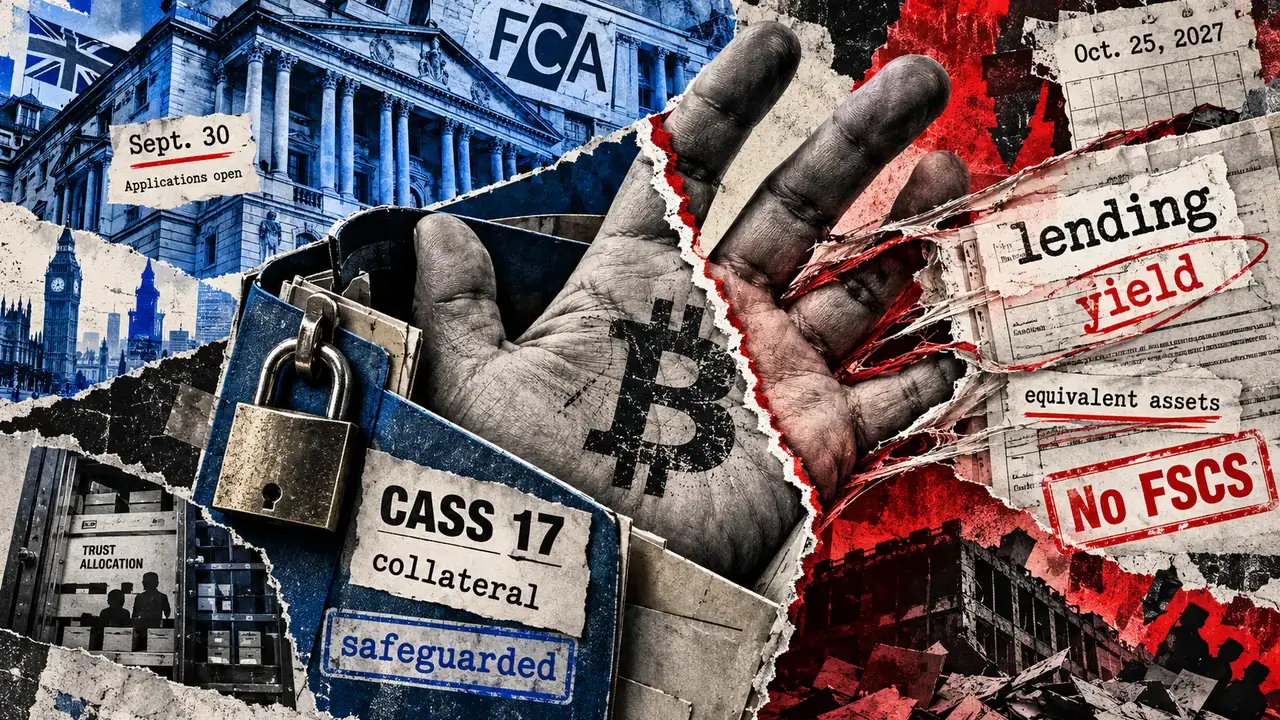
UK’s 2027 crypto rules let firms remove trust protection from Bitcoin lent for yield
UK crypto firms can now apply for authorization as of Sept. 30, bringing Bitcoin holders closer to a rulebook that will treat coin...