South Korean Supreme Court proposes amendments for crypto asset seizure procedures
The proposed amendments could enhance legal clarity and creditor recovery in civil cases, impacting crypto asset management and investor strategies. The post South Korean Supreme Court proposes amendments for crypto asse...
Archive context
Older archive item. Useful for background and entity history, but not a fresh market-moving signal.

The proposed amendments could enhance legal clarity and creditor recovery in civil cases, impacting crypto asset management and investor strategies.
The post South Korean Supreme Court proposes amendments for crypto asset seizure procedures appeared first on Crypto Briefing.
Why this matters
This research story adds another data point to the current market tape and is useful when read alongside nearby source coverage.
Original source
Read on Crypto BriefingRelated market context

Kalshi faces legal challenges as court battles escalate
Kalshi's legal battles highlight the complex interplay between federal oversight and state gambling laws, potentially prompting Su...
Securitize partners with LG CNS to advance tokenized assets in South Korea
The partnership could accelerate South Korea's financial innovation, potentially reshaping its asset management landscape and regu...

SEC drops to 2 members, and 1 hidden rule shifts crypto power
Hester Peirce’s Oct. 2 resignation has left Paul Atkins and Mark Uyeda as the SEC’s two listed commissioners. A new rule permits o...

Polymarket Takes €420K Dutch Gambling Fight to Court Over Crypto Prediction Markets
Key Takeaways: Polymarket challenges a court ruling that its prediction markets are illegal gambling in the Netherlands. Dutch reg...
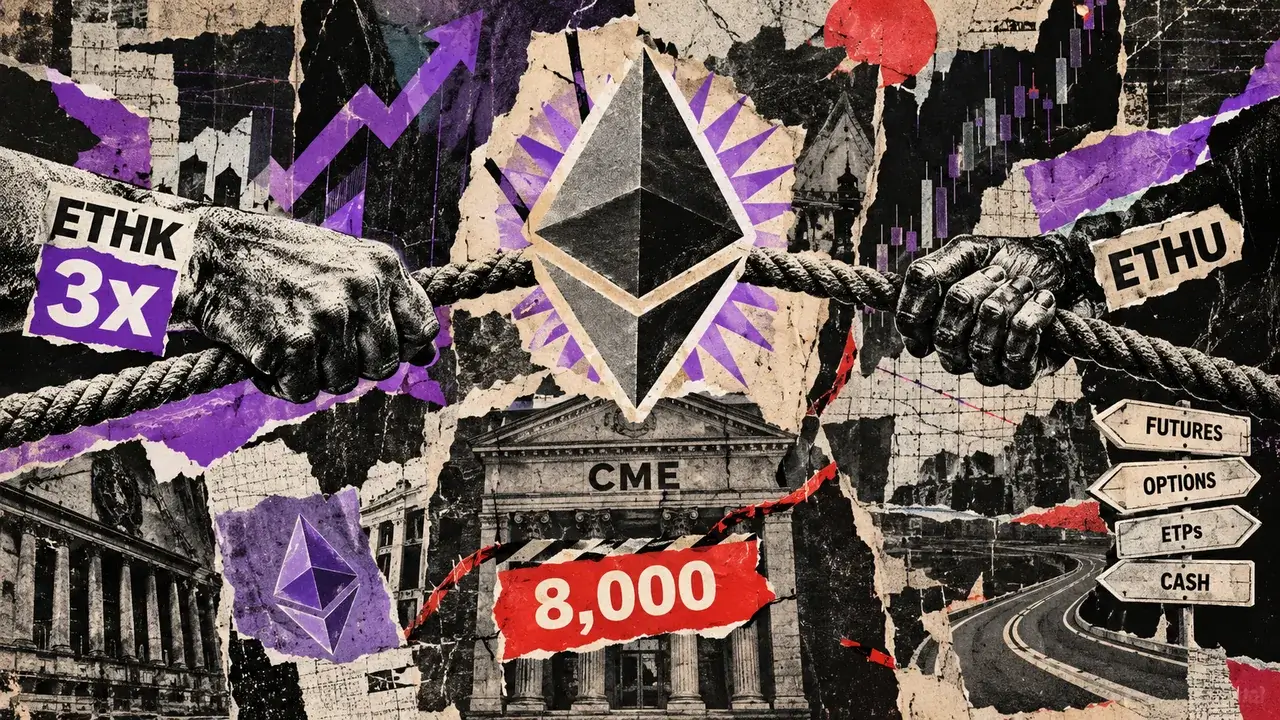
Ethereum’s proposed 3x ETF could reach CME’s futures threshold with just $362 million
At ETHU's Oct. 6 disclosed futures valuation, a 3x Ethereum ETF with $362.1 million in assets would target about $1.09 billion of...

Non-Custodial Crypto Exchanges: How Self-Custody Is Changing the Way Users Swap Digital Assets
For many users, the distinction comes down to custody. A centralized platform may hold assets on behalf of its customers, while a...