Stablecoins 2.0: Comparing Blockchains for the “Stable Coins” of a New Era
On July 18, 2025, President Donald Trump signed the federal GENIUS Act, initiating full regulation of “stable coins” in the U.S. This marked a turning point for both the American crypto market and the global digital asse...
Archive context
Older archive item. Useful for background and entity history, but not a fresh market-moving signal.

On July 18, 2025, President Donald Trump signed the federal GENIUS Act, initiating full regulation of “stable coins” in the U.S. This marked a turning point for both the American crypto market and the global digital asset industry, as the world’s largest economy officially opened its doors to the legal circulation of dollar-pegged stablecoins.
Now, major players – banks, corporations, and even entire nations – will inevitably have to catch up with the global trend. Nomy Research has analyzed how the race for leadership in the next-generation stablecoin segment will unfold.
Stablecoins on the International AgendaChina
In 2021, mainland China banned mining and cryptocurrency operations. But against the backdrop of a new global wave of stablecoin regulation, on July 11, 2025, a meeting was held in Hong Kong between the Shanghai State-owned Assets Supervision and Administration Commission and representatives of local authorities. Officials responded to calls from experts and large companies to develop a stablecoin pegged to the yuan.
“Given China’s powerful fintech ecosystem, it has the potential to become a key player in shaping the future of blockchain-based payments,” commented Nomy Research Analyst, Aron Burke.
In June, at the Lujiazui Forum, People’s Bank Director Pan Gongsheng announced the expansion of the international use of the digital yuan, the creation of an international e-CNY center, and the pursuit of a multipolar currency system.
Businesses are also not standing aside. E-commerce company JD.com and fintech giant Ant Group urged the central bank to allow the issuance of yuan-pegged stablecoins to counter the growing influence of U.S. dollar-pegged cryptocurrencies. Companies plan to apply for licenses to issue coins in Hong Kong.
Market participants argue that any changes in China may not be easy, as capital controls in the country will likely become the main obstacle to stablecoin development. But active discussions are already underway, and perhaps, against the backdrop of the U.S. passing the GENIUS Act, the process of relevant regulation in China will proceed much faster.
European Union
On June 30, 2024, the technical requirements of MiCA came into force. Firstly, stablecoin issuers must obtain a license in the EU and be registered in the relevant register. Secondly, issuing companies are obliged to disclose the structure of reserves supporting the stablecoin, including regular reports on liquidity and the storage of funds in reliable institutions.
MiCA also sets limits on transaction volume: no more than 1 million transactions per day or €200 million per day — otherwise, the asset may be recognized as systemically important and fall under the supervision of the European Central Bank.
In January 2025, control intensified when ESMA issued a requirement to remove unlicensed tokens from the market. In April, agency representatives also expressed concern about the active integration of cryptocurrencies and TradFi. Among the risks associated with this process, the regulator named the popularity of stablecoins and ETFs on digital assets.
United Kingdom
The United Kingdom is building a two-tiered model for stablecoin regulation: the FCA will handle basic registration of issuers, reserves, and custody, while the Bank of England will oversee systemically important payment tokens. Key proposals have already been put forward for public consultation, with a subsequent transition to final rules in 2026. Simultaneously, an initiative to launch a CBDC is being promoted, but the Bank of England is ready to consider a digital pound only if it is convinced of its profitability.
The Growing Appeal of Passive Income with StablecoinsAs the global regulatory landscape for stablecoins matures, so too does the opportunity for investors to generate passive income from these digital assets. Stablecoins, by their very nature, offer a unique advantage: price stability. This makes them an ideal vehicle for earning consistent yields without the high volatility associated with other cryptocurrencies.
Over the years, the potential for passive income with stablecoins has increased significantly, driven by innovations in decentralized finance (DeFi) and the growing demand for secure, yield-bearing digital assets.
Companies like Nomy Finance have been at the forefront of helping clients capitalize on this opportunity since 2019. Through their robust digital wealth management platforms, Nomy Finance provides access to secure and competitive staking and lending programs for stablecoins. For instance, clients can earn attractive annual percentage yields (APYs) on their stablecoin holdings, with rates often ranging and depending on the specific program and market conditions.
Source: Nomy Finance
Comparing Blockchains for Stablecoins 2.0The choice of blockchain is crucial for the future of stablecoins. Nomy Research has identified several key contenders:
- Ethereum: Remains the dominant platform for stablecoins due to its robust ecosystem, established network effects, and extensive developer community. However, scalability and high gas fees remain challenges.
- Solana: Offers high throughput and low transaction costs, making it an attractive alternative for stablecoin issuance and transfers. Its growing DeFi ecosystem further enhances its appeal.
- BNB Chain: Provides a cost-effective and fast environment for stablecoin operations, particularly popular for its centralized exchange integration and large user base.
- Tron: Known for its high transaction speeds and low fees, Tron has also attracted a significant volume of stablecoin circulation, particularly USDT.
- Avalanche: Offers a highly scalable and customizable blockchain solution, with subnets providing tailored environments for specific stablecoin projects.
Nomy Research emphasizes that the ideal blockchain for Stablecoins 2.0 will balance security, scalability, decentralization, and regulatory compliance. The future will likely see a multi-chain approach, with stablecoins leveraging the strengths of different networks for various use cases.
ConclusionThe signing of the GENIUS Act marks a new era for stablecoins, paving the way for broader institutional adoption and global integration. As regulatory frameworks continue to evolve across different regions, the landscape for stablecoins will become more defined, opening up new opportunities for innovation and investment.
The race for leadership in this segment will be driven by technological superiority, regulatory clarity, and the ability to offer secure and efficient solutions for both individual and institutional users.
Why this matters
This research story adds another data point to the current market tape and is useful when read alongside nearby source coverage.
Original source
Read on Brave New CoinRelated market context
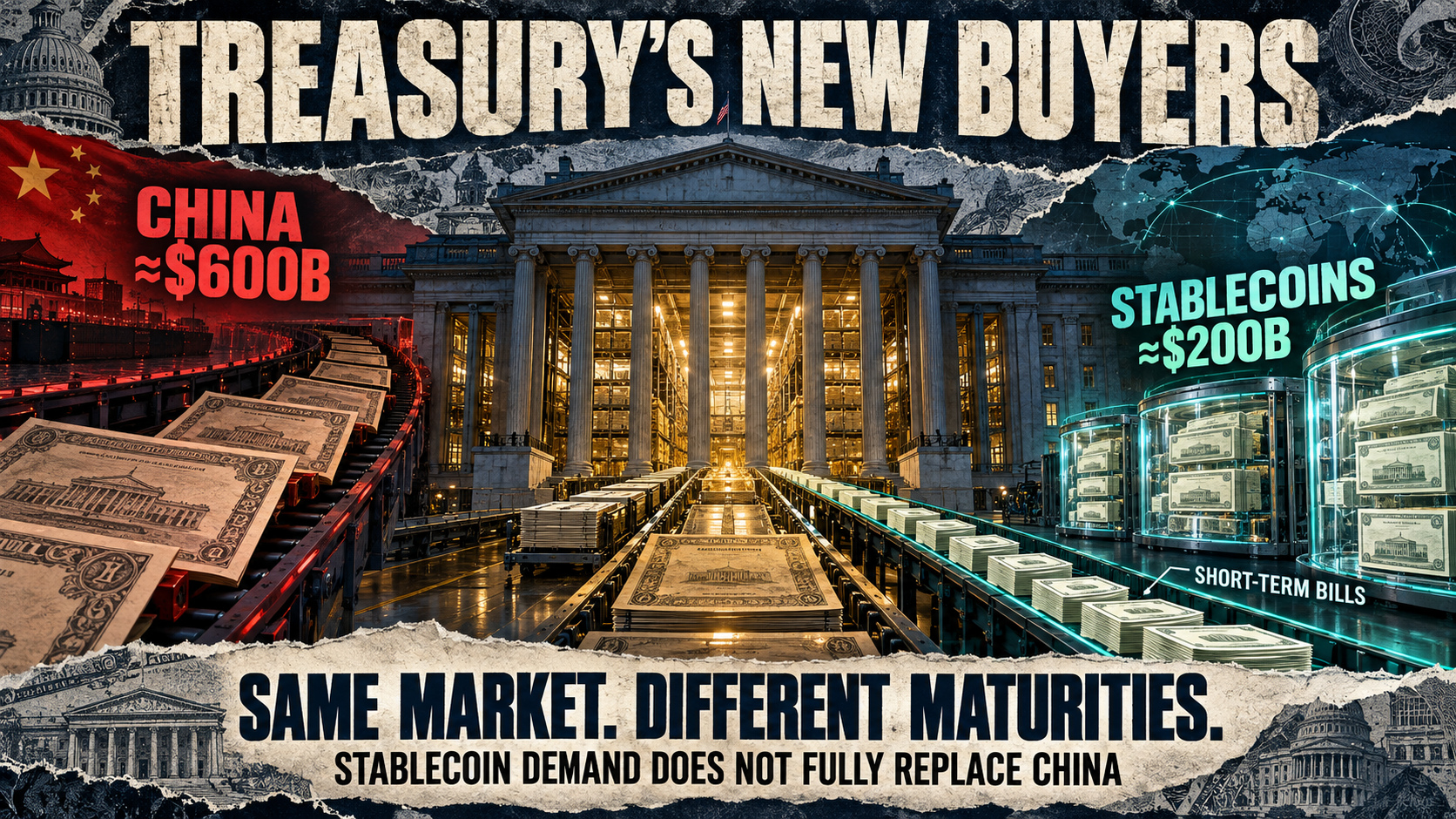
Stablecoin issuers have replaced 40% of China’s lost US Treasury demand
Stablecoin issuers are emerging as a new source of demand for US government debt as foreign official holdings lose ground. Tether...
Circle Pushes Back on MiCA's Bank-Deposit Mandate for Stablecoins
The USDC issuer told the European Commission that MiCA's reserve mandates and concentration caps keep the largest global stablecoi...

Hester Peirce departs SEC after years of advocating for digital assets
Peirce's departure leaves the SEC with a narrowed perspective, potentially impacting future crypto regulation and innovation initi...
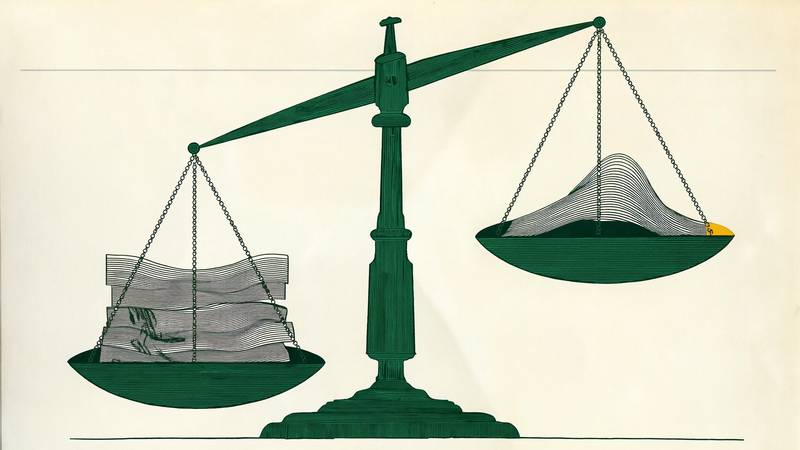
Circle Urges EU to Replace Stablecoin Bank-Deposit Mandates
The USDC issuer also wants to preserve cross-border co-issuance and create a recognition route for foreign stablecoins, while cent...
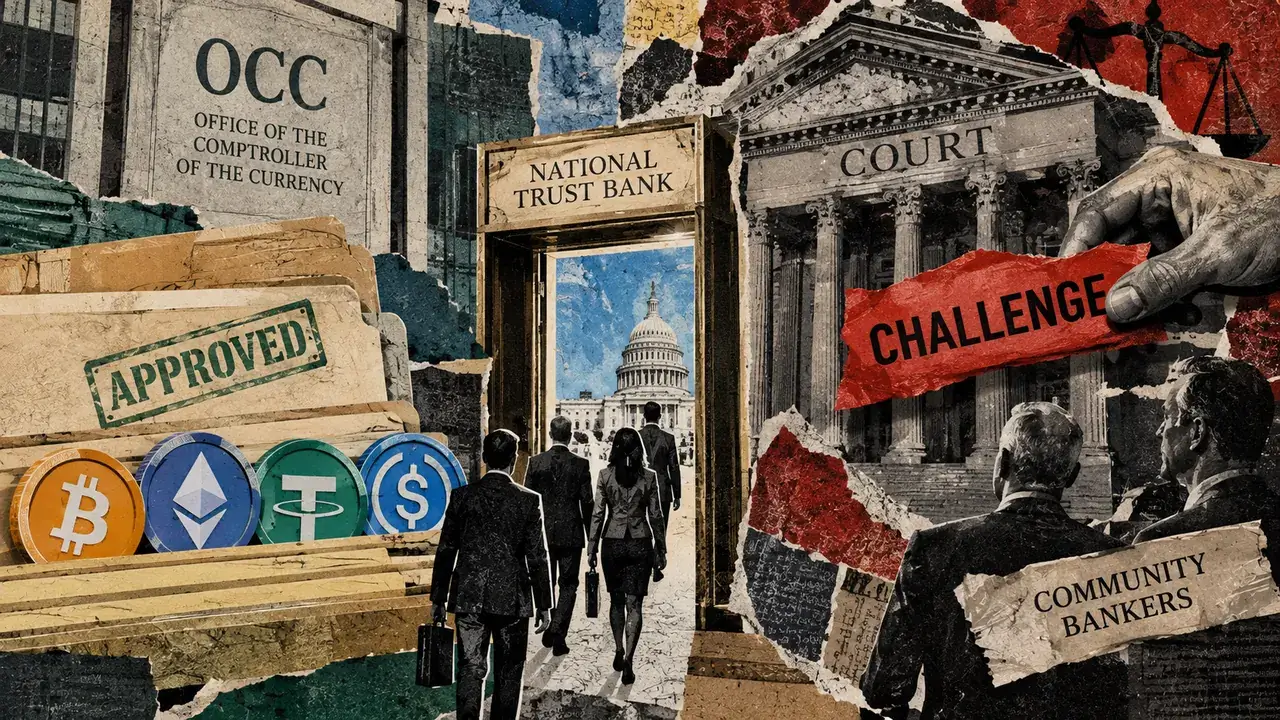
Bankers sue to overturn OCC trust-bank rule used by crypto firms
The Independent Community Bankers of America sued the OCC in federal court in Washington on Oct. 2, two weeks after the agency app...

Tokenized Stocks, Investor Rights, and Their Crypto Role
Tokenized stocks could give crypto-native investors access to equity exposure through crypto platforms, but a token that tracks a...