Strategy turns MSCI’s own SEC words against its $24 billion MSTR threat
Strategy has challenged MSCI's proposed “non-operating company” screen by tying it to a regulatory argument MSCI made four years ago in a letter shared on Aug. 31. The Bitcoin treasury company says the new methodology re...
Archive context
Older archive item. Useful for background and entity history, but not a fresh market-moving signal.
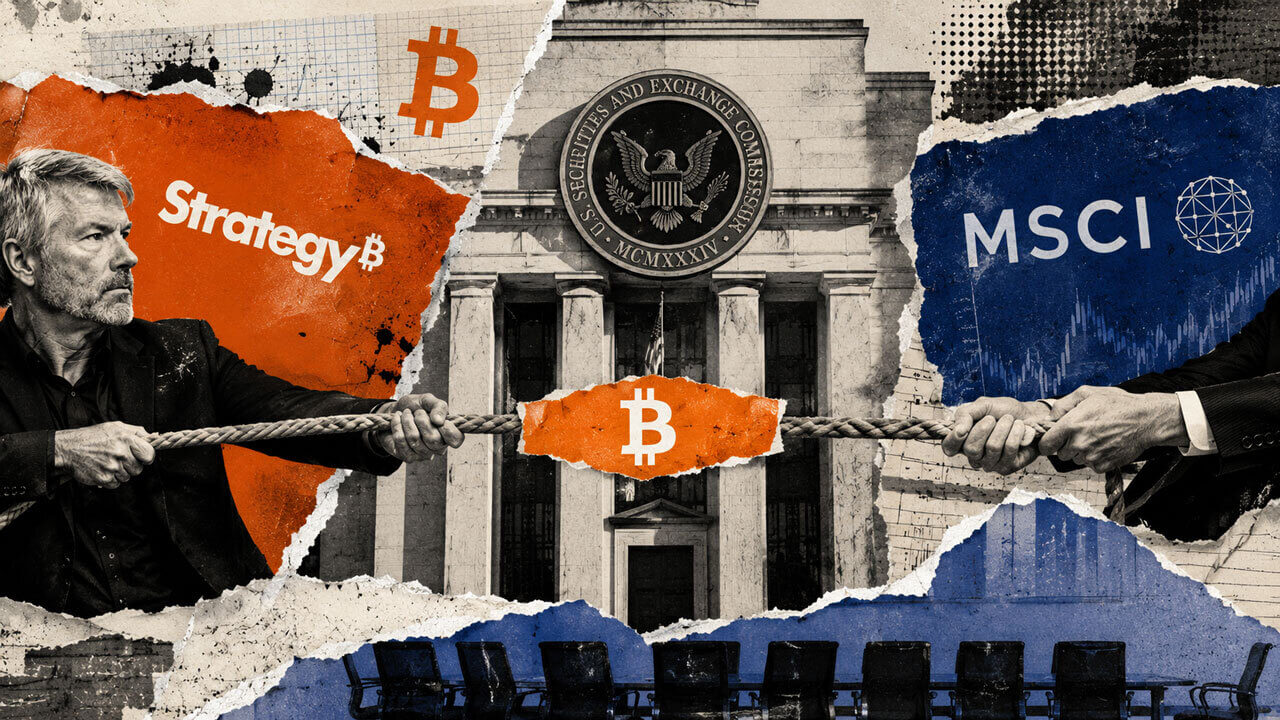
Strategy has challenged MSCI's proposed “non-operating company” screen by tying it to a regulatory argument MSCI made four years ago in a letter shared on Aug. 31.
The Bitcoin treasury company says the new methodology requires MSCI to judge whether Bitcoin belongs inside an operating business. That puts MSCI's 2022 defense to the Securities and Exchange Commission (SEC) at the center of the dispute.
MSCI told the agency that index providers “express no opinion or view as to whether any market, company, strategy or investment is good or bad,” a position Strategy says becomes harder to reconcile with a test that classifies corporate assets as operating or non-operating.
MSCI's latest 10-K says adviser-style obligations could increase the costs and complexity of its operations, giving Strategy a financial consequence to attach to its regulatory argument.
The index provider opened the consultation on Aug. 3 as part of a plan to expand existing exclusions for investment funds and business development companies. The proposal would use a core screen and five financial ratios to identify additional “non-operating companies,” with four triggered flags making a company ineligible for Global Investable Market Indexes.
Strategy argues that GAAP and IFRS provide no definitions for the operating and non-operating asset categories MSCI wants to use.
Under Strategy's reading, MSCI would therefore create its own standard for determining whether Bitcoin belongs inside an operating company, then use that classification to decide which securities qualify for its indexes.
It stated:
“The proposal, like the 2025 proposal that MSCI withdrew, is discriminatory, arbitrary, and misguided. If adopted, the proposal would have no meaningful impact on Strategy’s business, but it would profoundly harm MSCI’s reputation as a reliable and neutral index provider.”
Piece of the dispute MSCI’s position / disclosure Strategy’s counterargument Why it matters Index neutrality MSCI says index providers do not judge whether a company, market, strategy, or investment is good or bad Strategy says the new screen requires MSCI to judge whether Bitcoin is an operating asset Turns index methodology into a neutrality problem Adviser regulation MSCI says index providers do not recommend investments or allocations Strategy says subjective asset classification makes that harder to defend Links the rule to the SEC’s 2022 index-provider inquiry Business risk MSCI says adviser-style obligations could raise costs and complexity Strategy says MSCI is moving closer to a risk it already discloses Gives the dispute a financial consequence Strategy is using MSCI's SEC defense against the new screenThe SEC opened a request for comment in 2022 examining circumstances that could bring information providers, including index providers, within the Investment Advisers Act. Then-SEC Chair Gary Gensler focused on the economic power of index construction because inclusion and exclusion decisions can cause investors to buy or sell securities.
MSCI answered by presenting index providers as neutral market measurers. Its comment letter said it expresses no view on whether a company, market, strategy, or investment is good or bad and makes no recommendations about investments or asset allocations.
Strategy says the proposed screen conflicts with that position because MSCI would decide whether Bitcoin qualifies as an operating corporate asset.
The Bitcoin treasury's latest 10-Q strengthens its argument by reporting two operating segments, Software and Bitcoin, with the Bitcoin segment covering treasury operations, acquisitions, capital markets, and capital management.
MSCI could still classify the asset base behind that segment differently for index purposes. Strategy argues that doing so would require the index provider to impose its own definition of an operating business on a company whose SEC filings already treat Bitcoin activity as an operating segment.
That distinction gives Strategy a route into the regulatory debate surrounding index providers.
The SEC's 2022 inquiry remains general, and the agency has issued no determination on MSCI's current proposal. Strategy is using an existing regulatory issue to make MSCI defend the degree of discretion embedded in its methodology.
MSCI told shareholders that investment-adviser obligations could raise costs and complexity across its business and could create conflicts with other regulatory duties.
Strategy is pointing MSCI toward a risk the index provider already recognizes in its public disclosures.
Strategy says 87% of the affected value points back to MSTRCiting MSCI figures, Strategy says its float-adjusted market capitalization totals over $23.9 billion among six companies that would initially face deletion or watchlisting, compared with nearly $3.6 billion for the other five combined.
Strategy accounts for about 86.9% of the affected float-adjusted market value. That concentration gives the company evidence for its claim that an industry-neutral methodology would fall overwhelmingly on the largest Bitcoin treasury company, though the figure alone establishes nothing about MSCI's intent.
Affected group Float-adjusted market cap cited by Strategy Share of affected value Strategy $23.931B 86.9% Other five affected companies combined $3.618B 13.1% Total affected group $27.549B 100%The dispute points to a wider issue for corporate Bitcoin models, as MSCI defines how companies built around large digital-asset holdings fit inside broad equity benchmarks.
Strategy has incorporated Bitcoin into its treasury operations, capital markets activity and segment reporting, while MSCI's proposal could classify the assets supporting that business as non-operating for index eligibility.
Strategy's letter also asks MSCI to publish more of the consultation record, identify which companies would trigger the proposed screen, and explain the reasoning behind those classifications.
Near the end, Strategy asks MSCI to place a legal hold on documents connected to the purpose, creation, and issuance of the final eligibility test.
The company has announced no litigation, though the preservation request ensures that MSCI retains the internal record behind a methodology Strategy is attacking on regulatory grounds.
The bull case gives Bitcoin treasury companies a benchmarkStrategy's bull case depends on MSCI softening or withdrawing the current framework before the consultation concludes. MSCI could narrow the screen, define operating assets more precisely, or redesign the methodology so that corporate Bitcoin activity receives clearer treatment.
A softer framework would reduce immediate deletion risk for Strategy and give other Bitcoin treasury companies more room inside broad equity benchmarks. It could also establish an early precedent for companies that present Bitcoin acquisition and capital management as part of their operating structure.
The 86.9% concentration gives MSCI another factor to consider because a general methodology would produce a highly concentrated initial result.
Strategy's SEC argument adds a separate regulatory consideration by forcing MSCI to reconcile the proposed asset classification with the neutrality defense it presented in 2022.
Related Reading Strategy tells MSCI ‘Bitcoin doesn’t need you’ as $2.8 billion index risk hangs over MSTR The bear case leaves Strategy exposed to deletionMSCI can proceed with the current framework and defend asset classification as part of ordinary index construction.
Under that outcome, Strategy could face deletion or watchlist treatment once MSCI applies the screen, which could require index-linked portfolios to adjust their MSTR holdings. The methodology could then become a template for evaluating other Bitcoin treasury companies as digital assets occupy larger portions of corporate balance sheets.
Strategy could continue contesting the framework through the consultation process or pursue a broader legal route, with its document-preservation request keeping MSCI's internal methodology record intact.
MSCI decision path What MSCI does Effect on Strategy Broader consequence Withdraws proposal Drops or pauses the screen Removes immediate deletion risk Bitcoin treasury companies keep more room inside broad benchmarks Revises proposal Defines operating assets more clearly or phases implementation Reduces near-term cliff risk Creates a more formal framework for DAT eligibility Proceeds unchanged Applies current core screen and five-ratio test Strategy may face deletion or watchlist treatment Index-linked portfolios may need to adjust MSTR exposure Escalation path Strategy continues legal/regulatory challenge Dispute moves beyond consultation MSCI’s internal methodology record becomes more importantMSCI is accepting feedback through Sept. 30 and expects to announce its decision on or before Oct. 16, with implementation proposed for the November 2026 Index Review.
Those dates give Strategy only weeks to persuade MSCI that its Bitcoin screen creates a problem extending beyond MSTR's eligibility.
MSCI will ultimately have to defend the classification framework alongside the regulatory position it previously presented to the SEC. Strategy has made that consistency part of the price of proceeding.
The post Strategy turns MSCI’s own SEC words against its $24 billion MSTR threat appeared first on CryptoSlate.
Why this matters
SEC is showing up inside the Regulation theme, so this story is worth tracking for follow-through rather than treating it as a one-off headline.
Original source
Read on CryptoSlateRelated market context
As traditional giants rush into digital dollars, USDD’s Yvonne Chia explains why 24/7 access, self-custody, and transparent yield give decentralized stablecoins an edge banks can’t replicate. 20 November – Road Town, Totorla, British Virgin Islands – Decentralized stablecoin protocol USDD is accelerating its multichain utility across TRON, Ethereum, and BNB Chain—combining automated sUSDD yield via its Smart Allocator with GasFree zero-TRX transfers—as traditional financial giants race to build competing stablecoin rails. In a recent industry interview with instant exchange partner ChangeNOW, USDD Head of Communications Yvonne Chia outlined why self-custody, 24/7 settlement, and transparent onchain reserves give decentralized digital dollars a structural advantage over bank-issued alternatives. 1. Permissionless Access vs. Gatekept Accounts For billions of people globally, opening and maintaining a traditional bank account still involves paperwork, minimum balance requirements, geographic restrictions, and approval delays. Even when banks integrate stablecoin rails behind the scenes, those services remain gated behind legacy compliance walls and intermediary control. Crypto-native stablecoins flip that model on its head. As Yvonne Chia highlighted during the interview: “Compare this to a stablecoin like USDD, where all you need is a phone, a working internet connection, you can immediately start a wallet and you have access to your funds right away.” With USDD, users can access and manage their digital dollars directly through their own wallets, without depending on traditional financial intermediaries. This represents a fundamental shift in financial access: users are no longer limited to the services, operating hours, or account structures of a single institution. Instead, they have the freedom to hold, manage, and transfer their assets on their own terms. Self-custody also gives users greater autonomy over their financial decisions. They can choose which wallets to use, where to transfer their assets, and which supported decentralized applications to interact with, without needing to route every transaction through a centralized financial institution. With USDD, users’ digital dollars can move with them across an open blockchain ecosystem, rather than remaining tied to a particular bank or service provider. 2. 24/7 Global Settlement vs. “Banking Hours” Legacy payment networks still operate on decades-old schedules: weekend cutoffs, bank holidays, and multi-day cross-border settlement delays accompanied by hefty wire fees. Blockchain networks never close. Whether it is a Sunday night or a public holiday, USDD moves globally without depending on traditional banking operating hours or settlement windows. “We are able to have transfers 24/7 and we’re not limited to any traditional banking hours. So I think that in some ways, stablecoins are not just becoming banks, but exceeding what traditional banks can offer to users.” To make everyday transfers even smoother than fintech apps, USDD introduced GasFree integration on TRON, allowing users on supported wallets to pay network fees directly in USDD without needing to hold TRX. This removes another practical barrier to stablecoin adoption: having to acquire and maintain a separate gas token just to transfer digital dollars. With GasFree, eligible users can pay approximately 0.5 USDD per transaction, compared with around 1.5 USDT for a standard USDT transfer under the referenced fee conditions. These improvements matter because the usefulness of a stablecoin is not determined by its peg alone. Low-cost transfers, straightforward wallet experiences, and around-the-clock availability are what make digital dollars practical for everyday payments and global value transfers. 3. Passing Yield Back to Users vs. Bank Spreads Perhaps the sharpest contrast between banks and decentralized stablecoins lies in how yield is distributed. In traditional banking, institutions take customer deposits, deploy them into yield-generating markets, and retain a significant portion of the returns. Everyday depositors may receive relatively low interest rates, while higher-yielding products often come with eligibility requirements, minimum deposits, or fixed maturity periods. Stablecoins introduce another way to participate in digital-dollar opportunities. Rather than keeping capital entirely within a traditional deposit account, users can access onchain yield opportunities through decentralized protocols and transparent investment mechanisms. USDD was built to return that value directly to holders. Through USDD Earn, users can deposit USDD to receive sUSDD, earning automated, competitive yield powered by our Smart Allocator system, with no fixed lock-up periods restricting access to their capital. For users, the distinction is important: USDD Earn provides access to a productive stablecoin while maintaining flexibility, rather than requiring users to commit their capital to a conventional fixed-term product. 4. Onchain Verification vs. Institutional Trust Traditional banks ask customers to trust closed-door balance sheets and periodic regulatory filings—until a crisis proves otherwise. USDD takes a different approach through its “Don’t trust, verify” ethos, emphasizing publicly accessible onchain information and independent verification. Onchain Transparency: Smart contract addresses, collateral reserves, and Smart Allocator deployments are publicly viewable, allowing users to examine relevant information directly on the blockchain. Structured Disclosures: Quarterly Treasury Reports provide additional information about reserve positions, financial performance, and operational developments. Independent Security Reviews: USDD undergoes third-party security audits to assess its smart contracts and identify potential vulnerabilities. Transparency does not eliminate financial or technical risks, but it changes how users can evaluate them. Instead of relying exclusively on an institution’s assurances, users have access to information that can be independently examined and verified. 5. Beyond a Single Network: An Open, Multichain Financial Ecosystem Financial freedom is not just about holding digital dollars. It is also about being able to use them wherever opportunities and applications exist. A stablecoin confined to a single network or limited use case cannot fully realize the potential of open blockchain finance. Following its January 2025 protocol upgrade, USDD expanded natively from TRON onto Ethereum and BNB Chain, extending its reach across multiple blockchain ecosystems. This multichain presence allows USDD to connect with different communities, liquidity environments, and decentralized applications. Its sUSDD product has also expanded into DeFi integrations, including Pendle and Morpho, giving users additional ways to access yield strategies across supported ecosystems. The bigger picture is an interconnected financial ecosystem in which users can move between holding, transferring, exchanging, and deploying their stablecoins according to their own needs. These are not isolated functions. Together, they make stablecoins more useful as everyday financial infrastructure. The Future: Interconnected, Open, and Multichain Banks will undoubtedly continue using stablecoin rails to modernize their back-end settlement. However, true financial freedom comes from open networks where assets flow freely across protocols without intermediaries. For USDD, the opportunity goes beyond offering a dollar-pegged asset. It is about making digital dollars accessible, transferable, and productive across an interconnected financial ecosystem. From self-custody and 24/7 transfers to flexible yield opportunities and multichain DeFi access, these capabilities give users more ways to put their money to work. Banks may be bringing stablecoins into traditional finance. Crypto-native protocols are showing what stablecoins can make possible beyond it.
As traditional giants rush into digital dollars, USDD’s Yvonne Chia explains why 24/7 access, self-custody, and transparent yield...

Tether Backs SCRYPT to Scale Institutional Stablecoin Payments Across Global Markets
Key Takeaways: Tether has staked money in the Swiss stablecoin platform called SCRYPT. This deal is meant for institutional paymen...

Bitcoin Hits $55,500 following Strategy’s Massive $16.8B Paper Loss
Key Takeaways: The price of Bitcoin sank to $55,500 on November 20, marking the lowest price since September 2024. The amount of B...
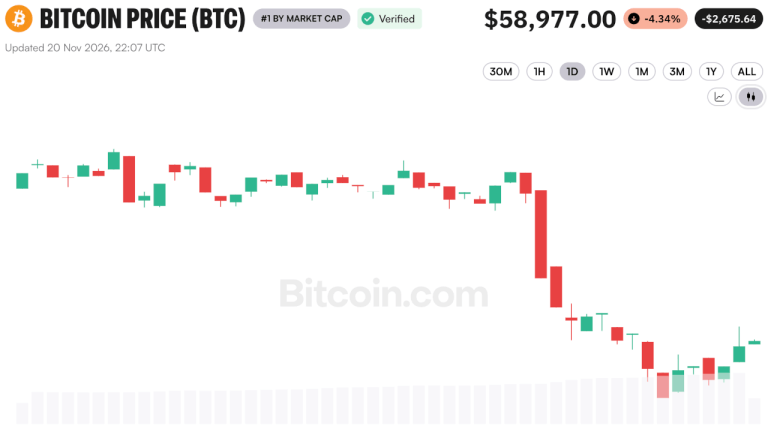
Strategy, Coinbase Shares Battered as Bitcoin Price Hits 2-Year Low and AI Stocks Bleed
Crypto-related equities suffered punishing weekly losses as bitcoin plunged below $58,000 and a widespread technology sell-off pus...
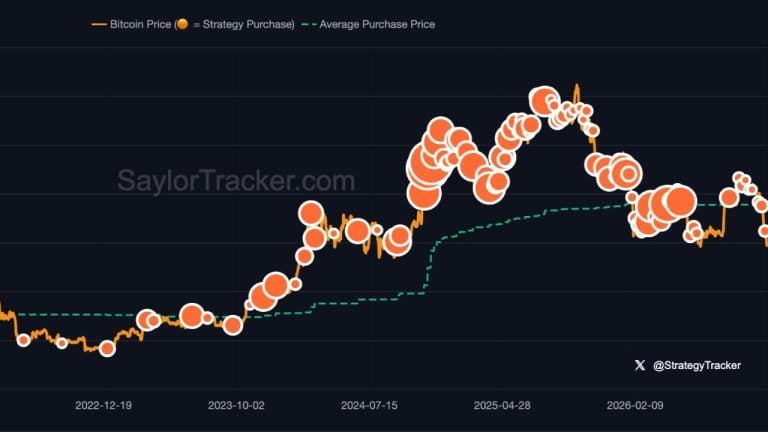
‘The Dots Aren’t Done’: Michael Saylor Hints at Another Strategy Bitcoin Buy
Michael Saylor revived speculation about another Strategy bitcoin purchase as the company’s holdings remained below their acquisit...
Bitcoin Hits $55,500 as Strategy's Paper Loss Deepens
Strategy's disclosed bitcoin holdings were about $16.8 billion below their purchase cost as the cryptocurrency traded more than 26...