Supreme Court Denies Coinbase User Appeal: IRS Can Still Access Your Crypto Data – What Now?
The United States Supreme Court has declined to hear a case challenging the Internal Revenue Service’s ability to access cryptocurrency user data, leaving in place a lower court ruling that allows the agency to collect r...
Archive context
Older archive item. Useful for background and entity history, but not a fresh market-moving signal.

The United States Supreme Court has declined to hear a case challenging the Internal Revenue Service’s ability to access cryptocurrency user data, leaving in place a lower court ruling that allows the agency to collect records from Coinbase.
In an order released Monday, the justices denied a petition from Coinbase user James Harper, who had argued that the IRS violated his constitutional rights by seizing his financial information without proper cause.
The decision means the IRS can continue to request and obtain crypto transaction data under its current enforcement approach.
Supreme Court Declines to Shield Crypto Users Data From IRS SurveillanceHarper, who filed the lawsuit in 2020, said the agency unlawfully acquired records from his Coinbase account, including transaction details, security settings, and personal correspondence.
Coinbase initially pushed back on the IRS summons, but a federal district court later ordered the company to comply, narrowing the scope of the data request.
The case stems from an IRS probe launched in 2016, when the agency sought data on more than 500,000 Coinbase users. After legal challenges, Coinbase eventually turned over a smaller set of data, including Harper’s.
In 2019, Harper received a letter from the IRS claiming he may not have properly reported crypto transactions. Harper, who insists he paid all taxes owed, sued the agency soon after.
The core of Harper’s legal argument centered on the Fourth Amendment, which protects against unreasonable searches and seizures.
He asked the court to revisit a 1976 ruling that said people do not have privacy rights over records held by third parties, such as banks.
“The lower court’s ruling will effectively strip millions of Americans of meaningful privacy protections over their most sensitive financial data—simply because they use modern financial service providers,” Harper wrote in his petition.
Coinbase joined Harper in urging the high court to reconsider the precedent. The exchange said it resisted the IRS summons as long as it could without facing contempt charges.
Coinbase’s chief legal officer, Paul Grewal, criticized the scope of the agency’s request.
“We believe in tax compliance, but this goes far beyond a narrow and tailored request and far beyond crypto,” Grewal posted on X in April.
“This applies to banks, phone companies, ISPs, email, you name it. You should have the same right to privacy for your inbox or account as you have for a letter in your mailbox,” he added
We believe in tax compliance, but this goes far beyond a narrow and tailored request and far beyond crypto. This applies to banks, phone companies, ISPs, email, you name it. As we explain here, you should have the same right to privacy for your inbox or account as you have for a…
— paulgrewal.eth (@iampaulgrewal) April 30, 2025The Biden administration, like the Trump and Obama administrations before it, supported the IRS’s position. In court filings, the government argued that Harper had no reasonable expectation of privacy in Coinbase’s records.
The 1976 Supreme Court decision at the center of the debate, United States v. Miller, established the third-party doctrine, allowing law enforcement to access records held by institutions like banks without a warrant.
The Court reaffirmed this idea in 1979 with regard to telephone records but carved out a narrow exception in 2018.
That year, it ruled that location data from cell phone towers is protected under the Fourth Amendment, meaning police generally need a warrant to obtain it.
IRS Expands Crypto Scrutiny Amid Surge in Tax NoticesSome current justices, including Neil Gorsuch, have questioned the third-party doctrine in past opinions. In 2018, Gorsuch argued that simply sharing data with a third party shouldn’t strip someone of their constitutional rights.
But in Harper’s case, the Court gave no explanation for declining the appeal.
The denial leaves the existing legal framework unchanged, and privacy advocates say it could affect more than just crypto users. Harper’s case drew support from several groups over the past year.
In April, Elon Musk’s platform X submitted a brief backing Harper’s challenge, arguing that the IRS subpoena was overly broad and lacked suspicion.
With the Supreme Court stepping aside, the IRS is now free to continue enforcing its summonses across the crypto industry.
However, crypto investors in the U.S. are facing increased pressure from the IRS, which has ramped up enforcement efforts over the past two months.
The IRS is cracking down on crypto taxes, sending recent warning letters to US investors over possible discrepancies in their digital asset filings.#IRS #CryptoTax https://t.co/mQDWiVWaRi
— Cryptonews.com (@cryptonews) June 30, 2025Tax experts say the agency is targeting discrepancies in digital asset filings.
According to the report, the number of IRS notices has jumped sharply compared to last year.
CoinLedger, a crypto tax platform, reported nearly 800 support requests related to IRS letters between May and June, nine times more than the same period in 2024.
The post Supreme Court Denies Coinbase User Appeal: IRS Can Still Access Your Crypto Data – What Now? appeared first on Cryptonews.
Why this matters
This research story adds another data point to the current market tape and is useful when read alongside nearby source coverage.
Original source
Read on CryptonewsRelated market context

Coinbase opens full trading for DATA-USD and WHUF-USD pairs
Coinbase's expansion of trading pairs enhances market liquidity and accessibility, potentially driving increased adoption and inno...

Coinbase and Gennius plan ONED USD stablecoin access through Latin American banks
Coinbase's partnership with Gennius could reshape Latin American banking by integrating stablecoins, enhancing financial inclusion...
Here’s How Not To Screw up Your Bitcoin Privacy
Bitcoin Magazine Here’s How Not To Screw up Your Bitcoin Privacy Just one transaction can compromise years of discreet Bitcoin act...
Coinbase and Gennius Plan ONED Stablecoin Access Through Latin American Banks
The Argentina-first initiative would let customers convert eligible deposits into ONED USD, transfer it around the clock and spend...

Samsung Wallet Brings USDC to 82M Galaxy Devices With Coinbase, Solana and Sui Support
Key Takeaways: Samsung Wallet will support 82 million U.S. Galaxy to add transfers on USDC. Coinbase will keep USDC in their Coinb...
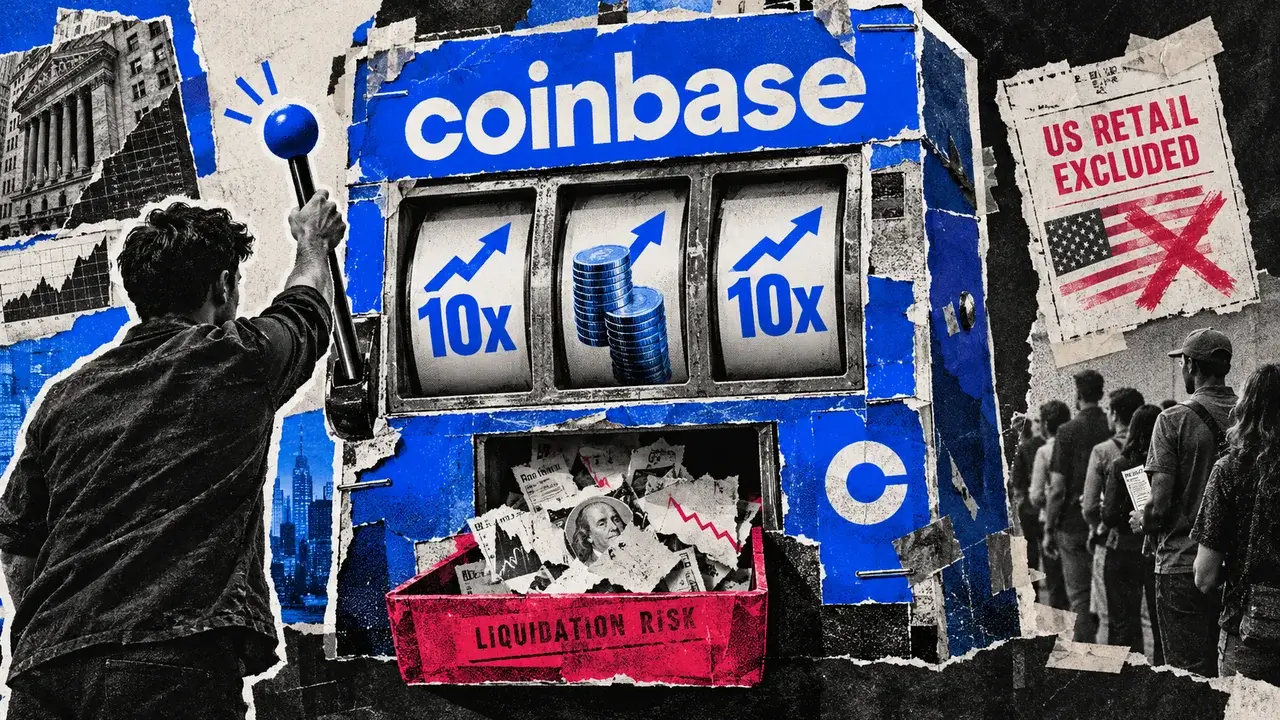
Coinbase rolls out 10x spot leverage, but blocks US retail from it
Coinbase plans to introduce spot borrowing with up to 10x leverage, letting eligible traders borrow against collateral to buy cryp...