Turkey Sets $425 Threshold for Crypto User ID Under New AML Rules
The new regulations take their cue from similar global efforts such as Europe’s upcoming Markets in Crypto-Assets (MiCA) framework. The new rules, published in the Official Gazette of the Republic of Turkey on Wednesday,...
Archive context
Older archive item. Useful for background and entity history, but not a fresh market-moving signal.

The new regulations take their cue from similar global efforts such as Europe’s upcoming Markets in Crypto-Assets (MiCA) framework.
The new rules, published in the Official Gazette of the Republic of Turkey on Wednesday, require all crypto users to provide identifying information for transactions exceeding 15,000 Turkish lira (around $425).
Source: X
Under these regulations, service providers must verify the identities of customers who engage in larger crypto transfers starting Feb. 25, 2025. Transactions below the $425 threshold are exempt from this requirement, reflecting a measured approach that attempts to balance innovation with security concerns. Officials say this Anti-Money Laundering (AML) measure is designed to prevent money laundering and terrorist financing conducted through digital assets.
The updated law also obligates crypto companies to collect detailed information from users transferring funds from previously unregistered wallet addresses. If providers fail to obtain sufficient user data, they are empowered to label the transaction as “risky.” In such cases, businesses can halt the transfer, limit the scope of future transactions, or even terminate the relationship with the user. This step aims to heighten vigilance against suspicious activities and bolster public trust in Turkey’s growing digital asset sector.
Turkey’s new rules come in the wake of rising crypto adoption, with Chainalysis ranking the country as the fourth-largest crypto market globally in September 2023. Trading volumes exceeded $170 billion, underscoring the heightened significance of strict AML measures. Over the past year, Turkish crypto firms have stepped up compliance efforts, with the country’s Capital Markets Board (CMB) receiving 47 license applications in 2024 alone. These applications followed the passage of the “Law on Amendments to the Capital Markets Law” in July, outlining regulations for digital asset providers.
Although crypto trading remains legal in Turkey, authorities have banned the use of digital assets for payments since 2021. Meanwhile, the government is reportedly contemplating a 0.03% transaction tax on crypto trades to boost national revenues. Thus far, profits from crypto trading remain untaxed, suggesting that more regulatory tweaks could be on the horizon.
“Protect Investors”The country’s regulatory overhaul echoes broader developments in Europe, where MiCA will come into force on Dec. 30, 2024. By aligning its rules with global standards, Turkey aims to protect investors, secure its financial system, and maintain its position as a major crypto market. Officials hope that clear guidelines will encourage legitimate businesses while deterring criminal elements seeking to exploit digital currencies.
In a separate development reflecting concerns about fraudulent ventures, Turkish authorities recently arrested OmegaPro co-founder Andreas Szakacs. A Swedish national who acquired Turkish citizenship and changed his name to Emre Avci, Szakacs denies allegations that OmegaPro orchestrated a $4 billion Ponzi scheme. Local gendarmerie seized computers and 32 cold wallets during the arrest, tracing around $160 million worth of digital assets. OmegaPro reportedly collapsed in late 2022, triggering inquiries from regulators in multiple countries.
With the new AML rules taking effect in early 2025, many in Turkey’s crypto sphere view this as a crucial step in shoring up the integrity of an expanding market. Observers suggest that the regulations will create a safer environment for both investors and businesses, even as the government continues to refine its oversight of digital asset activities
Why this matters
This research story adds another data point to the current market tape and is useful when read alongside nearby source coverage.
Original source
Read on Brave New CoinRelated market context

Crypto outperforms traditional assets over past three months: report
Crypto's recent outperformance may boost investor confidence, potentially influencing future market dynamics and Ethereum's long-t...
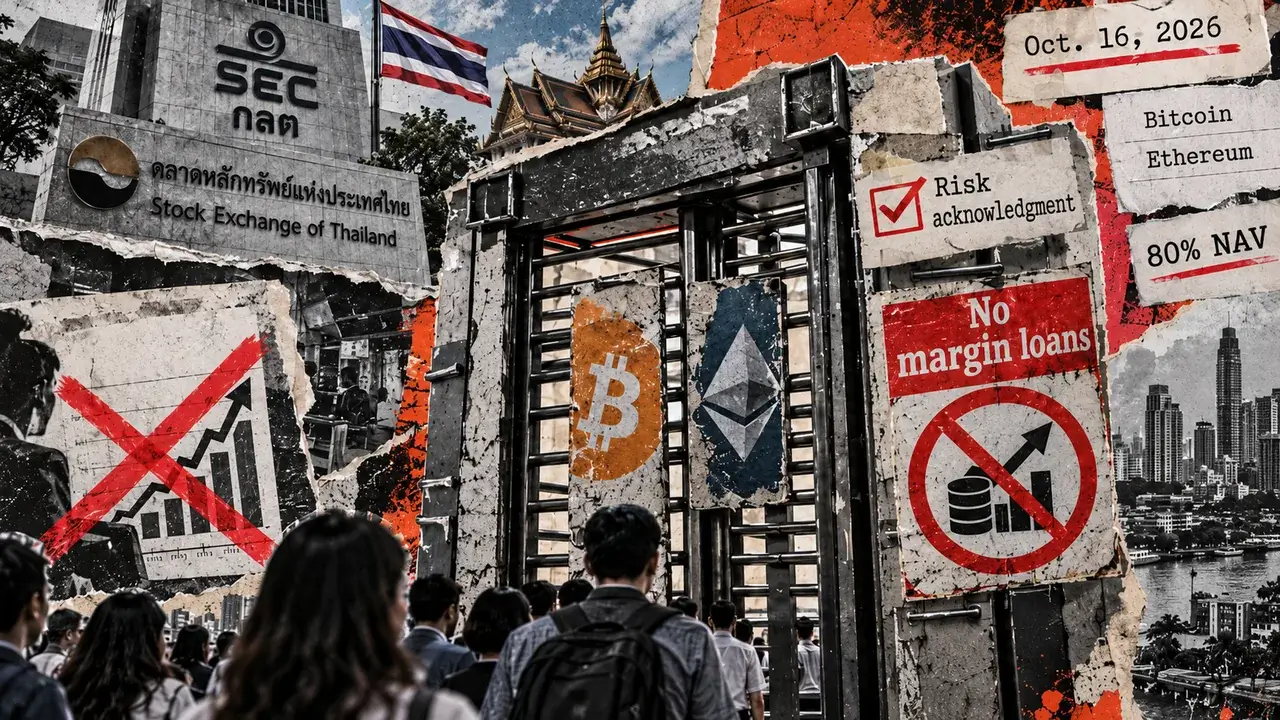
Thailand wants a piece of the $120 billion Bitcoin and Ethereum ETF market, but on its own terms
Thailand has finalized rules allowing domestic Bitcoin and Ethereum ETFs while restricting retail access to competing overseas inv...

Solana Policy Institute’s Kristin Smith warns crypto rules may be hard to undo
The entrenchment of crypto regulations could solidify existing frameworks, impacting innovation and adaptability in the digital as...

XRP’s next Wall Street expansion comes with an unexpected complication from Ripple
Evernorth is preparing to begin trading on Nasdaq on Monday, bringing approximately 473 million XRP into a publicly traded treasur...

Stealing $1.5B in crypto is easy, cashing out is the trap
North Korean hackers stole around $1.5 billion from Bybit in February 2025. While the hack itself has been widely covered and anal...

Morgan Stanley expects to support tokenized equities in Q1 2027, digital asset strategy head says
Morgan Stanley is actively building the necessary infrastructure for tokenized equities while monitoring industry developments.