Two Presidents, Two Revolutions: Trump’s Trade War vs. Milei’s Libertarian Purge
Donald Trump and Javier Milei both represent radical economic shifts in their respective countries, yet their approaches diverge sharply in both philosophy and implementation. Trump’s Economic Doctrine: Nationalist Merca...
Archive context
Older archive item. Useful for background and entity history, but not a fresh market-moving signal.

Donald Trump and Javier Milei both represent radical economic shifts in their respective countries, yet their approaches diverge sharply in both philosophy and implementation.
Trump’s Economic Doctrine: Nationalist MercantilismTrump’s economic policies center on economic nationalism and mercantilism. His administration implemented wide-ranging tariffs targeting China, Europe, and other trade partners, under the premise of protecting American industry and restoring domestic manufacturing. He withdrew from multilateral trade agreements, sought to repatriate supply chains, and promoted a weak-dollar policy while using tariffs as tools of geopolitical leverage. Simultaneously, Trump moved to reduce the social function of government, cutting regulatory oversight and attempting to reduce welfare spending. However, he maintained large federal budgets, including stimulus during crises, contradicting strict fiscal conservatism.
Milei’s Economic Doctrine: Radical LibertarianismMilei, elected on a promise to abolish Argentina’s “caste” of political elites, has embraced a much more ideologically pure libertarian model. His plan includes massive reductions in state spending, dismantling government ministries, eliminating subsidies, privatizing state assets, and proposing full dollarization of the Argentine economy. Unlike Trump, Milei aggressively opposes tariffs, state intervention, and even central banking as a concept. His core thesis is that government should exit nearly all areas of the economy, which marks a sharp departure from both leftist populism and nationalist conservatism.
Trump Vs Milei – Key DifferencesTrade Policy: Trump supports protectionism via tariffs; Milei supports free trade and opposes tariffs.
Government Role: Trump maintains a nationalist state with strategic interventions; Milei seeks near-complete withdrawal of the state from economic life.
Ideology: Trump blends populism with mercantilism; Milei is driven by Austrian economics and anarcho-capitalist theory.
Social Programs: Both aim to reduce dependency, but Trump maintained large-scale federal support during crises, while Milei aims to cut social spending drastically regardless of conditions.
Trump’s reforms are tactical, aimed at strategic advantage and national sovereignty, while Milei’s are doctrinal, targeting ideological transformation. Both disrupt the postwar economic consensus but from opposite directions — Trump from the right-wing nationalist playbook, Milei from the libertarian anti-state one.
Why this matters
This research story adds another data point to the current market tape and is useful when read alongside nearby source coverage.
Original source
Read on Brave New CoinRelated market context

Kalshi investigates suspicious trades tied to Trump’s press secretary pick
The investigation highlights the vulnerability of prediction markets to insider trading, potentially undermining their credibility...

U.S. Government Sends $1 Billion in Seized Bitfinex Bitcoin to Unlabeled Wallets
A wallet holding bitcoin stolen in the 2016 Bitfinex hack sent 12,267 BTC, worth about $1.01 billion, to new addresses on Thursday...

Bitcoin Price Prediction: Is the US Government Behind The Crypto Crash?
Bitcoin is trading at $82,400 after losing 4% over the past week, but that bounce does little to settle the question behind the se...
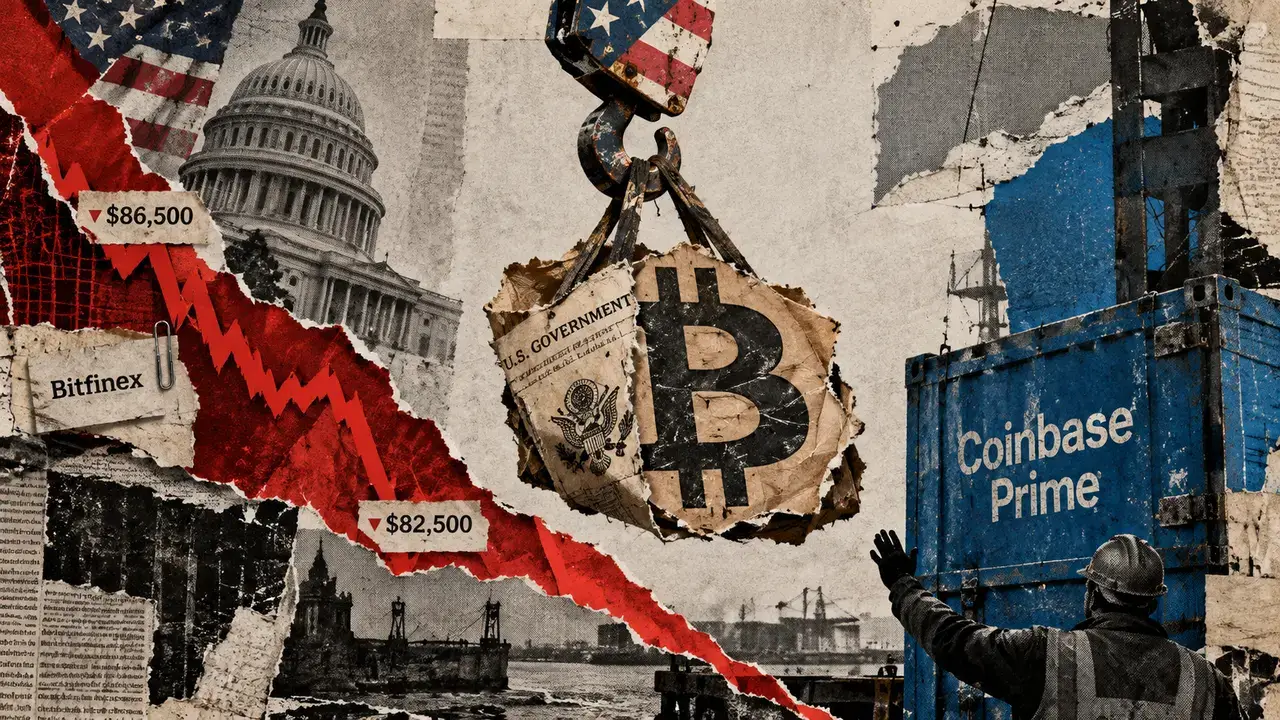
US government moves another $1 billion in Bitcoin as BTC slides $4,000
US government-linked wallets moved over $1 billion in Bitcoin on Oct. 8 as BTC prices fell and more coins reached Coinbase Prime....

Citrini Research Says Tokenized Assets and AI Agents Make Crypto a Fundamentals Trade
Citrini Research published a report on Thursday arguing that AI agents and tokenized assets have opened a new paradigm of “fundame...

Franklin Templeton Explores SEC Relief for Tokenized Fund Trades
Franklin Templeton is exploring whether regulatory exemptions could allow tokenized money market funds and ETFs to trade through b...