White House Crypto Czar David Sacks Likely to Probe Alleged Regulatory ‘Choke’ on Industry
The move follows a series of public accusations from industry executives, who allege that U.S. regulatory agencies have systematically targeted crypto-related enterprises, leading to forced bank closures, bankruptcies, a...
Archive context
Older archive item. Useful for background and entity history, but not a fresh market-moving signal.

The move follows a series of public accusations from industry executives, who allege that U.S. regulatory agencies have systematically targeted crypto-related enterprises, leading to forced bank closures, bankruptcies, and widespread operational disruption.
While the U.S. government has not officially confirmed the existence of such a program, major figures within the crypto sector say the pattern is unmistakable. They draw parallels to the original Operation Choke Point, a 2013 initiative under the Obama administration intended to sever banking relationships with industries considered “high-risk.” Insiders now claim a revived and expanded version is underway, aimed squarely at blockchain companies.
Sacks has recently been tapped as President-elect Trump’s pick for White House ‘A.I. & Crypto’ Czar”. His decision to examine these claims directly follows public statements from former Silvergate Bank Chief Technology Officer Chris Lane, who alleges regulatory pressure destroyed the institution. According to Lane, Silvergate survived a severe deposit run triggered by the collapse of crypto exchange FTX in November 2022, only to be undermined by regulatory directives that severely limited its ability to hold crypto-related dollar deposits. He has stated that “FTX didn’t kill us; our regulators did,” casting regulators’ actions as a decisive factor in pushing Silvergate out of business.
High-profile industry figures — including Cardano co-founder Charles Hoskinson, Coinbase CEO Brian Armstrong, and Gabriel Abed, chairman at Binance — have voiced similar complaints. They contend that banking partners, faced with regulatory scrutiny, felt compelled to close accounts or refuse services to crypto clients. These executives maintain that the alleged program has strangled innovation, driven entrepreneurs offshore, and curtailed legitimate business activity within the United States.
In response, Sacks has pledged to “look into” what he describes as a growing number of credible accounts of harm. While Sacks has not publicly outlined a step-by-step investigation plan, observers expect him to start by gathering testimonies, reviewing financial documents, and seeking disclosures from regulatory agencies. Given the complexity of the allegations, he is also likely to request unredacted versions of key documents currently withheld under redactions. Industry insiders note that Coinbase, for example, has already filed Freedom of Information Act (FOIA) requests and has made public heavily redacted “pause letters” it obtained from the Federal Deposit Insurance Corporation (FDIC). Such letters suggest that U.S. banks were instructed to halt crypto services without clear guidelines, potentially offering starting points for Sacks’s inquiries.
In addition, there is growing congressional interest in the matter. Lawmakers like Representative French Hill have called for formal investigations, suggesting that the next Congress could act to “halt, reverse, and investigate” these alleged tactics. Should Sacks coordinate with legislative bodies, it could further expand the scope of the inquiry, giving it more authoritative reach into regulatory corridors.
Why this matters
This research story adds another data point to the current market tape and is useful when read alongside nearby source coverage.
Original source
Read on Brave New CoinRelated market context

From TOKEN2049 to Ecosystem Co-Building: HTX Advances Its Multifaceted Engagement Across the Global Crypto Industry
Singapore, October 12, 2026 – From October 6 to 8, the global crypto industry turned its attention to Singapore for TOKEN2049, a m...

Celsius Founder Alex Mashinsky Hit With $35M Deal and Permanent Crypto Industry Ban
Key Takeaways: Under a NY settlement, Alex Mashinsky may have to pay up to $35M in conditional payments. Celsius’s previous chief...

Evernorth Holdings shares rise 5% in Nasdaq debut as XRP treasury firm goes public
Evernorth's Nasdaq debut highlights growing institutional interest in crypto, offering traditional investors a regulated entry int...
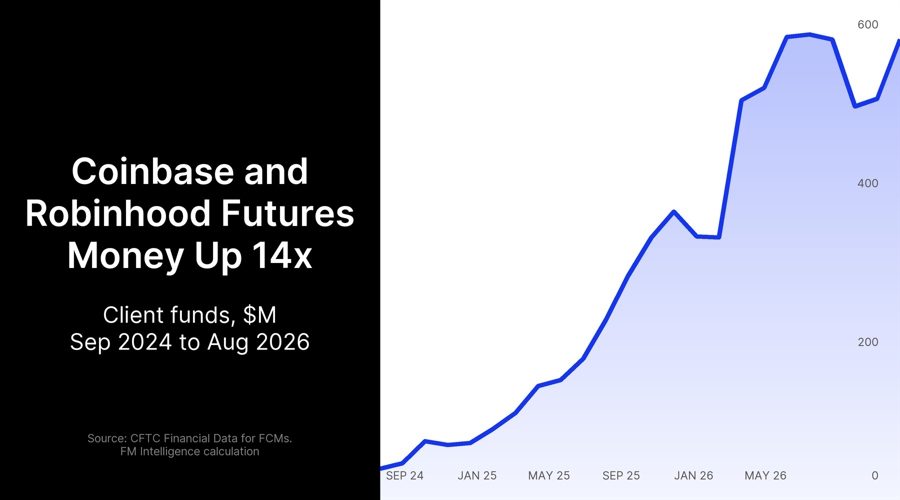
Coinbase and Robinhood Futures Arms Now Hold More Client Money Than the US Retail Forex Pool
The futures brokers of Coinbase and Robinhood held $581.4 million of segregated client money at the end of August. That is more th...

Evernorth XRP Treasury Merger Brings 473 Million XRP to Nasdaq as XRPN Debuts October 12
The transaction gives public-market investors another route to gain exposure to XRP through a company that actively manages its di...
Tether Freezes $1.45M in THORChain USDT Vaults, Then Reverses Blacklist Hours Later
Key Takeaways: The amount of about $1.45 million in USDT was temporarily frozen in THORChain vault addresses. According to THORCha...