Abracadabra.Money’s GMX pools hacked, $13M lost
About $13 million worth of cryptocurrency has been drained from decentralized lending protocol Abracadabra.Money following an exploit targeting pools using GMX tokens.In a March 25 X post, crypto cybersecurity firm PeckS...
Archive context
Older archive item. Useful for background and entity history, but not a fresh market-moving signal.

About $13 million worth of cryptocurrency has been drained from decentralized lending protocol Abracadabra.Money following an exploit targeting pools using GMX tokens.
In a March 25 X post, crypto cybersecurity firm PeckShield reported that contracts related to GMX and Abracadabra.Money had been compromised, resulting in the loss of about 6,260 Ether (ETH), worth around $13 million.
The news follows Abracadabra.Money losing $6.49 million after its smart contracts were compromised in late January 2024. At the time, this also led to the protocol’s Magic Internet Money (MIM) stablecoin losing its peg to the US dollar.
Related: Pump.fun’s new DEX reaches $1B volume a week after launch
GMX denies contract vulnerabilityDespite initial reports, a pseudonymous GMX communications contributor claimed on X that “GMX contracts are not affected.” According to the user, GMX is involved because MIM’s pools are based on GMX v2 pools.
GMX Market (GM) tokens are a core part of the GMX platform, earning fees from swaps and leveraged trading. MIM’s pools, known as cauldrons, are the protocol’s core product and provide isolated lending exposure.
Related: DeFi lender Nostra pauses borrowing after price feed error
In an official X post, GMX stated that the hack involved MIM’s pools that used GM tokens. The post further claimed that “no issues have been identified with GMX contracts,” adding:
“We believe the issue relates solely to the Abracadabra/Spell cauldrons. These cauldrons allow for borrowing against specific GM liquidity tokens.”GMX and Abracadabra.Money had not responded to Cointelegraph’s inquiry by the time of publication.
Hackers use Tornado Cash, bridge to EthereumGraphic tracking the hacked funds. Source: AMLBot
Crypto forensics firm AMLBot provided Cointelegraph with a partial reconstruction of how the hack was performed. The hacker’s address was first funded through the Tornado Cash decentralized cryptocurrency mixer, and then those funds were used to pay the transaction fees of the malicious transactions. The stolen ETH was later moved from the Arbitrum network to Ethereum via a blockchain bridge:
“The stolen funds, totaling 6,260 ETH, have been transferred from Arbitrum to Ethereum via a bridge.”AMLBot’s investigations department also confirmed to Cointelegraph that only Abracadabra.Money contracts were breached as part of the hack. The GMX smart contracts, on the other hand, were not exploited in the malicious transactions, AMLBot added.
Magazine: What are native rollups? Full guide to Ethereum’s latest innovation
Why this matters
This security story adds another data point to the current market tape and is useful when read alongside nearby source coverage.
Original source
Read on CointelegraphRelated market context
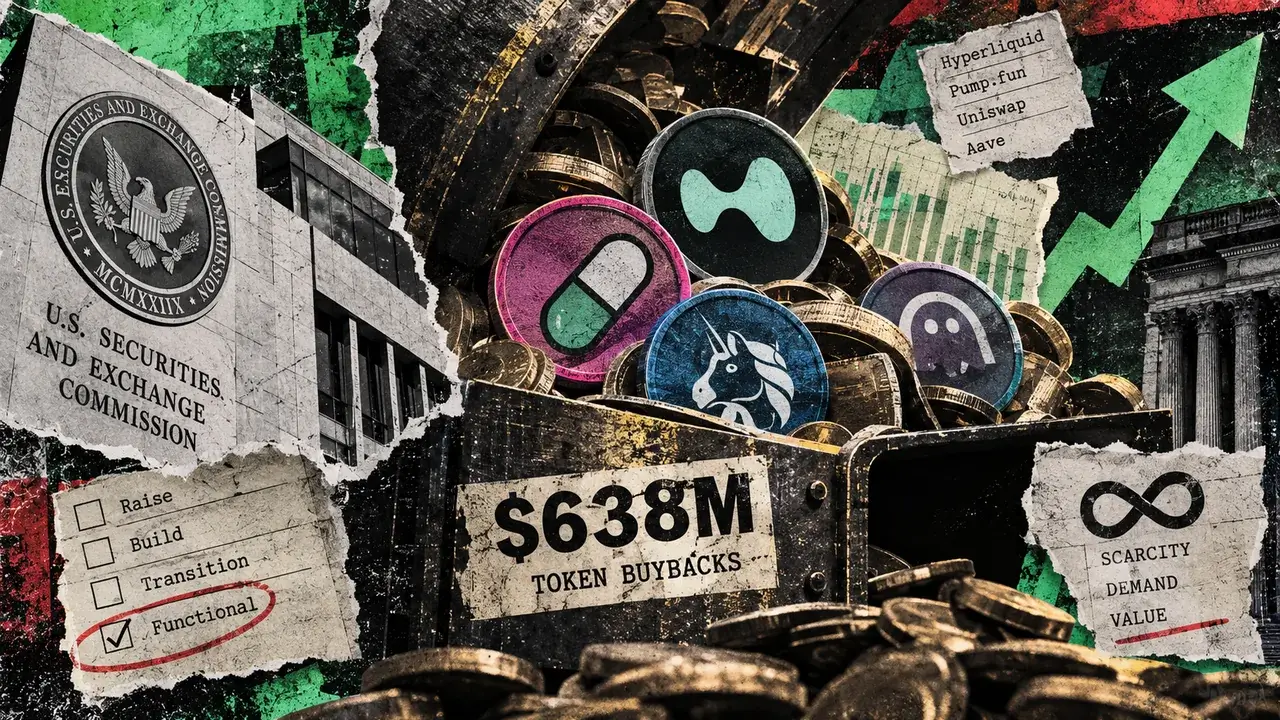
SEC clears regulatory hurdle as crypto token buybacks hit record $638 million
Crypto projects spent about $638 million with token buybacks through late August 2026, according to Allium Labs data. That is alre...
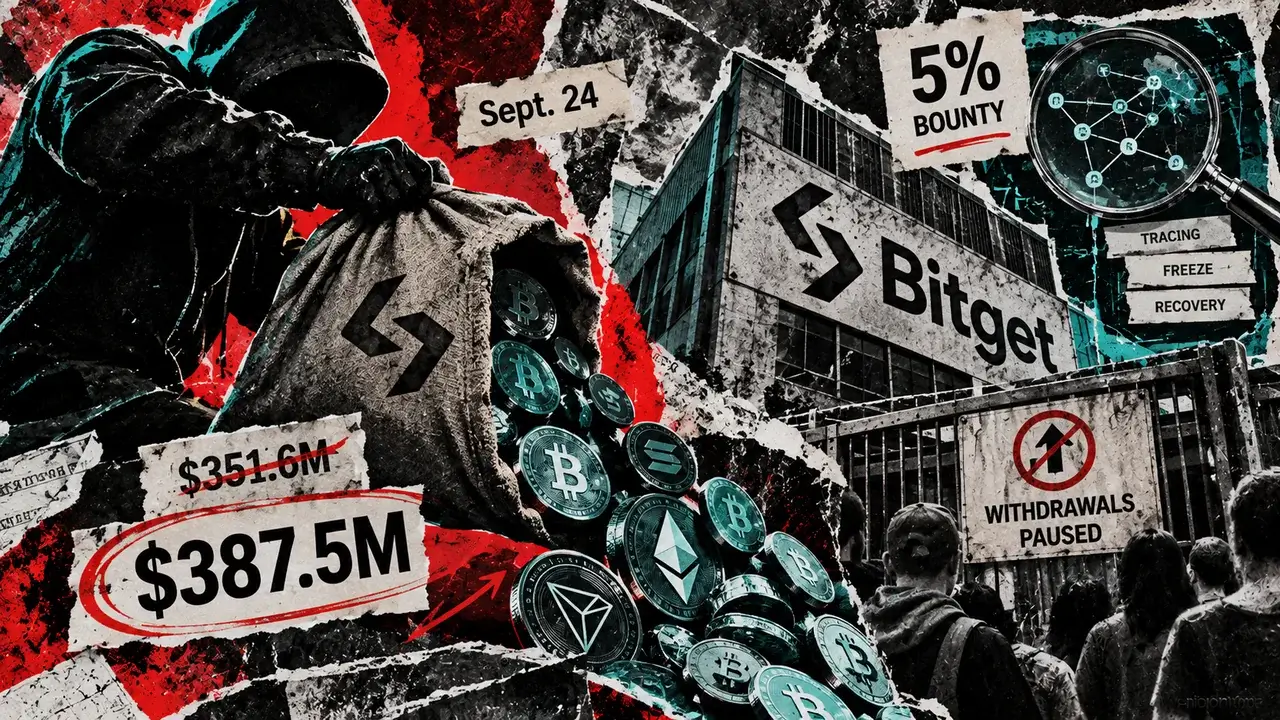
Bitget’s hack just got $36 million bigger, and now there’s a bounty on the stolen crypto
Bitget has raised the estimated value of assets taken in its Sept. 24 breach to $387.5 million as exchanges and security firms mob...

THORChain under fire after Bitget hack funds routed through protocol
Bitget CEO Gracy Chen urges THORChain to block attacker wallets after a $387.5 million hack, reviving the censorship versus neutra...
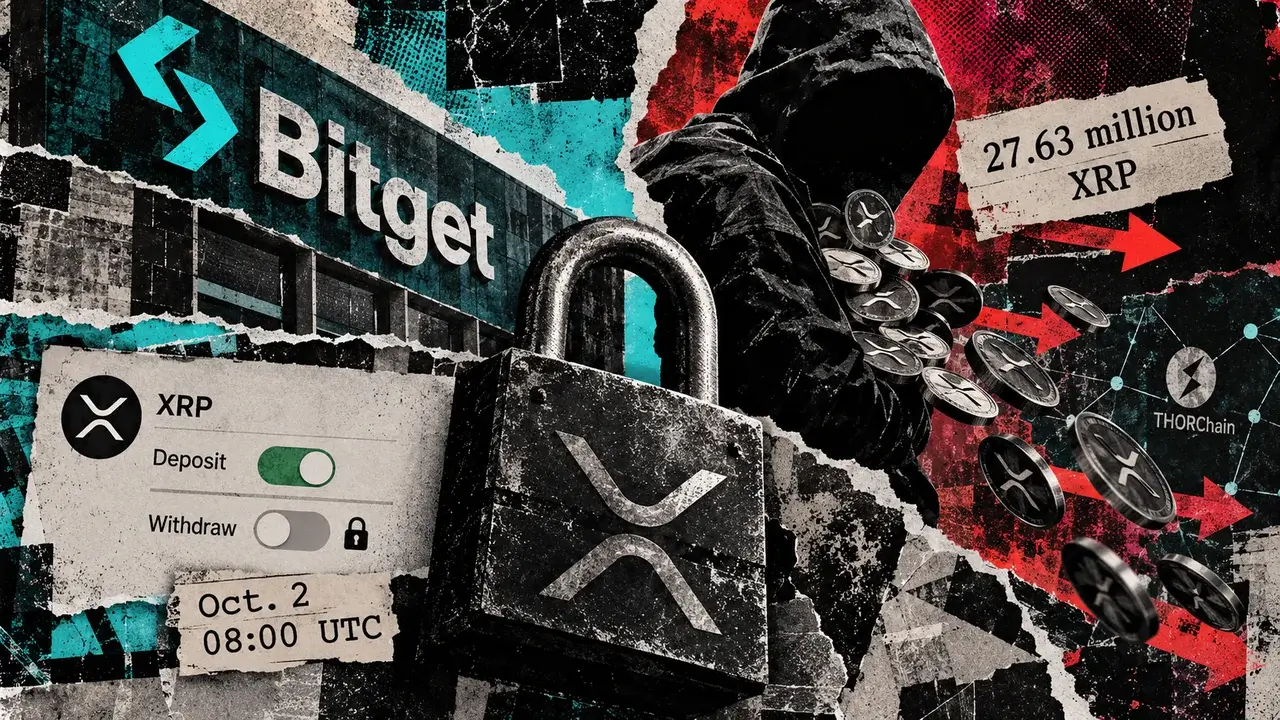
Bitget freezes XRP withdrawals as 27M stolen tokens move
Bitget’s XRP withdrawal route was still disabled on Sept. 26, even as the exchange set Oct. 2 at 08:00 UTC for the last phase of i...

Crypto Hacks: Three Projects Hacked in One Day as Losses Hit Over $11M
Three crypto projects were attacked on September 24, suffering combined losses of more than $11M. Attackers drained around $1.8M f...
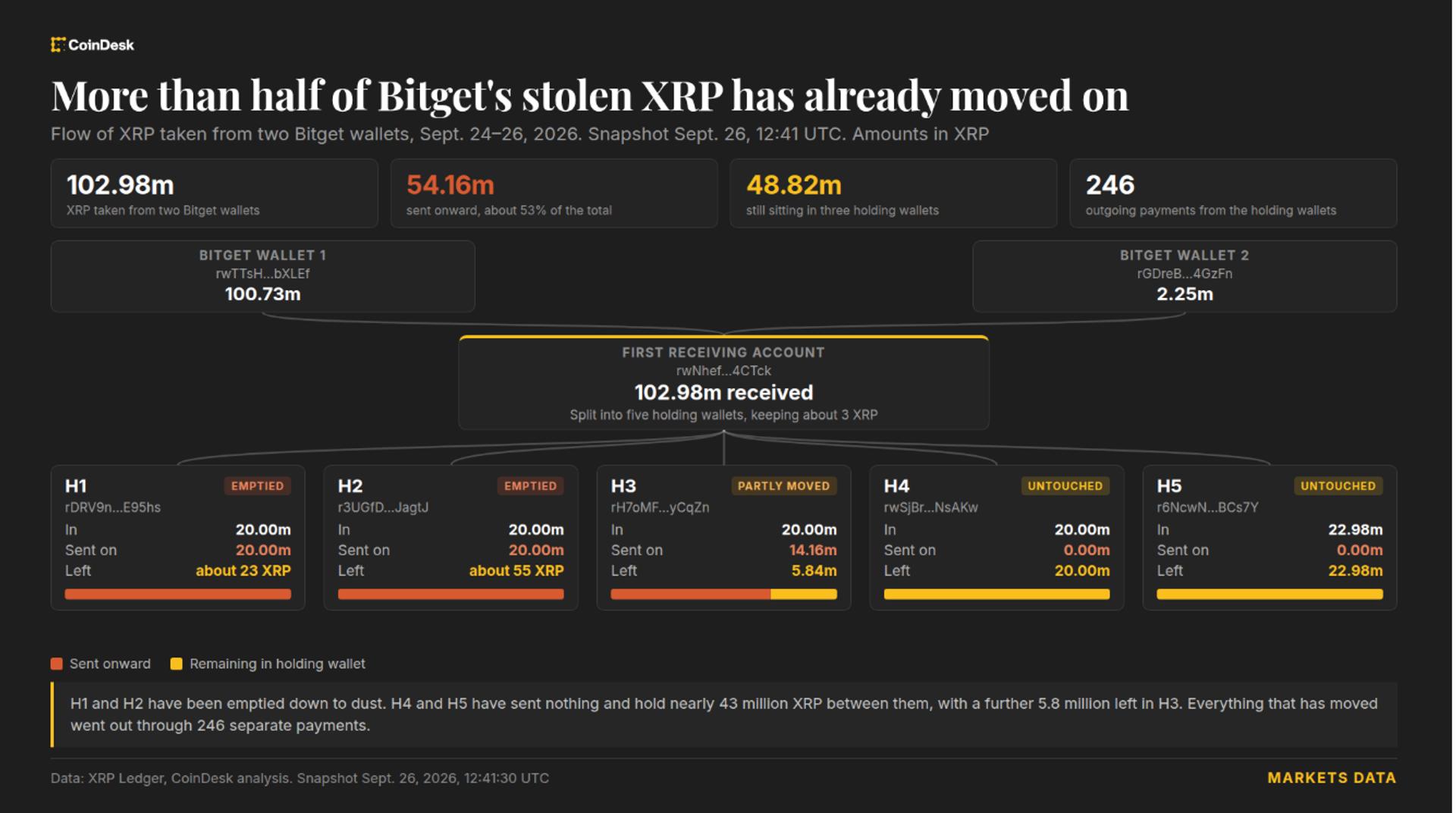
Bitget hacker moves $83 million in stolen XRP that Ripple cannot freeze
Two wallets have been almost emptied and a third is being drained, with about $75 million remaining across the five original holdi...