Balancer Protocol Sees $70M Exit In Suspected Crypto Exploit
Balancer, one of the most established decentralized finance (DeFi) protocols with more than $700 million in total value locked (TVL), appears to have suffered a serious exploit, adding fresh stress to an industry still g...
Archive context
Older archive item. Useful for background and entity history, but not a fresh market-moving signal.

Balancer, one of the most established decentralized finance (DeFi) protocols with more than $700 million in total value locked (TVL), appears to have suffered a serious exploit, adding fresh stress to an industry still grappling with security concerns. Early on-chain evidence indicates that attackers drained assets across multiple chains, with losses now exceeding $98 million, making this one of the largest DeFi breaches of 2025 so far.
The attack appears to have targeted Balancer liquidity pools, siphoning high-value assets including wrapped ETH and liquid-staking derivatives through coordinated cross-chain movements. Initial wallet traces show funds rapidly routed through mixing services and bridge networks. This suggests a sophisticated operation designed to minimize traceability.
This is not the first time Balancer has faced a security incident, and the scale of this exploit reignites conversations around protocol hardening, liquidity pool design risk, and cross-chain attack vectors. It also deals a blow to market confidence at a time when institutional interest in DeFi infrastructure has been slowly recovering.
Over $98M in ETH-Based Assets Drained as Market Weakness Adds PressureAccording to on-chain data compiled by Lookonchain, the Balancer exploit resulted in the loss of a significant amount of high-value Ethereum-based assets. Among the stolen funds were 6,587 WETH (worth approximately $24.46 million), 6,851 osETH (valued around $26.86 million), and 4,260 wstETH (roughly $19.27 million). These figures confirm that the attacker targeted core liquidity holdings, particularly liquid-staking assets and wrapped Ether. Assets commonly used in advanced DeFi strategies and institutional portfolios.
The scale of outflows highlights the exploit’s severity and underscores persistent vulnerabilities in cross-chain and liquidity-pool architecture. More importantly, this incident has arrived at a sensitive moment for the market. Ethereum is already under selling pressure, struggling to reclaim key levels amid broader crypto market weakness. Risk appetite has thinned, liquidity has become more selective, and sentiment remains fragile following recent volatility.
The Balancer breach adds another layer of stress to an ecosystem trying to regain its footing. Major exploits like this serve as a stark reminder that smart-contract risk remains one of the sector’s biggest challenges. With investors already cautious, the timing amplifies uncertainty — and the market’s reaction in the coming days will be a critical test for confidence across the Ethereum and DeFi landscape.
Balancer (BAL) Trades Near Cycle Lows as Sellers Maintain ControlBalancer’s native token BAL continues to trade under heavy pressure, now sitting near $0.97 and hovering close to multi-year lows. The weekly chart reflects persistent weakness, with price trending steadily downward since mid-2024 and repeatedly failing to reclaim key moving averages. The 50-week and 100-week moving averages remain firmly above price and slope downward, reinforcing a long-term bearish structure and signaling that momentum remains with sellers.
Recent attempts to rebound have been shallow and short-lived. Indicating limited buying interest and a reluctance from market participants to position aggressively following the latest exploit news. This weakness predates the incident. However, BAL has been in a consistent downtrend for months, struggling to sustain demand even during broader market relief phases.
With the token sitting near its post-listing lows, the market is in a “show-me” phase. Bulls need to reclaim at least the $1.20–$1.40 area and break above the 50-week moving average to challenge the prevailing downtrend. Failure to do so risks deeper price compression and potential price discovery lower.
Featured image from ChatGPT, chart from TradingView.com
Why this matters
This security story adds another data point to the current market tape and is useful when read alongside nearby source coverage.
Original source
Read on NewsBTCRelated market context
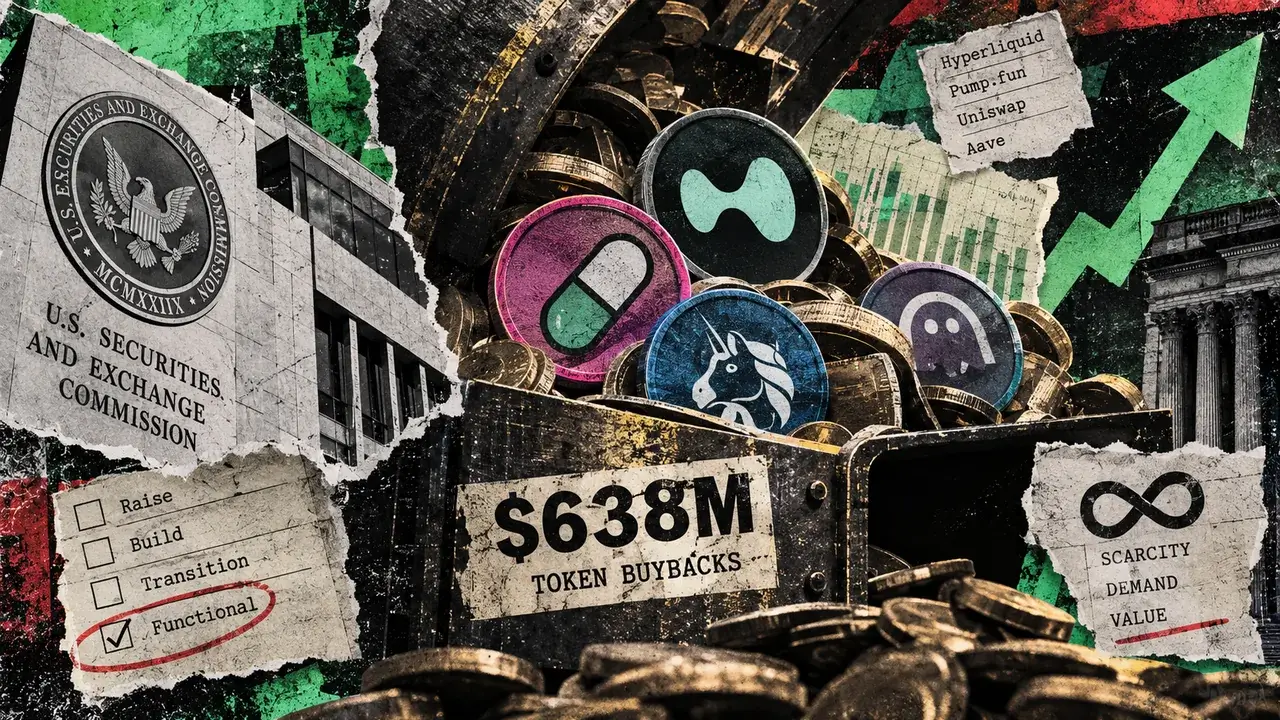
SEC clears regulatory hurdle as crypto token buybacks hit record $638 million
Crypto projects spent about $638 million with token buybacks through late August 2026, according to Allium Labs data. That is alre...

SEC staff’s staking-token split spotlights the exit risks behind staked ETH tokens
An ETH holder can sell a liquid-staking token while the ETH behind it remains staked. A Sept. 25 SEC staff FAQ draws a conditional...

An $84 million US asset seizure just sparked a massive question for Tether
Tether has disclosed exposure to EQIBank as the bank fights a US seizure involving payment processor Capstone Limited, raising a q...

Washington has $114 billion reasons to want Tether around
Not that long ago, Washington fined Tether for misleading people about the dollars behind its tokens. Today, the company's insatia...

EU faces September 30 clock to decide future of DeFi loans
The European Banking Authority has asked the European Commission to examine new MiCA rules for crypto firms that connect customers...

Tokenized commodities in DeFi reach $133M as Aave dominates with 51% market share
The rise of tokenized commodities in DeFi highlights a shift towards integrating real-world assets into digital finance, enhancing...