Binance, Coinbase Explain Why Cryptocurrency Won’t Help Russia Evade Sanctions
The chief executives of two major cryptocurrency exchanges, Binance and Coinbase, do not believe that cryptocurrency is an effective tool to help Russia evade Western sanctions. CEOs of Binance and Coinbase Say Crypto No...
Archive context
Older archive item. Useful for background and entity history, but not a fresh market-moving signal.
The chief executives of two major cryptocurrency exchanges, Binance and Coinbase, do not believe that cryptocurrency is an effective tool to help Russia evade Western sanctions.
Since Russia began its invasion of Ukraine, governments worldwide have raised concerns that cryptocurrency could be used to circumvent sanctions placed by Western nations.
The CEOs of two leading cryptocurrency exchanges have shared their thoughts on whether crypto can be an effective tool to circumvent sanctions. Binance CEO Changpeng Zhao (CZ) was quoted by the Guardian as saying:
Currently, the media and politicians are spending a lot of effort and focus on crypto and sanctions. The truth is, crypto is too small for Russia.
“If we look at the crypto adoption today, there is probably about 3% of the global population with some kind of crypto exposure (ie, owning some crypto),” Zhao continued. “Of those, most only have a small percentage of their net worth in crypto. Less than 10% on average. So, there is probably only less than 0.3% of the global net worth in crypto today. This percentage applies equally to Russia.”
The Binance boss added:
Another reason Russia would not want to use crypto is that it is too traceable. And governments around the world are already very adept at tracking it.
Furthermore, Zhao said using privacy-focused cryptocurrencies, such as monero, would not work either because the market capitalization of XMR is $3 billion compared with Russia’s GDP of $1.5 trillion.
Citing that every crypto transaction can be scrutinized by anyone, the Binance CEO stressed that crypto assets are “not an effective tool for illicit activities.”
Coinbase CEO Brian Armstrong shares a similar sentiment. He tweeted Friday:
We don’t think there’s a high risk of Russian oligarchs using crypto to avoid sanctions. Because it is an open ledger, trying to sneak lots of money through crypto would be more traceable than using U.S. dollars cash, art, gold, or other assets.
Meanwhile, the G7 countries, the European Union, and several other nations worldwide are taking measures to prevent Russia from using cryptocurrency to evade sanctions.
The U.S. Treasury Department issued a report last year stating that crypto reduces the efficacy of U.S. sanctions. The department is currently monitoring Russian efforts to evade sanctions using cryptocurrency.
Do you think cryptocurrency can help Russia evade sanctions? Let us know in the comments section below.
Why this matters
This security story adds another data point to the current market tape and is useful when read alongside nearby source coverage.
Original source
Read on Bitcoin NewsRelated market context

Solana DeFi retained TVL more effectively than Ethereum as Jupiter Lend grew through the quarter
Solana's DeFi growth, driven by Jupiter Lend, suggests a shift in investor confidence, potentially enhancing Solana's market posit...

Treasury’s New Stablecoin Rule Could Force US Exchanges to Delist Tether
Austin Campbell, founder of Zero Knowledge Group, said on the Bits + Bips podcast that Treasury’s newly proposed rules for the GEN...

Circle renews Coinbase deal creating two ways to challenge Coinbase’s USDC payouts, but neither works quickly
Circle's renewed agreement with Coinbase preserves the existing economics around USDC for another three-year term and, starting Au...
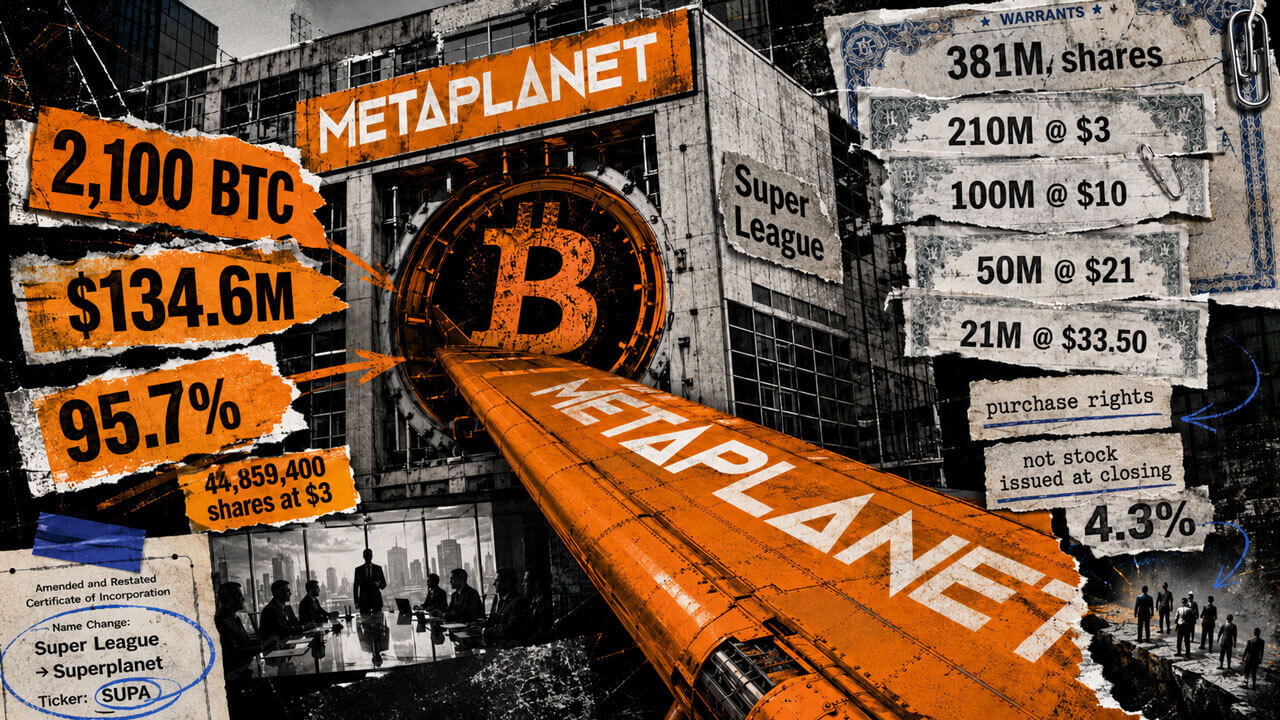
Metaplanet’s US Bitcoin treasury bet could unlock up to $3.4 billion, but there’s a catch
Metaplanet is set to take near-total control of Nasdaq-listed Super League Enterprise with a $134.6 million investment, while most...

Coinbase Routes Base App Users to Hyperliquid's Perps. No US Access Yet
Base App was built around Coinbase's bet on crypto-native social features, but in reality, most users just need leverage. Coinbase...

Rapid7 uncovers Operation ASTERIX: AI-powered phishing tools targeting crypto wallet recovery phrases
Operation ASTERIX highlights the urgent need for enhanced security measures in crypto exchanges to prevent AI-driven phishing atta...