Bitcoin Analyst Thinks Prices Must First Breach $50,000 Before Rallying
Bitcoin flash crashed on July 4 and 5, extending losses from all-time highs to about 30%. Though there was a relief bounce over the weekend, forcing the world’s most valuable coin up by nearly 11%, BTC remains within a b...
Archive context
Older archive item. Useful for background and entity history, but not a fresh market-moving signal.

Bitcoin flash crashed on July 4 and 5, extending losses from all-time highs to about 30%. Though there was a relief bounce over the weekend, forcing the world’s most valuable coin up by nearly 11%, BTC remains within a bearish formation.
Bitcoin Correction Not Over: Will Bears Break $50,000?One analyst who took to X confirmed this assessment, adding that the optimism over the last 48 hours could be quashed in the coming sessions. With BTC not out of the woods, at least from technical formation, the analyst predicted not only will the coin sink below last week’s lows, but it will likely break the psychological $50,000 mark.
Pointing to historical price action, the coin said Bitcoin could drop to as low as $48,000 in the coming days, roughly 40% from its all-time high.
When this happens, and following the price action seen in 2017, when the coin also crashed by 40% after local peaks, the coin will resume the uptrend.
Even so, looking at the analyst’s assessment, the swing high and low anchoring of the Fibonacci retracement tool is subjective. For now, if September 2023 to March 2024 range acts as swing and lows, a 40% drop from local highs places Bitcoin $10,000 lower at around $37,000.
Cracks are beginning to form on the weekly chart. After last week’s losses, the coin firmly closed below the 20-period moving average, placing sellers in control. Confirmation of last week’s losses could set the ball rolling, sparking more losses in the short term, pushing the world’s most valuable coin to $50,000 or even $40,000.
How High Will BTC Jump After The Correction?However, after the cool-off and the depth doesn’t matter, another analyst predicts the coin will bounce off strongly. If BTC finds support at around the $47,000 to $50,000 level, the probability of it floating to at least $102,000 is high.
This is the first level of the Fibonacci extension. At its high, the coin could soar to as high as $242,000 in the sessions to come.
The confidence that BTC will bounce back after the current sell-off, sparked most by Mt. Gox liquidation fears and the constant dump by the German government, is based on history. After the Halving, Bitcoin prices tend to recover steadily.
If anything, one analyst said holders shouldn’t panic sell within the first 79 days after the Halving event. Marking the beginning of the fifth epoch, the network reduced its miner rewards on April 20, roughly three months ago.
Why this matters
This security story adds another data point to the current market tape and is useful when read alongside nearby source coverage.
Original source
Read on NewsBTCRelated market context

Billions Pour Into Bitcoin ETFs as Rally Rolls On
Bitcoin Magazine Billions Pour Into Bitcoin ETFs as Rally Rolls On Bitcoin exchange-traded funds have continued their winning stre...

Strategy’s MSTR quietly outperforms Bitcoin’s $80,000 rally as STRC closes in on $100
Bitcoin's sharp two-week recovery, which briefly pushed its value above $80,000, has brought Michael Saylor's Strategy BTC treasur...
Forget the Trump Bump — Bitcoin Would Be Fine Under Democrats, Says VanEck
Bitcoin Magazine Forget the Trump Bump — Bitcoin Would Be Fine Under Democrats, Says VanEck President Donald Trump may be the most...
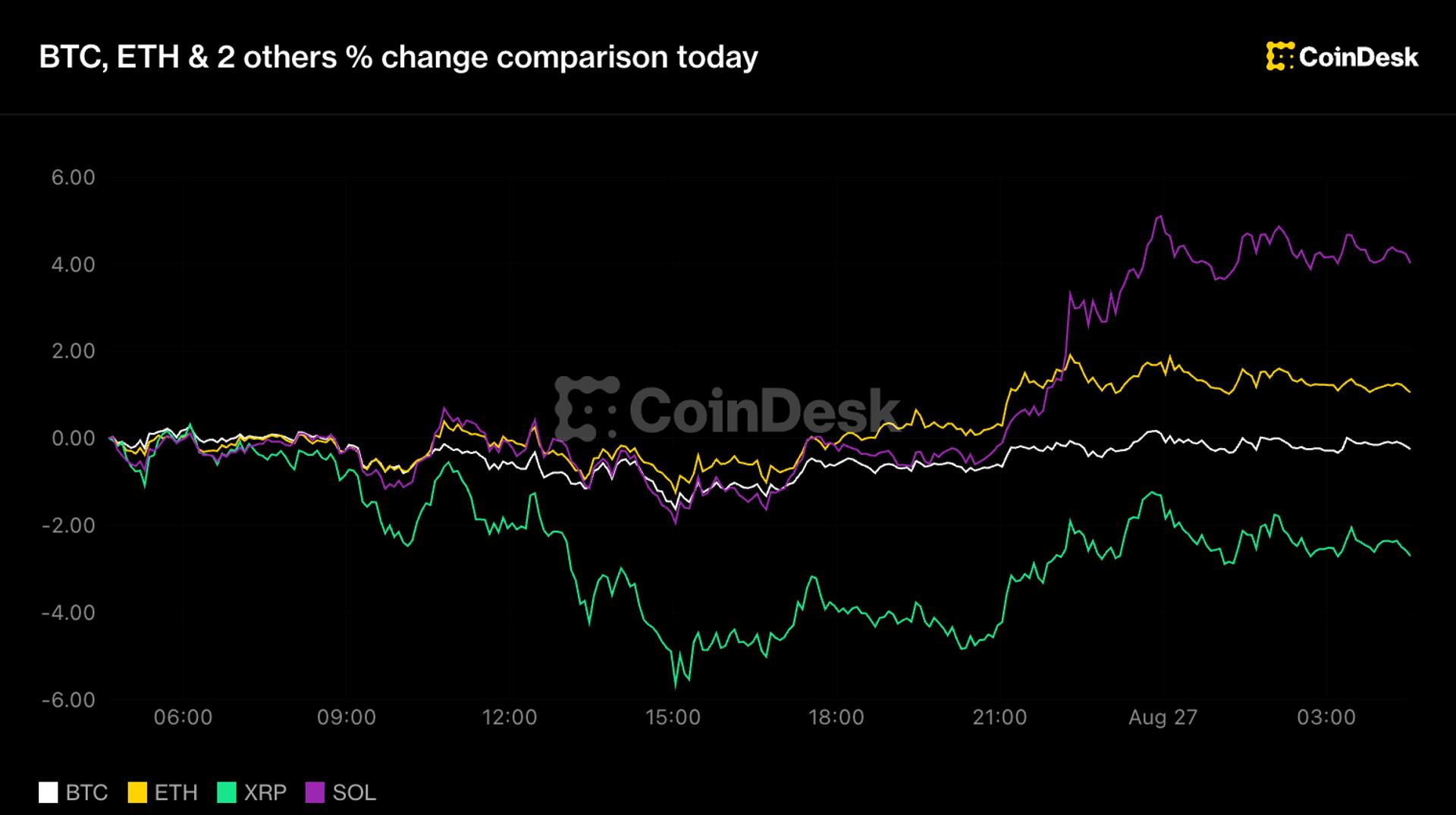
Bitcoin below $79,000, XRP leads losses as traders start betting on a Fed hike
Every major token except solana and BNB is flat or lower over 24 hours, with bitcoin holding a 14% weekly gain and XRP 28%.

Bitcoin is trapped between $75,000 and $80,000 ahead of a massive Friday derivatives settlement
Bitcoin is trading between $80,000 and $78,000, and faces two option strikes that could shape dealer hedging into Friday. Reported...

Bitcoin’s security risk starts when one block gets far more fees than the next
Bitcoin’s security-budget debate usually starts with one total: how much miners collect in transaction fees as the block subsidy s...