BitMart’s sudden shutdown triggers withdrawal delays and on-chain panic, echoing the ghosts of 2022
With ETH drained from its wallets, BitMart faces a wave of stuck user withdrawals after abruptly announcing its closure BitMart said it will wind down its trading platform after nine years, abruptly reversing an expansio...
Archive context
Older archive item. Useful for background and entity history, but not a fresh market-moving signal.
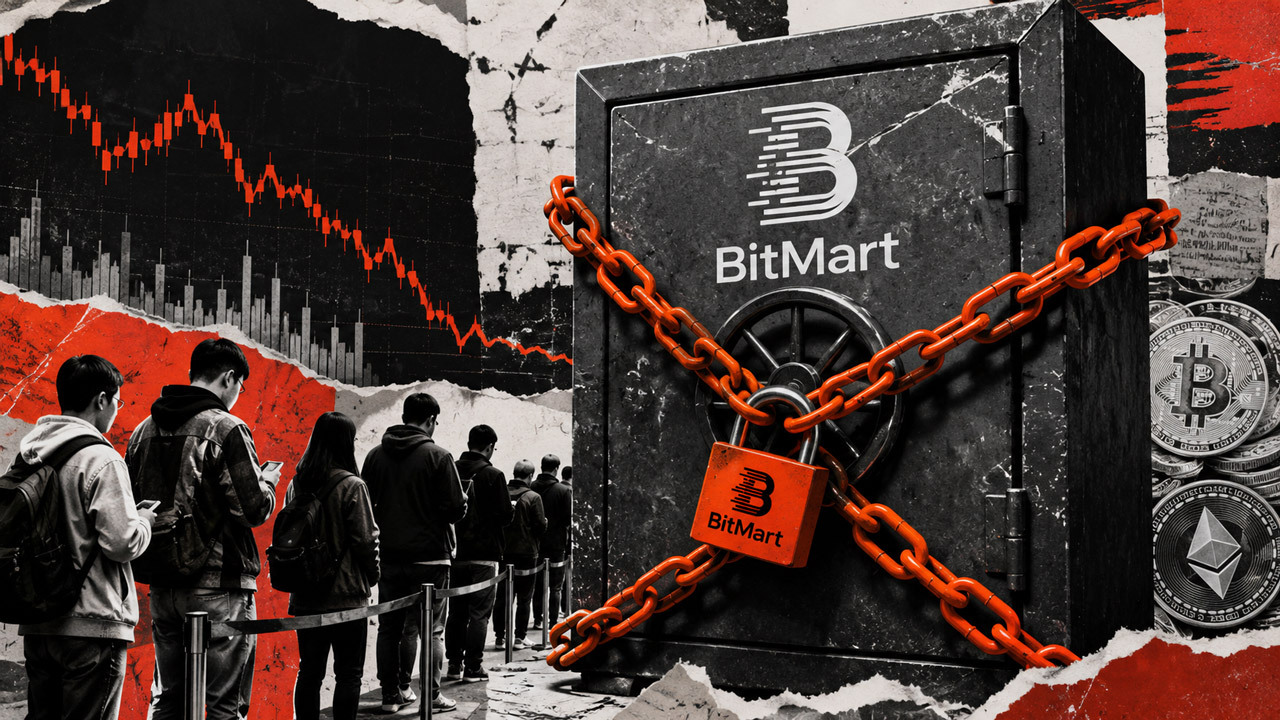
BitMart said it will wind down its trading platform after nine years, abruptly reversing an expansion push that continued into the summer.
The exchange stopped accepting new registrations, deposits and orders at 01:30 UTC on July 26. Spot, futures and other trading services will end at 01:00 UTC on Aug. 26, before the platform formally ceases operations on Jan. 31, 2027.
The decision followed a series of service cuts that initially appeared to be routine product changes. Earlier in the week, BitMart discontinued its Spot Margin service and suspended its Automated Market Making Bot, saying the changes were intended to improve the security, convenience and reliability of its trading platform.
The shutdown is particularly striking because BitMart had continued signaling growth only weeks earlier.
In June, the exchange secured an Australian Financial Services License, while its asset-management business reported that assets under management increased by about 256% period-over-period in the first half of the year.
BitMart attributed the closure to an assessment of its operating conditions, market environment and future strategic direction, without identifying a specific financial, regulatory or operational event behind the decision.
Withdrawal concerns intensify as users rush to exitBitMart’s shutdown is now colliding with a more immediate problem: some customers and projects say they are struggling to withdraw funds from the exchange.
The concerns are sharpened by on-chain movements that began before BitMart announced its closure.
On-chain analysis platform Nansen said much of the ETH and stablecoin balance held in wallets it tracks for the exchange was transferred out in recent days, leaving those Ethereum wallets with relatively little readily usable liquidity and reserves increasingly dominated by less-liquid tokens.
BitMart Wallet Portfolio (Source: Nansen)While the transfers do not establish that BitMart lacks sufficient assets to honor customer withdrawals, the shift has drawn attention because BitMart is now urging customers to remove their assets as the exchange winds down.
So far, relatively little appears to be leaving through identified wallets.
Blockchain analysis platform Lookonchain said only 58 wallets withdrew about $805,000 over a 24-hour period following the shutdown announcement. It also reported an eight-hour stretch in which BitMart processed no withdrawals.
BitMart Wallet TransactionsOnchain Lens reported a similar pattern, saying BitMart processed no Bitcoin, stablecoin or altcoin withdrawals above $25,000 over a 24-hour period. It said its tracking showed no large withdrawals from retail users, market makers or listed projects during that window.
The concerns have also moved beyond individual customers as some projects are complaining about their inability to withdraw funds.
Paxi Network called on BitMart to immediately release funds it said belong to its users and market makers, arguing that delays were already causing financial damage.
“These funds do not belong to BitMart,” Paxi said, demanding a clear timeline for the return of outstanding balances.
Paxi did not disclose how much it says remains on the exchange, how many users are affected, or how long the withdrawal requests have been pending. BitMart has not publicly responded to the claims.
These complaints have revived questions BitMart was confronting before the shutdown.
In May, the exchange acknowledged allegations that some users were unable to withdraw funds after account restrictions were imposed.
BitMart said the restrictions primarily involved 239 linked accounts that its risk-control system identified as part of an organized effort to exploit trading subsidies, while legitimate users remained unaffected and operations were running normally.
The exchange also addressed concerns about its reserves at the time, saying it was preparing a proof-of-reserves disclosure and would publish it after addressing security and risk-control considerations.
That earlier dispute gives the latest withdrawal complaints a different context. BitMart was already defending access to customer funds months before deciding to close, while the Nansen data suggests the composition of its tracked wallets was shifting even before users were told to exit.
BitMart to manually review withdrawalsThe exchange has not said it faces a liquidity shortage. However, the firm's wind-down procedures offer a possible explanation for the delays users are experiencing.
According to BitMart:
“We strongly recommend that all users complete identity verification and close all trading positions before 01:00 (UTC) on August 26, 2026, and submit withdrawal requests before 05:00 (UTC) on August 26, 2026.”
The firm stated that certain withdrawals may undergo additional reviews covering KYC information, login devices, IP addresses, destination wallets, and blockchain transaction risks.
BitMart said it may also examine customers’ source of funds and trading history, conduct sanctions and Travel Rule checks, and request proof of address, source of funds or ownership of the receiving wallet.
The company warned that high withdrawal volumes, additional documentation, blockchain congestion and compliance reviews could lengthen processing times. It also stressed that submitting a withdrawal request does not mean the assets have been sent to the blockchain.
Such controls are common tools for managing fraud, sanctions exposure and account security. Their use during a shutdown, however, leaves customers dependent on BitMart completing potentially lengthy reviews while the platform is being dismantled.
The exchange has not provided a maximum period for processing an approved withdrawal.
Could BitMart’s withdrawal problems trigger another confidence crisis?BitMart’s withdrawal troubles are landing at a particularly sensitive moment for centralized exchanges in this bear market, with another long-running venue preparing to disappear days before BitMart announced its own closure.
BitMEX said last week that it will shut its exchange on Sept. 23 following a strategic review, ending more than 11 years of operations. The derivatives venue has said customer assets are safe and urged users to close positions and withdraw funds before the deadline.
While the two closures are unrelated, their proximity is reviving scrutiny of the risks customers take when leaving assets on centralized platforms, particularly as BitMart users report withdrawal problems.
That sensitivity is rooted in 2022, when withdrawal freezes repeatedly became the first visible sign of deeper financial distress.
Celsius suspended withdrawals in June before filing for bankruptcy the following month. Voyager Digital froze customer transactions in July and entered bankruptcy days later. FTX stopped processing withdrawals in November as customers rushed to remove assets ahead of its collapse, while the resulting contagion later engulfed BlockFi and Genesis.
Chicago Federal Reserve researchers estimated that FTX customers withdrew $7.81 billion, equivalent to roughly 37% of customer funds, during the run preceding its bankruptcy. Voyager experienced an even larger proportional run, losing almost 39% of customer funds.
Those failures turned access to withdrawals into a basic test of confidence in centralized exchanges. JPMorgan analysts described the FTX fallout at the time as a broader confidence crisis, while institutional investors became increasingly focused on counterparty exposure and the ability of trading venues to meet customer claims during periods of stress.
The industry responded by embracing proof-of-reserves disclosures intended to show that customer assets remained backed and available. BitMart itself said in May that it was preparing such a disclosure after facing questions about withdrawals and asset transparency.
BitMart has not said it faces a liquidity shortfall, and the available on-chain evidence does not establish one. BitMEX has also not reported comparable withdrawal stress.
But after the failures of 2022, confidence can deteriorate quickly once customers begin questioning whether funds can be retrieved on demand.
BitMart’s ability to process withdrawals smoothly will now shape whether its shutdown remains a contained exchange exit or adds to broader market unease around centralized crypto platforms.
The post BitMart’s sudden shutdown triggers withdrawal delays and on-chain panic, echoing the ghosts of 2022 appeared first on CryptoSlate.
Why this matters
Ethereum is showing up inside the Stablecoins theme, so this story is worth tracking for follow-through rather than treating it as a one-off headline.
Original source
Read on CryptoSlateRelated market context
As traditional giants rush into digital dollars, USDD’s Yvonne Chia explains why 24/7 access, self-custody, and transparent yield give decentralized stablecoins an edge banks can’t replicate. 20 November – Road Town, Totorla, British Virgin Islands – Decentralized stablecoin protocol USDD is accelerating its multichain utility across TRON, Ethereum, and BNB Chain—combining automated sUSDD yield via its Smart Allocator with GasFree zero-TRX transfers—as traditional financial giants race to build competing stablecoin rails. In a recent industry interview with instant exchange partner ChangeNOW, USDD Head of Communications Yvonne Chia outlined why self-custody, 24/7 settlement, and transparent onchain reserves give decentralized digital dollars a structural advantage over bank-issued alternatives. 1. Permissionless Access vs. Gatekept Accounts For billions of people globally, opening and maintaining a traditional bank account still involves paperwork, minimum balance requirements, geographic restrictions, and approval delays. Even when banks integrate stablecoin rails behind the scenes, those services remain gated behind legacy compliance walls and intermediary control. Crypto-native stablecoins flip that model on its head. As Yvonne Chia highlighted during the interview: “Compare this to a stablecoin like USDD, where all you need is a phone, a working internet connection, you can immediately start a wallet and you have access to your funds right away.” With USDD, users can access and manage their digital dollars directly through their own wallets, without depending on traditional financial intermediaries. This represents a fundamental shift in financial access: users are no longer limited to the services, operating hours, or account structures of a single institution. Instead, they have the freedom to hold, manage, and transfer their assets on their own terms. Self-custody also gives users greater autonomy over their financial decisions. They can choose which wallets to use, where to transfer their assets, and which supported decentralized applications to interact with, without needing to route every transaction through a centralized financial institution. With USDD, users’ digital dollars can move with them across an open blockchain ecosystem, rather than remaining tied to a particular bank or service provider. 2. 24/7 Global Settlement vs. “Banking Hours” Legacy payment networks still operate on decades-old schedules: weekend cutoffs, bank holidays, and multi-day cross-border settlement delays accompanied by hefty wire fees. Blockchain networks never close. Whether it is a Sunday night or a public holiday, USDD moves globally without depending on traditional banking operating hours or settlement windows. “We are able to have transfers 24/7 and we’re not limited to any traditional banking hours. So I think that in some ways, stablecoins are not just becoming banks, but exceeding what traditional banks can offer to users.” To make everyday transfers even smoother than fintech apps, USDD introduced GasFree integration on TRON, allowing users on supported wallets to pay network fees directly in USDD without needing to hold TRX. This removes another practical barrier to stablecoin adoption: having to acquire and maintain a separate gas token just to transfer digital dollars. With GasFree, eligible users can pay approximately 0.5 USDD per transaction, compared with around 1.5 USDT for a standard USDT transfer under the referenced fee conditions. These improvements matter because the usefulness of a stablecoin is not determined by its peg alone. Low-cost transfers, straightforward wallet experiences, and around-the-clock availability are what make digital dollars practical for everyday payments and global value transfers. 3. Passing Yield Back to Users vs. Bank Spreads Perhaps the sharpest contrast between banks and decentralized stablecoins lies in how yield is distributed. In traditional banking, institutions take customer deposits, deploy them into yield-generating markets, and retain a significant portion of the returns. Everyday depositors may receive relatively low interest rates, while higher-yielding products often come with eligibility requirements, minimum deposits, or fixed maturity periods. Stablecoins introduce another way to participate in digital-dollar opportunities. Rather than keeping capital entirely within a traditional deposit account, users can access onchain yield opportunities through decentralized protocols and transparent investment mechanisms. USDD was built to return that value directly to holders. Through USDD Earn, users can deposit USDD to receive sUSDD, earning automated, competitive yield powered by our Smart Allocator system, with no fixed lock-up periods restricting access to their capital. For users, the distinction is important: USDD Earn provides access to a productive stablecoin while maintaining flexibility, rather than requiring users to commit their capital to a conventional fixed-term product. 4. Onchain Verification vs. Institutional Trust Traditional banks ask customers to trust closed-door balance sheets and periodic regulatory filings—until a crisis proves otherwise. USDD takes a different approach through its “Don’t trust, verify” ethos, emphasizing publicly accessible onchain information and independent verification. Onchain Transparency: Smart contract addresses, collateral reserves, and Smart Allocator deployments are publicly viewable, allowing users to examine relevant information directly on the blockchain. Structured Disclosures: Quarterly Treasury Reports provide additional information about reserve positions, financial performance, and operational developments. Independent Security Reviews: USDD undergoes third-party security audits to assess its smart contracts and identify potential vulnerabilities. Transparency does not eliminate financial or technical risks, but it changes how users can evaluate them. Instead of relying exclusively on an institution’s assurances, users have access to information that can be independently examined and verified. 5. Beyond a Single Network: An Open, Multichain Financial Ecosystem Financial freedom is not just about holding digital dollars. It is also about being able to use them wherever opportunities and applications exist. A stablecoin confined to a single network or limited use case cannot fully realize the potential of open blockchain finance. Following its January 2025 protocol upgrade, USDD expanded natively from TRON onto Ethereum and BNB Chain, extending its reach across multiple blockchain ecosystems. This multichain presence allows USDD to connect with different communities, liquidity environments, and decentralized applications. Its sUSDD product has also expanded into DeFi integrations, including Pendle and Morpho, giving users additional ways to access yield strategies across supported ecosystems. The bigger picture is an interconnected financial ecosystem in which users can move between holding, transferring, exchanging, and deploying their stablecoins according to their own needs. These are not isolated functions. Together, they make stablecoins more useful as everyday financial infrastructure. The Future: Interconnected, Open, and Multichain Banks will undoubtedly continue using stablecoin rails to modernize their back-end settlement. However, true financial freedom comes from open networks where assets flow freely across protocols without intermediaries. For USDD, the opportunity goes beyond offering a dollar-pegged asset. It is about making digital dollars accessible, transferable, and productive across an interconnected financial ecosystem. From self-custody and 24/7 transfers to flexible yield opportunities and multichain DeFi access, these capabilities give users more ways to put their money to work. Banks may be bringing stablecoins into traditional finance. Crypto-native protocols are showing what stablecoins can make possible beyond it.
As traditional giants rush into digital dollars, USDD’s Yvonne Chia explains why 24/7 access, self-custody, and transparent yield...
NYSE taps Avalanche for tokenized securities, Bitwise cites privacy, security, and compliance
NYSE's adoption of Avalanche for tokenized securities highlights a shift towards blockchain solutions prioritizing privacy and com...

Hyperliquid Monero Crashes? Wagyu-Linked XMR1 Collapses, $13.2M Flows Into Ethereum
A Monero token crashed 99% on Friday after 5.2 million XMR1 tokens moved from a wallet tied to its creator, triggering a massive s...

Ledger CTO Charles Guillemet Exits After Nine Years, Warns AI Is Changing Crypto Security
Key Takeaways: Charles Guillemet, CTO will be exiting the company at the end of 2026. He contributed to the development of Ledger...

Ethereum Devs Lean Toward Shipping Glamsterdam as Is, Push Hoodi Testnet Decision to Next Week
Ethereum’s core developers leaned toward shipping Glamsterdam, the network’s next hard fork, with its contested gas repricing unch...

Bitcoin faces a quantum security challenge with roughly 6 million coins exposed
The looming quantum threat to Bitcoin's security could force a significant overhaul of its infrastructure, impacting users and the...