BitMEX Shuts Down After 11 Years as Arthur Hayes Bids Farewell and CZ Reflects on Crypto Exchange’s Legacy
The exchange announced on July 23 that it will permanently cease operations at 04:00 UTC on September 23, 2026, following a strategic review conducted by its owner and operator, HDR Global Trading Limited. The company di...
Archive context
Older archive item. Useful for background and entity history, but not a fresh market-moving signal.

The exchange announced on July 23 that it will permanently cease operations at 04:00 UTC on September 23, 2026, following a strategic review conducted by its owner and operator, HDR Global Trading Limited. The company did not provide a specific reason for the decision, instead citing its assessment of the business and the broader crypto industry.
The closure brings an end to the platform founded in 2014 by Arthur Hayes, Benjamin Delo, and Samuel Reed, which became widely known for pioneering the high-leverage perpetual swap. The product later became a core part of the crypto derivatives market and was adopted across the industry.
BitMEX said it was making the decision “with a heavy heart” but expressed pride in the platform’s legacy. The exchange also highlighted its security record, stating that it had experienced zero customer funds lost to hacks throughout its more than 11-year history.
BitMEX Closure Ends an Era for Crypto DerivativesBitMEX played a central role in the development of modern crypto derivatives trading. Its introduction of the perpetual swap helped create a market structure that allowed traders to maintain leveraged positions without the fixed expiration dates associated with traditional futures contracts.
BitMEX will permanently cease operations on September 23, 2026, at 04:00 UTC following a strategic review by its owner, HDR Global Trading Limited. Source: BitMEX via X
The exchange’s influence grew rapidly during the industry’s early expansion. At its peak, BitMEX became one of the largest venues for Bitcoin derivatives, while its 100x leverage offering attracted traders seeking significant exposure with relatively small amounts of collateral.
The model eventually spread throughout the market. Major crypto derivatives platforms adopted perpetual contracts, making the product one of the most widely traded instruments in digital assets.
BitMEX also became closely associated with some of the market’s most volatile episodes. During the March 12–13, 2020 “Black Thursday” crash, extreme market volatility and liquidations across crypto derivatives markets highlighted the risks associated with high leverage.
The exchange’s market position, however, weakened over subsequent years as competitors expanded their derivatives offerings and captured a larger share of global trading activity. Reuters, citing Kaiko data, reported that BitMEX’s market share had fallen to less than 0.01%, with daily trading volumes of roughly $400,000 at the time of the closure announcement. That represents a sharp decline from the platform’s earlier prominence.
Arthur Hayes Bids Farewell to BitMEXArthur Hayes, who co-founded BitMEX, also reflected on the exchange’s closure in a farewell message.
Hayes thanked the company’s employees, partners, and customers who contributed to the platform’s development over more than a decade. His message marked the end of the exchange’s operational chapter while emphasizing its role in challenging established financial infrastructure.
BitMEX co-founder Arthur Hayes bid farewell, thanking partners, employees, and clients for helping build the pioneering crypto derivatives platform known for its 100x leveraged perpetual swaps. Source: Arthur Hayes via X
Hayes’ post also retained the ideological tone that has long characterized his public commentary on cryptocurrency. He concluded with the phrase “Satoshi for life,” referencing Bitcoin’s pseudonymous creator and BitMEX’s early positioning as a platform built around the principles of the cryptocurrency movement.
Hayes later became a prominent crypto market commentator and investor following his departure from BitMEX. His career after the exchange’s rise has included frequent analysis of Bitcoin, global liquidity, monetary policy, and broader financial markets.
The BitMEX chapter also unfolded against a difficult regulatory backdrop. In 2020, U.S. authorities brought enforcement action against the exchange and its founders over allegations involving failures to maintain an adequate anti-money-laundering program. Hayes, Delo, and Reed later pleaded guilty to violating the Bank Secrecy Act. The founders were subsequently pardoned by U.S. President Donald Trump in 2025.
CZ Reflects on BitMEX’s Crypto LegacyBinance founder Changpeng Zhao, widely known as CZ, also responded to the BitMEX shutdown, recognizing the exchange’s contribution to the development of cryptocurrency derivatives.
CZ reflected on BitMEX’s closure, highlighting its 2014 introduction of 100x leveraged perpetual swaps and their transformative impact on crypto derivatives trading. Source: CZ via X
CZ highlighted BitMEX’s role in introducing the 100x leveraged perpetual swap in 2014, noting how the product helped transform crypto derivatives from a market centered largely on traditional delivery futures.
He also pointed to BitMEX’s approach to platform security. The exchange historically operated with a relatively narrow asset structure and emphasized cold-storage and multi-signature controls. BitMEX itself says it has never lost customer funds to a hack during its operating history.
CZ’s comments also acknowledged the regulatory difficulties that eventually affected the exchange’s leadership and competitive position. He expressed respect for the founders while reflecting on the broader regulatory environment facing crypto businesses.
The response underscores the significance of BitMEX’s role in the industry’s evolution. While the platform ultimately lost ground to larger exchanges, the perpetual swap model it popularized remains a central component of cryptocurrency derivatives markets.
BitMEX Sets September Shutdown DateBitMEX has already stopped accepting new account registrations. The exchange will continue operating during the transition period, but users have been urged to close open positions and withdraw their assets before the September deadline.
According to the company’s official closure plan, trading services will continue until August 26 at 04:00 UTC. At that point, risk limits will be introduced to prevent users from opening new positions, leaving them able to reduce existing exposure. BitMEX said it will then begin the process of force-closing positions as part of an orderly wind-down, with any remaining open positions closed at the final shutdown time.
The exchange has also reassured customers that their assets remain safe and that its assets exceed liabilities, according to its proof-of-reserves and liabilities information.
BitMEX said users will continue to have access to their accounts after the closure to review wallet balances and transaction history and to withdraw remaining funds. However, customers are being encouraged to complete withdrawals before the shutdown rather than wait until after operations formally end.
The company also warned users to remain alert for phishing attempts. It said there would be no special or expedited withdrawal service and that additional review procedures could be applied to withdrawals during the wind-down period.
BitMEX Bitcoin Reserves and Market ImpactThe closure comes after BitMEX’s influence in the global crypto derivatives market had already diminished considerably.
Reuters reported that the exchange’s relatively small market share means its shutdown is unlikely to create a significant direct disruption to broader cryptocurrency liquidity. Kaiko research analyst Thomas Probst similarly described the potential market impact as limited, given BitMEX’s current trading footprint.
CryptoQuant’s Julio Moreno reported that BitMEX’s Bitcoin reserves fell to a multi-year low of approximately 13,300 BTC in July 2026, coinciding with the exchange’s shutdown announcement. Source: Julio Moreno via X
Data shared by CryptoQuant analyst Julio Moreno also showed BitMEX’s Bitcoin reserves at multi-year lows of around 13,300 BTC in July 2026. The decline in reserves provides additional context for the exchange’s reduced role compared with its earlier years, although reserve levels alone do not explain the company’s decision to close.
The contrast with BitMEX’s peak years is substantial. The exchange once ranked among the most influential crypto trading venues, but the market has since become considerably more competitive. Binance, Bybit, OKX, Deribit and other platforms have expanded their derivatives businesses, while the broader market has also seen the emergence of decentralized perpetual trading venues.
As a result, BitMEX’s shutdown is unlikely to resemble the market-wide shock that would follow the failure of a major exchange with a dominant share of global trading. Instead, it represents the closing of a platform whose influence was arguably greater in shaping the structure of crypto derivatives than its current market position would suggest.
A Legacy That Outlasts the ExchangeBitMEX’s closure marks the end of one of the most recognizable chapters in cryptocurrency trading history.
The exchange helped establish perpetual swaps as a defining product in digital-asset markets and demonstrated how crypto-native derivatives could attract traders beyond the traditional futures model. Its aggressive leverage limits, distinctive trading culture, and role during major market events made it an important part of the industry’s formative years.
Its history also reflects the challenges that followed as cryptocurrency markets matured. Regulatory scrutiny increased, institutional participation expanded, and competition intensified across both centralized and decentralized trading platforms.
For Arthur Hayes, the shutdown closes the operational chapter of the exchange he helped build. For CZ and other industry participants, it offers an opportunity to reflect on BitMEX’s lasting influence on crypto derivatives.
BitMEX will formally cease exchange operations on September 23, 2026, at 04:00 UTC. By then, the platform that helped popularize 100x perpetual swaps will have completed an 11-year journey from crypto derivatives pioneer to a historical reference point in the industry’s evolution.
Why this matters
Bitcoin is showing up inside the Regulation theme, so this story is worth tracking for follow-through rather than treating it as a one-off headline.
Original source
Read on Brave New CoinRelated market context

Securitize Puts 12 U.S. Stocks on Solana With 1:1 Backing and 24/7 Trading Plans
Key Takeaways: Securitize has already launched tokenized U.S. stocks on Solana, including NVIDIA, Tesla and Apple. Each token repr...

What Is Crypto Spot Trading?
For example, a token can be up 70% and still be a terrible trade if you have no idea when to take profits. Likewise, a 30% dip can...
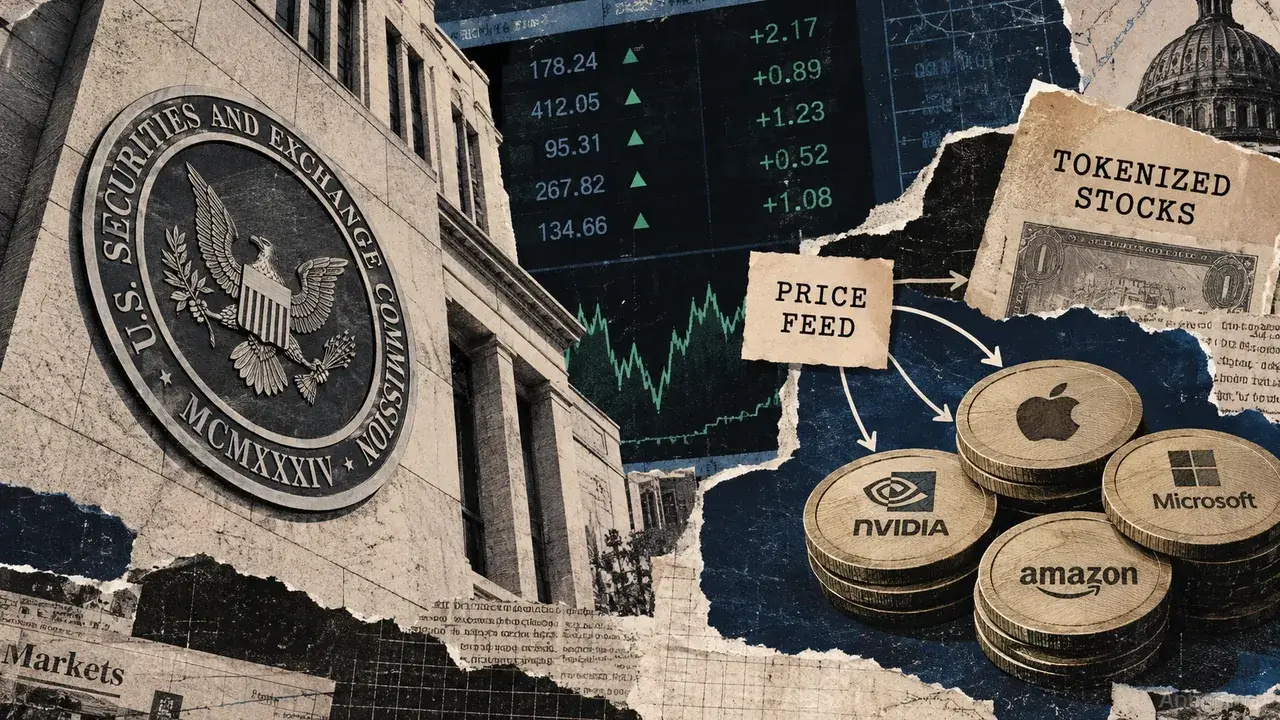
Tokenized stocks can carry the same rights without the same trading protections
Tokenized stocks eligible for the SEC’s September exemption must carry equivalent shareholder rights, yet their trading venues can...

AI Could Weaken Ethereum Security as Cryptographic Risks Grow, Vitalik Buterin Warns
Buterin urged developers to prepare for potential AI vulnerabilities in both conventional and quantum-resistant cryptography, whil...

DOJ scrutinizes Binance compliance with its 2023 settlement
The DOJ's scrutiny of Binance's compliance could impact global crypto regulations and influence future enforcement actions against...
Blockchain.com Seeks CFTC Approval for Prediction Markets, Crypto Derivatives
Blockchain.com is seeking regulatory approval to launch prediction markets and cryptocurrency derivatives trading in the United St...