Blockchain security firm releases Cetus hack post-mortem report
Blockchain security firm Dedaub released a post-mortem report on the Cetus decentralized exchange hack, identifying the root cause of the attack as an exploit of the liquidity parameters used by the Cetus automated marke...
Archive context
Older archive item. Useful for background and entity history, but not a fresh market-moving signal.

Blockchain security firm Dedaub released a post-mortem report on the Cetus decentralized exchange hack, identifying the root cause of the attack as an exploit of the liquidity parameters used by the Cetus automated market maker (AMM), which went undetected by a code "overflow" check.
According to the report, the hackers exploited a flaw in the most significant bits (MSB) check, allowing them to manipulate the values for the liquidity parameters by orders of magnitude and establish relatively large positions with a keystroke. The Dedaub security researchers wrote:
"This allowed them to add massive liquidity positions with just one unit of token input, subsequently draining pools collectively containing hundreds of millions of dollars worth of tokens."The incident and the post-mortem update reflect the unfortunate trend of cybersecurity exploits and hacks impacting crypto and the Web3 industry.
Executives in the industry have continually warned that industry firms must establish safeguards and protect users before regulators clamp down and impose safeguards on the industry.
The flawed MSB check. Source: DedaubRelated: Twice lucky? Cetus’ recovery plan on Sui mirrors a Solana blueprint
Cetus decentralized exchange hacked, triggering $223 million in lossesOn May 22, the Cetus exchange was hacked, causing $223 million in user losses within a 24-hour period.
Cetus and the Sui Foundation also announced that Sui network validators froze a majority of the stolen assets.
$163 million of the $223 million was frozen by validators and ecosystem partners on the same day as the hack, according to the Cetus team.
Response draws criticisms and allegations of centralizationThe decision to freeze the stolen funds drew mixed reactions from the crypto community, with decentralization advocates criticizing the validators for stepping in and controlling the chain.
"Sui validators are actively censoring transactions across the blockchain," one user wrote on X, echoing many other posts.
Source: Sui"This completely undermines the principles of decentralization and transforms the network into nothing more than a centralized, permissioned database," the post continued.
"It’s interesting how many Web3 projects backed by VCs lean heavily on centralization, despite borrowing Bitcoin’s ethos," Steve Bowyer wrote in a May 23 X post.
Magazine: Fake Rabby Wallet scam linked to Dubai crypto CEO and many more victims
Why this matters
This security story adds another data point to the current market tape and is useful when read alongside nearby source coverage.
Original source
Read on CointelegraphRelated market context

Crypto Hacks: Three Projects Hacked in One Day as Losses Hit Over $11M
Three crypto projects were attacked on September 24, suffering combined losses of more than $11M. Attackers drained around $1.8M f...

Bitget Confirms $387.5 Million Security Breach as Revised On-Chain Accounting Reveals Wider Losses
Bitget raises breach losses to $387.5 million after Zcash and TRON transfers found. Attackers spoofed backend transaction data to...
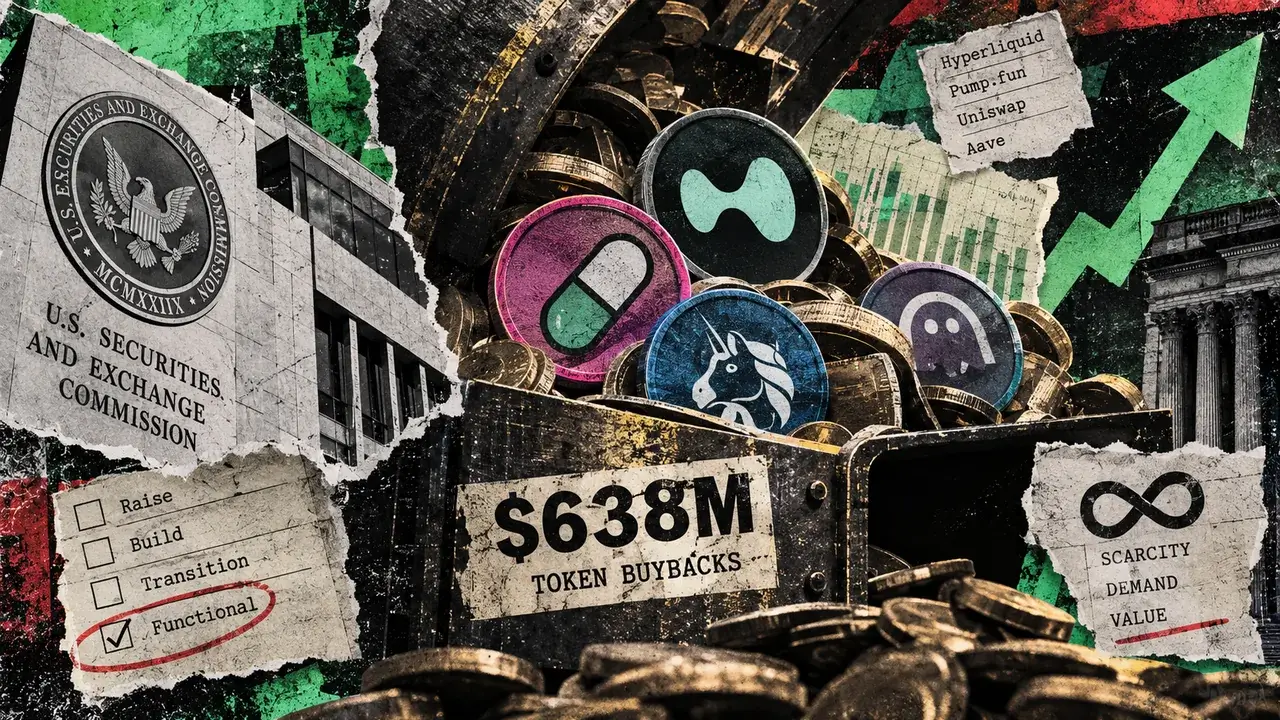
SEC clears regulatory hurdle as crypto token buybacks hit record $638 million
Crypto projects spent about $638 million with token buybacks through late August 2026, according to Allium Labs data. That is alre...
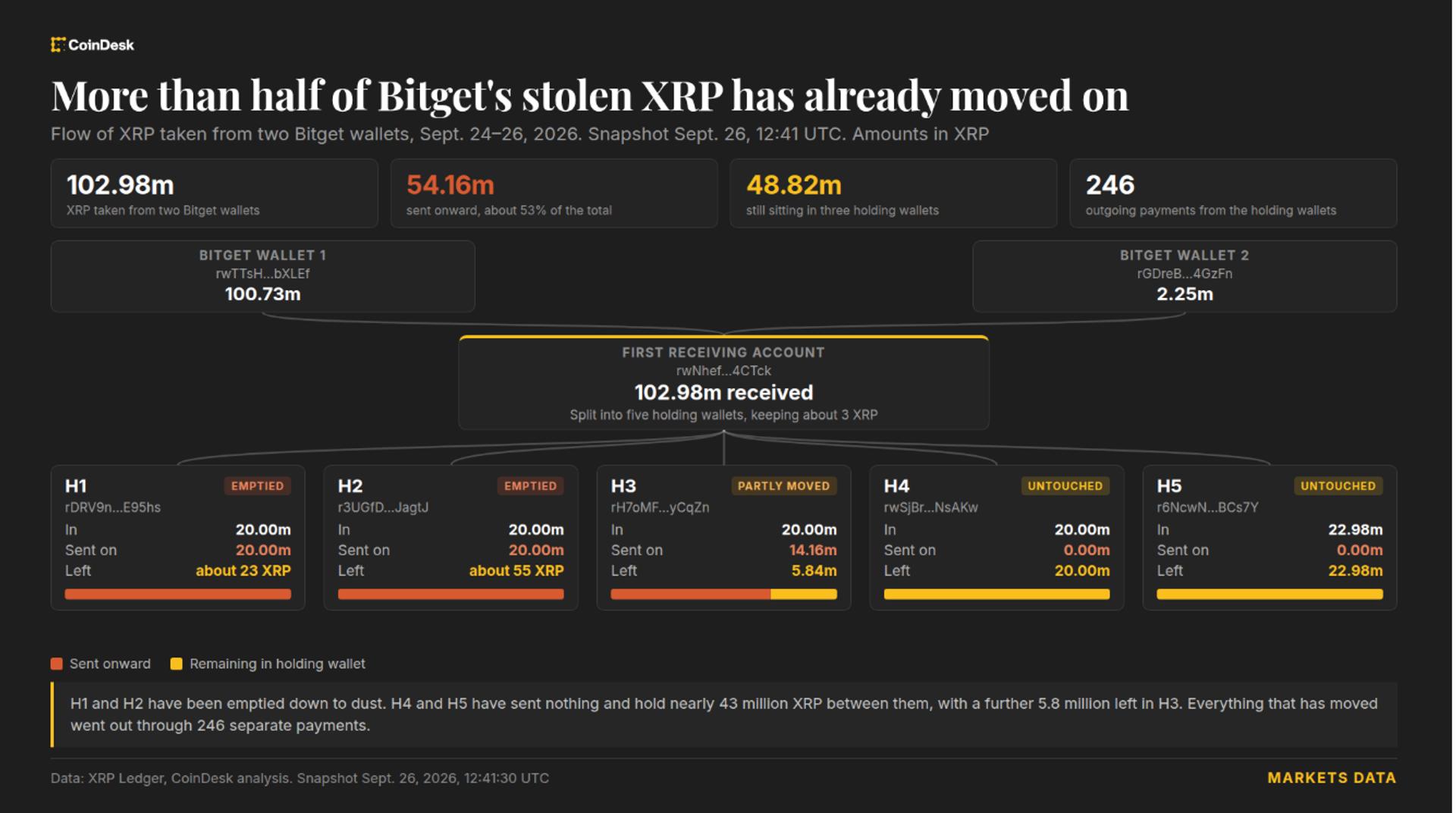
Bitget hacker moves $83 million in stolen XRP that Ripple cannot freeze
Two wallets have been almost emptied and a third is being drained, with about $75 million remaining across the five original holdi...

Visa cuts reported stablecoin volume but there’s no proof payments fell
Visa’s September 18 data refresh lowered its adjusted stablecoin volume measure, while its adjusted transaction count fell by less...
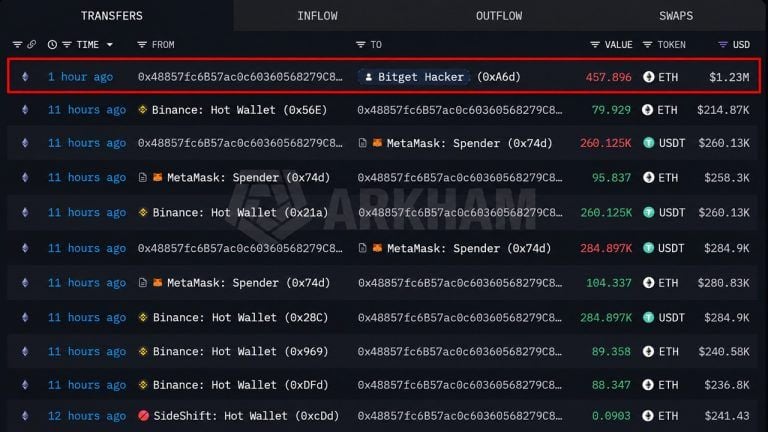
Bitget Saga: Hacker Just Refueled on Binance as Withdrawals Reopen Monday
A wallet tied to Bitget’s $387.5 million hacker pulled about $1.23 million in ether out of Binance, two days before the exchange r...