Brazil’s Central Bank Hack Sparks $40M Crypto Laundering in BTC, ETH
A sophisticated cyberattack on C&M Software, a technology provider for Brazil’s Central Bank, has triggered a wave of crypto laundering, with at least $40 million in stolen funds funneled into Bitcoin, Ethereum, and stab...
Archive context
Older archive item. Useful for background and entity history, but not a fresh market-moving signal.

A sophisticated cyberattack on C&M Software, a technology provider for Brazil’s Central Bank, has triggered a wave of crypto laundering, with at least $40 million in stolen funds funneled into Bitcoin, Ethereum, and stablecoins.
Key Takeaways:
- Hackers stole nearly $148 million from Brazilian banks by breaching C&M Software’s systems.
- At least $40 million was laundered into Bitcoin, Ethereum, and stablecoins, according to ZachXBT.
- Authorities froze $50 million linked to the hack, but much of the stolen crypto remains missing.
Blockchain investigator ZachXBT flagged the laundering after tracing large sums moving through Latin American over-the-counter desks and exchanges.
The attack stands as one of Brazil’s most significant financial breaches to date.
Hackers Target C&M, Key Link to Brazil’s PIX Payment NetworkThe hack targeted C&M, a key intermediary connecting smaller banks and fintechs to the Central Bank’s infrastructure, including PIX, the country’s widely used instant payments system.
According to Brazilian authorities, hackers exploited credentials sold by João Nazareno Roque, a 48-year-old IT worker at C&M, who received the equivalent of $2,770 for his corporate login details.
Local news outlet g1 Globo reported that Roque didn’t just sell his credentials; he also assisted in building a system to facilitate the theft, netting an additional payment of about $1,800.
Using this inside access, hackers orchestrated a coordinated attack early on June 30, siphoning approximately 800 million reais, or nearly $148 million, from reserve accounts of six financial institutions.
$140M HACK in Brazil – Insider Sold Access for Just $2.7K?!
ZachXBT reports a $140M breach in Brazil, where an insider allegedly sold system access for only $2.7K. Around $30–40M was funneled into crypto via LatAm OTC desks.
One of the biggest insider leaks in recent memory?… pic.twitter.com/ehMqjuQGCi
The fraudulent transfers went undetected for nearly two and a half hours. The breach only came to light when BMP, one of the affected institutions, flagged suspicious transactions.
BMP’s CEO, Carlos Benitez, said his bank alone lost roughly $73.8 million but managed to recover about $29.5 million.
A Brazilian court has since frozen accounts suspected of receiving stolen funds, recovering approximately $50 million so far.
However, the full scope of the laundering operation remains under investigation, with significant sums still unaccounted for.
Following the incident, the Central Bank suspended parts of C&M’s access to its systems as authorities worked to contain the damage.
Roque was arrested on July 3, two days after the hack, and remains in custody as the investigation continues.
Officials said no retail customers suffered direct losses, as the stolen funds were limited to institutional reserve balances held at the Central Bank.
Crypto Networks Emerge as Escape Route for CrimesThe latest breach underscores growing fears about crypto’s role as a conduit for conventional financial crimes.
Digital assets offer liquidity and a level of pseudonymity that traditional cash transactions can’t match, enabling swift movement of illicit funds at scale.
Stablecoins, in particular, have drawn the attention of criminal networks.
The Financial Action Task Force recently warned that stablecoins pose increasing risks when used by illicit groups, especially in the absence of coordinated global oversight.
Brazil’s recent heist mirrors a series of high-profile crypto-related thefts this year, including North Korea’s record $1.46 billion ByBit hack and Chinese authorities dismantling a $136 million laundering ring that used digital currencies for cross-border money flows.
Nevertheless, Brazilian officials are now working to trace the stolen funds across various blockchain networks, coordinating with international agencies to freeze assets and identify those responsible for one of the nation’s largest financial cyberattacks.
The post Brazil’s Central Bank Hack Sparks $40M Crypto Laundering in BTC, ETH appeared first on Cryptonews.
Why this matters
This security story adds another data point to the current market tape and is useful when read alongside nearby source coverage.
Original source
Read on CryptonewsRelated market context
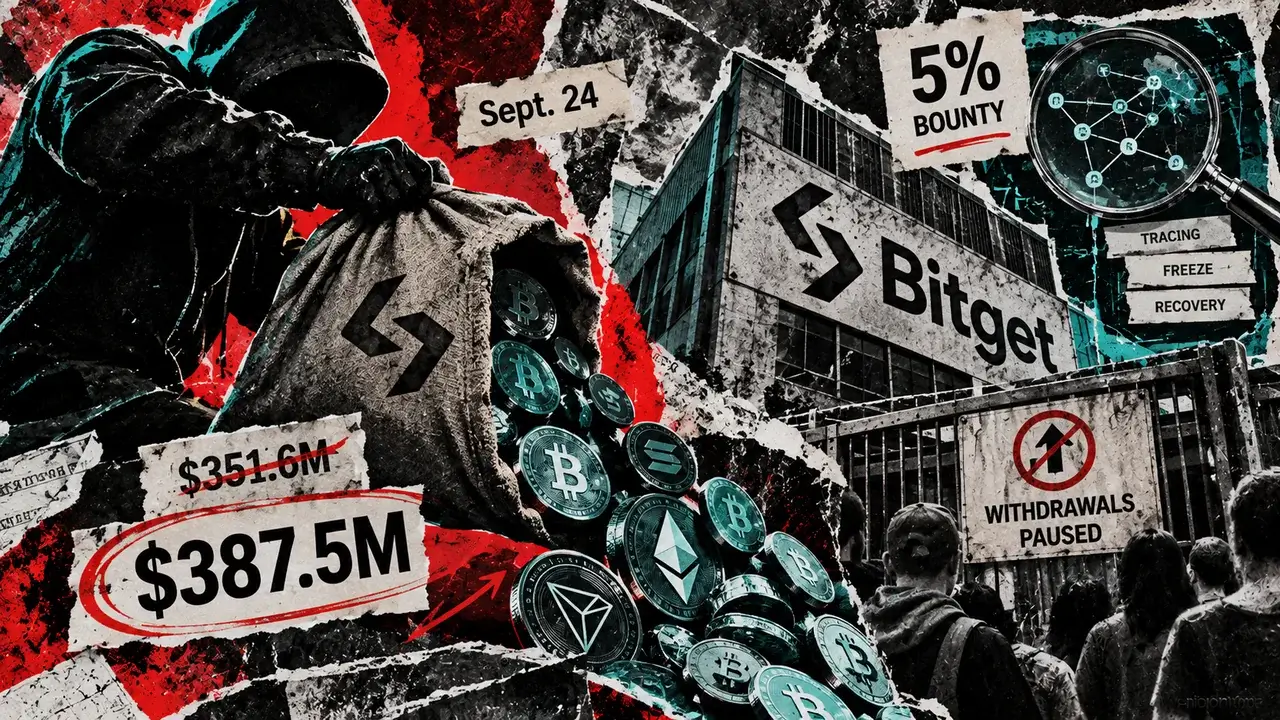
Bitget’s hack just got $36 million bigger, and now there’s a bounty on the stolen crypto
Bitget has raised the estimated value of assets taken in its Sept. 24 breach to $387.5 million as exchanges and security firms mob...

North Korean Hackers Linked to $388M Bitget Crypto Exchange Theft: CEO
Bitcoin Magazine North Korean Hackers Linked to $388M Bitget Crypto Exchange Theft: CEO Hackers from North Korea targeted crypto e...
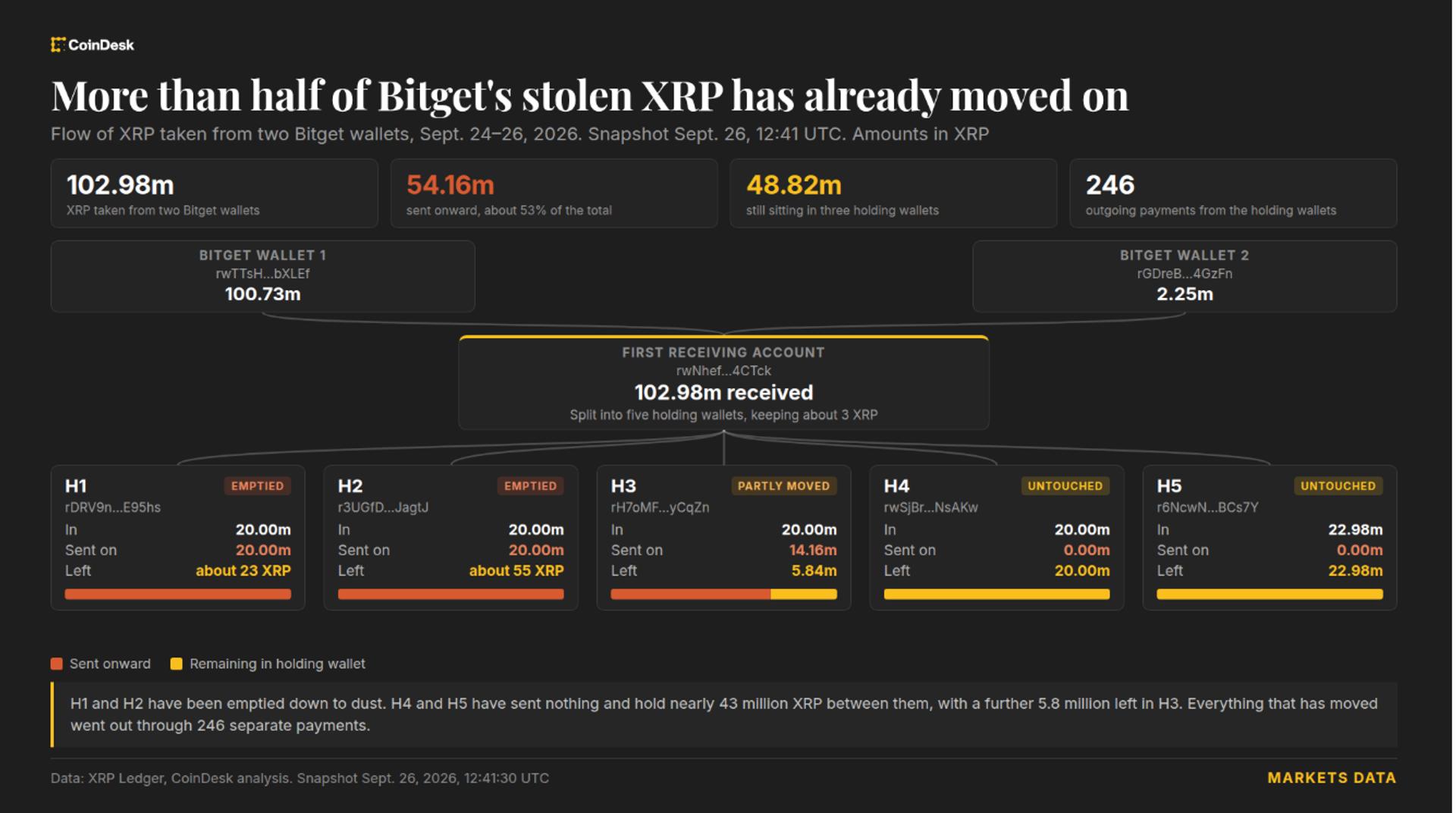
Bitget hacker moves $83 million in stolen XRP that Ripple cannot freeze
Two wallets have been almost emptied and a third is being drained, with about $75 million remaining across the five original holdi...
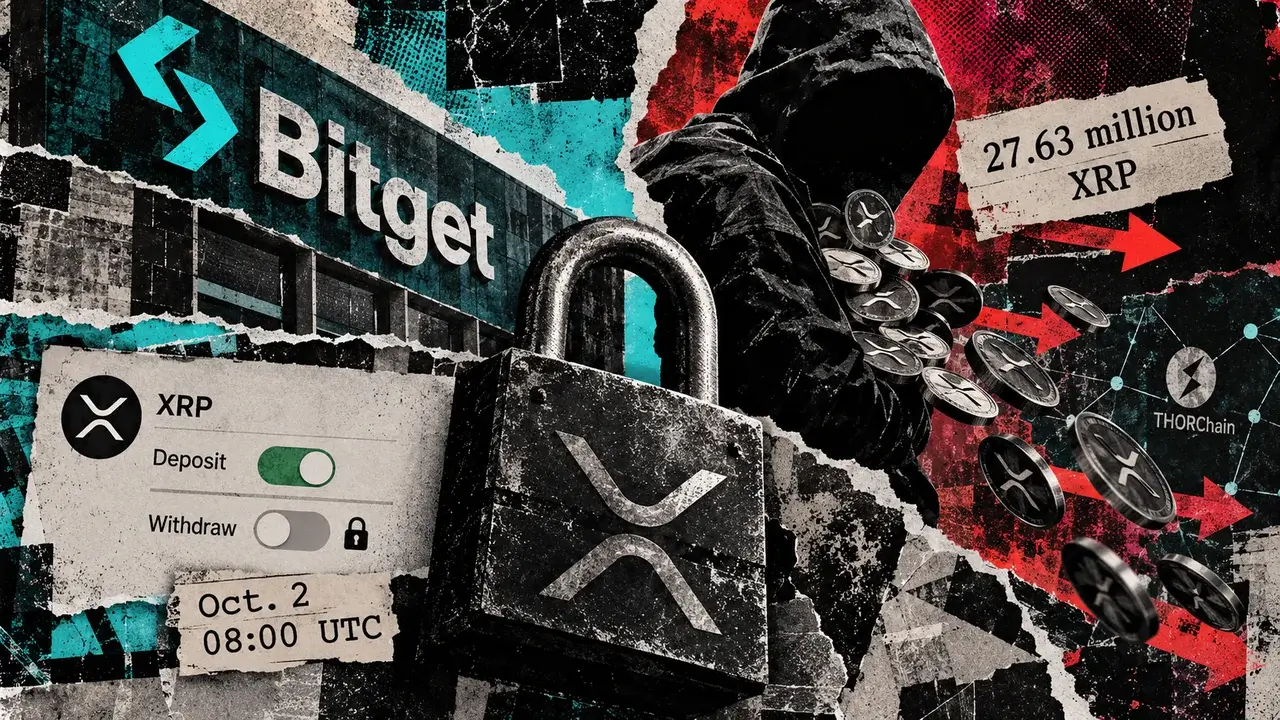
Bitget freezes XRP withdrawals as 27M stolen tokens move
Bitget’s XRP withdrawal route was still disabled on Sept. 26, even as the exchange set Oct. 2 at 08:00 UTC for the last phase of i...

Tokenized funds rise to $11.39 for every $100 in stablecoins, nearly quadrupling in two years
Tokenized funds' growth highlights a shift towards yield-seeking on-chain investments, potentially reshaping the stablecoin ecosys...

Bitget hacker withdraws $1.23M from Binance, funnels funds to attacker-controlled wallet
The Bitget hack highlights vulnerabilities in crypto exchanges, prompting urgent calls for enhanced security measures and internat...